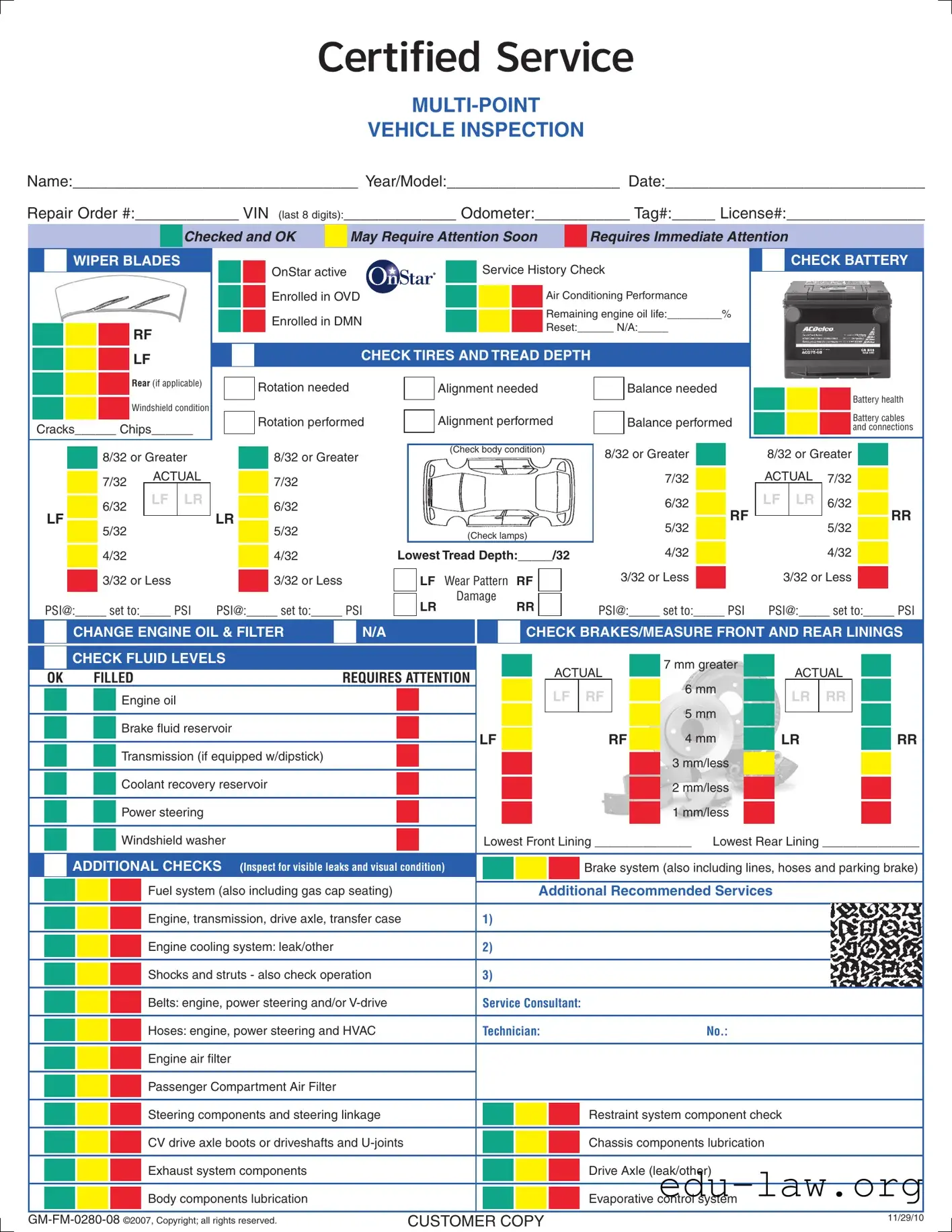
The Automobile Service Checklist form is an essential tool for vehicle maintenance, ensuring that your car remains in optimal condition. It covers various critical areas of inspection, including wiper blades, tire tread depth, battery health, and fluid levels. Each section of the form allows technicians to assess whether components are functioning properly or require attention. For instance, the tire section evaluates tread depth and pressure, while the battery section checks connections and overall health. Additionally, the checklist prompts for an oil change and brake inspection, which are vital for safe driving. Other important checks include the engine cooling system, steering components, and the fuel system. This comprehensive approach not only helps identify immediate concerns but also encourages regular maintenance practices, contributing to the longevity and reliability of your vehicle.
VEHICLE INSPECTION
Name:_________________________________ Year/Model:____________________ Date:______________________________
Repair Order #:____________ VIN (last 8 digits):_____________ Odometer:___________ Tag#:_____ License#:________________
|
|
Checked and OK |
|
May Require Attention Soon |
|
Requires Immediate Attention |
|
|
|
|
|
|
|
WIPER BLADES
RF LF
OnStar active |
|
|
Service History Check |
|||
Enrolled in OVD |
|
|
|
|
|
Air Conditioning Performance |
|
|
|
|
|
||
Enrolled in DMN |
|
|
|
|
|
Remaining engine oil life:_________% |
|
|
|
|
|
||
|
|
|
|
|
Reset:______ N/A:_____ |
|
|
|
|
|
|
|
|
CHECK TIRES AND TREAD DEPTH
CHECK BATTERY
Rear (if applicable) Windshield condition
Cracks______ Chips______
8/32 or Greater
7/32 ACTUAL
6/32 LF LR
LF
5/32
4/32
3/32 or Less PSI@:_____ set to:_____ PSI
Rotation needed
Rotation performed
8/32 or Greater 7/32
6/32
LR
5/32
4/32
3/32 or Less
PSI@:_____ set to:_____ PSI
Alignment needed
Alignment performed
(Check body condition)
(Check lamps)
Lowest Tread Depth:_____/32
LF Wear Pattern RF
Damage
LRRR
Balance needed
Balance performed
8/32 or Greater 7/32
6/32
RF
5/32
4/32 3/32 or Less
PSI@:_____ set to:_____ PSI
Battery health
Battery cables and connections
8/32 or Greater ACTUAL 7/32
LF LR 6/32
RR
5/32
4/32 3/32 or Less
PSI@:_____ set to:_____ PSI
|
|
CHANGE ENGINE OIL & FILTER |
N/A |
|
CHECK BRAKES/MEASURE FRONT AND REAR LININGS |
||||||||||||||||||||||||
|
|
|
|
|
|
|
|
|
|
|
|
|
|
|
|
|
|
|
|
|
|
|
|
|
|
|
|
|
|
|
|
CHECK FLUID LEVELS |
|
|
|
|
|
|
ACTUAL |
|
7 mm greater |
|
|
ACTUAL |
|
|
|||||||||||||
|
|
|
|
|
|
|
|
|
|
|
|
|
|||||||||||||||||
|
|
|
|
|
|
|
|
|
|
|
|
|
|
|
|
|
|
|
|
|
|||||||||
|
OK |
|
|
|
FILLED |
REQUIRES ATTENTION |
|
|
|
|
6 mm |
|
|
|
|
||||||||||||||
|
|
|
|
|
|
|
|
|
|||||||||||||||||||||
|
|
|
|
|
|
|
LF |
|
RF |
|
|
|
|
LR |
RR |
|
|
|
|||||||||||
|
|
|
|
|
|
|
|
Engine oil |
|
|
|
|
|
|
|
|
|
|
|
|
|
|
|||||||
|
|
|
|
|
|
|
|
|
|
|
|
|
|
|
|
|
|
|
|
||||||||||
|
|
|
|
|
|
|
|
|
|
|
|
|
|
|
|
|
5 mm |
|
|
|
|
|
|||||||
|
|
|
|
|
|
|
|
|
|
|
|
|
|
|
|
||||||||||||||
|
|
|
|
|
|
|
|
Brake fluid reservoir |
|
|
|
|
|
|
|
|
|
|
|
|
|
|
|
|
|
|
|
||
|
|
|
|
|
|
|
|
|
|
|
LF |
|
|
|
|
RF |
|
4 mm |
|
LR |
|
|
|
|
RR |
||||
|
|
|
|
|
|
|
|
|
|
|
|
|
|
|
|
|
|
|
|
|
|||||||||
|
|
|
|
|
|
|
|
|
|
|
|
|
|
|
|
|
|
|
|
|
|||||||||
|
|
|
|
|
|
|
|
|
|
|
|
|
|
|
|
|
|
|
|
|
|
|
|||||||
|
|
|
|
|
|
|
|
Transmission (if equipped w/dipstick) |
|
|
|
|
|||||||||||||||||
|
|
|
|
|
|
|
|
|
|
|
|
|
|
|
|
|
|
|
3 mm/less |
|
|
|
|
|
|
|
|
||
|
|
|
|
|
|
|
|
|
|
|
|
|
|
|
|
|
|
|
|
|
|
|
|
|
|
|
|
|
|
|
|
|
|
|
|
|
|
Coolant recovery reservoir |
|
|
|
|
|
|
|
|
|
|
|
2 mm/less |
|
|
|
|
|
|
|
|
|
|
|
|
|
|
|
|
|
|
|
|
|
|
|
|
|
|
|
|
|
|
|
|
|
|
|
|
|||
|
|
|
|
|
|
|
|
|
|
|
|
|
|
|
|
|
|
|
|
|
1 mm/less |
|
|
|
|
|
|
|
|
|
|
|
|
|
|
|
|
Power steering |
|
|
|
|
|
|
|
|
|
|
|
|
|
|
|
|
|
|
|
||
|
|
|
|
|
|
|
|
|
|
|
|
|
|
|
|
|
|
|
|
|
|
|
|
|
|
|
|||
|
|
|
|
|
|
|
|
|
|
|
|
|
|
|
|
|
|
|
|
|
|
|
|
|
|
|
|
|
|
|
|
|
|
|
|
|
|
Windshield washer |
|
|
|
Lowest Front Lining ______________ Lowest Rear Lining ______________ |
|||||||||||||||||
|
|
|
|
|
|
|
|
|
|
|
|
|
|
|
|
|
|
|
|
|
|
|
|
|
|
|
|
|
|
|
|
ADDITIONAL CHECKS (Inspect for visible leaks and visual condition) |
|
|
|
|
|
Brake system (also including lines, hoses and parking brake) |
|||||||||||||||||||||
|
|
|
|
|
|
|
|
|
|
|
|
|
|
|
|
|
|
|
|
|
|
|
|
|
|
|
|||
|
|
|
|
|
|
|
|
|
Fuel system (also including gas cap seating) |
|
|
Additional Recommended Services |
|
|
|
|
|
|
|
||||||||||
|
|
|
|
|
|
|
|
|
|
|
|
|
|
|
|
|
|
|
|
|
|
|
|
|
|
|
|
|
|
|
|
|
|
|
|
|
|
|
Engine, transmission, drive axle, transfer case |
1) |
|
|
|
|
|
|
|
|
|
|
|
|
|
|
|
|
|||
|
|
|
|
|
|
|
|
|
|
|
|
|
|
|
|
|
|
|
|
|
|
|
|
|
|
|
|
|
|
|
|
|
|
|
|
|
|
|
Engine cooling system: leak/other |
|
|
|
2) |
|
|
|
|
|
|
|
|
|
|
|
|
|
|
|
|
|
|
|
|
|
|
|
|
|
|
|
|
|
|
|
|
|
|
|
|
|
|
|
|
|
|
|
|
||
|
|
|
|
|
|
|
|
|
|
|
|
|
|
|
|
|
|
|
|
|
|
|
|
|
|
|
|
|
|
|
|
|
|
|
|
|
|
|
Shocks and struts - also check operation |
3) |
|
|
|
|
|
|
|
|
|
|
|
|
|
|
|
|
|||
|
|
|
|
|
|
|
|
|
|
|
|
|
|
|
|
|
|
|
|
|
|
|
|
|
|||||
|
|
|
|
|
|
|
|
|
|
|
|
|
|
|
|
|
|
|
|
|
|
|
|
|
|
|
|
|
|
|
|
|
|
|
|
|
|
|
Belts: engine, power steering and/or |
Service Consultant: |
|
|
|
|
|
|
|
|
|
|
|
|
|||||||
|
|
|
|
|
|
|
|
|
|
|
|
|
|
|
|
|
|
|
|
|
|||||||||
|
|
|
|
|
|
|
|
|
|
|
|
|
|
|
|
|
|
|
|
|
|
|
|
|
|
|
|
|
|
|
|
|
|
|
|
|
|
|
Hoses: engine, power steering and HVAC |
Technician: |
|
|
|
No.: |
|
|
|
|
|
|
|
||||||||
|
|
|
|
|
|
|
|
|
|
|
|
|
|
|
|
|
|
|
|||||||||||
|
|
|
|
|
|
|
|
|
|
|
|
|
|
|
|
|
|
|
|
|
|
|
|
|
|
|
|
|
|
|
|
|
|
|
|
|
|
|
Engine air filter |
|
|
|
|
|
|
|
|
|
|
|
|
|
|
|
|
|
|
|
|
|
|
|
|
|
|
|
|
|
|
|
|
|
|
|
|
|
|
|
|
|
|
|
|
|
|
|
|
|
|
|
|
|
|
|
|
|
|
|
|
|
|
|
|
|
|
|
|
|
|
|
|
|
|
|
|
|
|
|
|
|
|
|
|
|
|
|
|
|
Passenger Compartment Air Filter |
|
|
|
|
|
|
|
|
|
|
|
|
|
|
|
|
|
|
|
|
|
|
|
|
|
|
|
|
|
|
|
|
|
|
|
|
|
|
|
|
|
|
|
|
|
|
|
|
|
|
|
|
|
|
|
|
|
|
|
|
|
|
|
|
|
|
|
|
|
|
|
|
|
|
|
|||||
|
|
|
|
|
|
|
|
|
Steering components and steering linkage |
|
|
|
|
|
Restraint system component check |
|
|
|
|
|
|||||||||
|
|
|
|
|
|
|
|
|
|
|
|
|
|
|
|
|
|
|
|||||||||||
|
|
|
|
|
|
|
|
|
|
|
|
|
|
|
|
|
|
|
|
|
|
|
|
|
|
||||
|
|
|
|
|
|
|
|
|
CV drive axle boots or driveshafts and |
|
|
|
|
|
Chassis components lubrication |
|
|
|
|
|
|
|
|||||||
|
|
|
|
|
|
|
|
|
|
|
|
|
|
|
|
|
|
|
|
|
|||||||||
|
|
|
|
|
|
|
|
|
|
|
|
|
|
|
|
|
|
|
|
|
|
|
|
|
|
|
|
|
|
|
|
|
|
|
|
|
|
|
Exhaust system components |
|
|
|
|
|
|
|
|
Drive Axle (leak/other) |
|
|
|
|
|
|
|
||||
|
|
|
|
|
|
|
|
|
|
|
|
|
|
|
|
|
|
|
|
|
|
|
|
||||||
|
|
|
|
|
|
|
|
|
|
|
|
|
|
|
|
|
|
|
|
|
|
|
|
|
|
|
|
|
|
|
|
|
|
|
|
|
|
|
Body components lubrication |
|
|
|
|
|
|
|
|
Evaporative control system |
|
|
|
|
|
|
|
||||
|
|
|
|
|
|
|
|
|
|
|
|
|
|
|
|
|
|
|
|
|
|
|
|
||||||
|
|
|
|
|
|
|
|
|
|
|
|
|
|
|
|
|
|
|
|
|
|
|
|
|
|
|
|
|
|
CUSTOMER COPY |
11/29/10 |
|
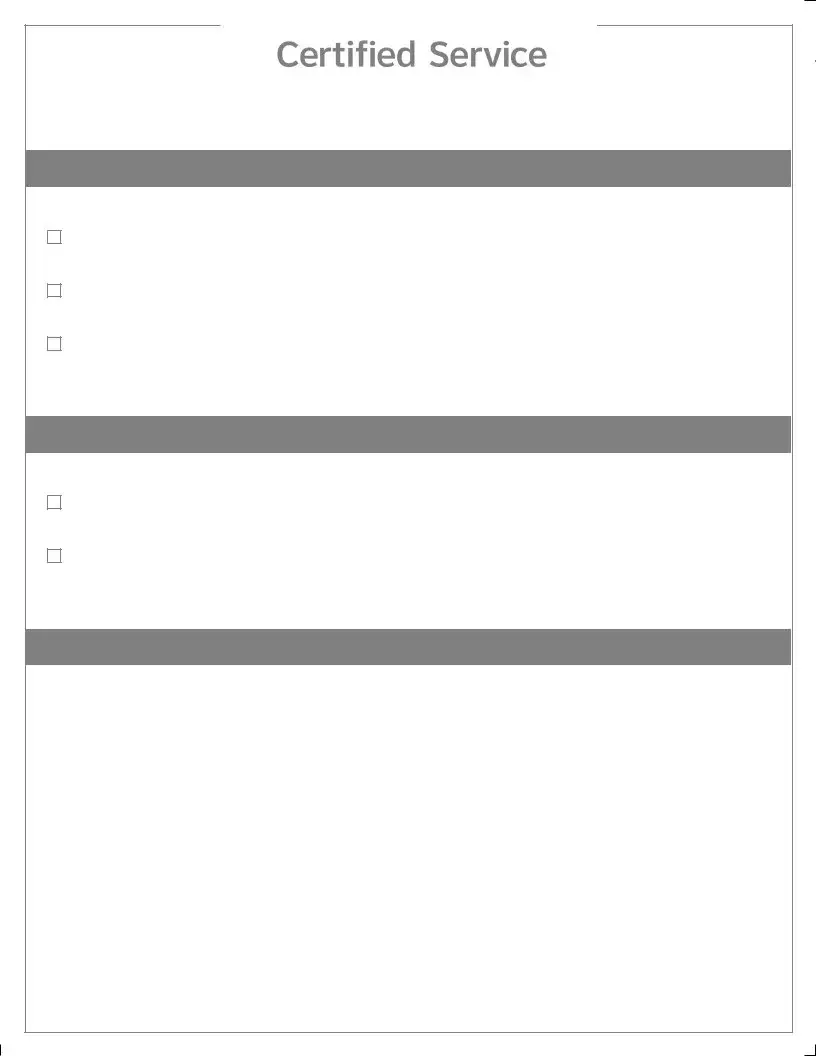
VEHICLE OWNER CHECKLIST
AT EACH FUEL STOP
Engine oil level check
Engine coolant level check
Windshield washer fluid level check
ONCE A MONTH
Tire inflation check
Tire wear inspection
ONCE A YEAR
Refer to your vehicle owner’s manual for additional required services. Visit your GM Goodwrench Dealer’s Service Department to assist you with these maintenance needs.
| Fact Name | Description |
|---|---|
| Purpose | The Automobile Service Checklist form is designed to provide a comprehensive overview of a vehicle's condition, ensuring that all critical components are inspected during routine maintenance. |
| Multi-Point Inspection | This form includes a multi-point inspection checklist that covers essential vehicle systems, such as brakes, tires, and fluids, to help identify any immediate or potential issues. |
| Owner Information | Vehicle owners are required to provide their name, vehicle year and model, date of service, repair order number, VIN, odometer reading, tag number, and license number on the form. |
| Inspection Categories | The checklist is divided into categories, including wiper blades, tires, battery, engine oil, brakes, and additional checks, allowing for a systematic review of the vehicle. |
| Condition Ratings | Each inspected item can be marked as "Checked and OK," "May Require Attention Soon," or "Requires Immediate Attention," helping technicians prioritize repairs. |
| Fluid Levels | The form includes sections for checking various fluid levels, such as engine oil, brake fluid, and coolant, which are crucial for safe vehicle operation. |
| State-Specific Requirements | In some states, the use of this form may be governed by specific laws regarding vehicle maintenance and safety inspections, ensuring compliance with local regulations. |
| Documentation | The completed form serves as a record of the vehicle's service history, which can be valuable for future maintenance and resale purposes. |
| Owner Responsibilities | The checklist encourages vehicle owners to perform regular checks, such as tire inflation and fluid levels, promoting proactive vehicle maintenance. |
| Professional Recommendations | Technicians may use the checklist to recommend additional services based on the vehicle's condition, helping owners make informed decisions about their vehicle care. |
Completing the Automobile Service Checklist form is straightforward. This form helps ensure that all necessary vehicle checks are performed. Follow the steps below to fill it out accurately.
What is the purpose of the Automobile Service Checklist form?
The Automobile Service Checklist form is designed to provide a comprehensive overview of a vehicle's condition during a multi-point inspection. It helps technicians assess various components, such as the engine, brakes, tires, and fluid levels. By documenting the status of these elements, the form ensures that any potential issues are identified early, promoting vehicle safety and reliability.
How often should I have my vehicle inspected using this checklist?
What should I do if my vehicle requires immediate attention according to the checklist?
If the checklist indicates that your vehicle requires immediate attention, it is crucial to address the identified issues as soon as possible. Ignoring these warnings can lead to more severe problems or safety hazards. Contact your mechanic or service center to schedule repairs and discuss the findings of the inspection.
What are some common items checked during the inspection?
The inspection covers a variety of components, including wiper blades, tire tread depth, battery health, and fluid levels such as engine oil and brake fluid. Additionally, the technician will check the condition of the brakes and look for any visible leaks. Each item is categorized based on its condition, helping you understand what needs immediate attention and what is functioning well.
Can I perform any of the checks on the checklist myself?
Yes, many of the checks can be done by vehicle owners. For instance, you can regularly check the engine oil level, coolant level, and windshield washer fluid at each fuel stop. Monthly tire inflation checks and wear inspections are also manageable tasks. However, for more complex evaluations, such as brake inspections or fluid assessments, it is best to consult a professional.
What happens after the inspection is completed?
After the inspection, the technician will provide you with a detailed report based on the checklist findings. This report will outline any areas that require attention and recommend necessary services. You can then make informed decisions about repairs or maintenance, ensuring your vehicle remains in optimal condition.
Incomplete Information: Failing to fill out all required fields, such as name, vehicle year/model, or VIN, can lead to delays in service.
Incorrect Measurements: Not accurately measuring tire tread depth or fluid levels can result in overlooking necessary maintenance.
Neglecting to Check All Sections: Skipping sections, such as the battery health or brake system, may leave critical issues unaddressed.
Misunderstanding Checkboxes: Misinterpreting the meaning of checkboxes for "Requires Immediate Attention" versus "May Require Attention Soon" can cause confusion in service priorities.
Forgetting to Document Changes: Not noting any performed services, like oil changes or tire rotations, can lead to inaccurate service history records.
Ignoring Visual Inspections: Overlooking the importance of visual inspections for leaks or damage can result in missed safety issues.
Rushing the Process: Completing the checklist in haste often leads to errors. Taking the time to ensure accuracy is essential for proper vehicle maintenance.
The Automobile Service Checklist form is an important document used during vehicle maintenance. Along with this form, several other documents may be utilized to ensure comprehensive service and record-keeping. Below is a list of commonly used forms and documents that complement the Automobile Service Checklist.
These documents work together to create a complete picture of the vehicle's service history and maintenance needs. Keeping accurate records helps ensure the vehicle remains in good working condition and can assist in future repairs or service decisions.
The Vehicle Maintenance Log serves a similar purpose to the Automobile Service Checklist form. It documents all maintenance and repairs performed on a vehicle over time. This log helps vehicle owners track service history, ensuring that they stay informed about past repairs and upcoming maintenance needs. Regular entries can enhance the resale value of the vehicle, as potential buyers appreciate a well-documented service history.
The Pre-Purchase Inspection Report is another document that aligns closely with the Automobile Service Checklist. This report is typically conducted by a certified mechanic before a vehicle purchase. It provides a comprehensive overview of the vehicle's condition, including any existing issues that may need attention. Like the checklist, it emphasizes the importance of safety and reliability, helping buyers make informed decisions before committing to a purchase.
The Oil Change Receipt is also similar in that it records essential service details. This document includes information about the type of oil used, the date of service, and any additional services performed during the oil change. Keeping this receipt helps vehicle owners maintain a consistent oil change schedule, which is crucial for engine health and longevity, paralleling the preventive maintenance focus of the Automobile Service Checklist.
The Tire Maintenance Record is another relevant document. It tracks tire rotations, replacements, and inspections, including tread depth measurements. This record helps ensure optimal tire performance and safety. Like the checklist, it highlights the importance of regular tire maintenance, which can significantly affect vehicle handling and fuel efficiency.
The Brake Inspection Report is similar in that it focuses specifically on the brake system's condition. This report outlines findings from brake inspections, including lining measurements and any necessary repairs. It serves to ensure driver safety and vehicle reliability, echoing the comprehensive nature of the Automobile Service Checklist.
Lastly, the Fluid Level Check Form is akin to the Automobile Service Checklist. This document records the levels of essential fluids in the vehicle, such as oil, coolant, and brake fluid. Regular checks are vital for vehicle performance and safety. Both documents emphasize the importance of monitoring vehicle health to prevent breakdowns and maintain optimal operation.
When filling out the Automobile Service Checklist form, consider the following guidelines:
This is not true. The Automobile Service Checklist is designed for vehicles of all ages. Regular maintenance is crucial for both new and older cars to ensure safety and performance.
While it may seem optional, using the checklist is highly recommended. It helps identify potential issues before they become serious problems, ultimately saving time and money.
The checklist is comprehensive but not exhaustive. It focuses on key areas of vehicle maintenance. Additional inspections may be necessary based on specific vehicle needs or unusual symptoms.
Anyone can use the checklist as a guide. Vehicle owners can perform basic checks themselves and then take the checklist to a mechanic for more detailed inspections.
In addition to routine services, the checklist also includes checks for safety features, tire conditions, and other critical components that may require immediate attention.
Although it may seem that way, the checklist is regularly updated to reflect current best practices in vehicle maintenance. Always refer to the latest version to ensure accuracy.
While the checklist is a valuable tool for maintenance, it cannot guarantee complete safety. Regular use combined with professional inspections is essential for optimal vehicle safety.
Fill out all required fields on the Automobile Service Checklist form, including your name, vehicle year and model, date, repair order number, VIN, odometer reading, tag number, and license number.
Regularly check the status of each component listed on the form, marking them as "Checked and OK," "May Require Attention Soon," or "Requires Immediate Attention."
Pay special attention to the tire tread depth and pressure. Ensure that the tread depth is adequate and the pressure is set correctly.
Monitor fluid levels, including engine oil, brake fluid, coolant, and power steering fluid. Record any that require attention.
Perform additional checks for visible leaks and the overall condition of the brake and fuel systems.
Refer to your vehicle owner's manual for any additional required services specific to your vehicle.
Conduct a monthly tire inflation check and a tire wear inspection to maintain safety and performance.
Keep a copy of the completed checklist for your records and share it with your service consultant for future reference.