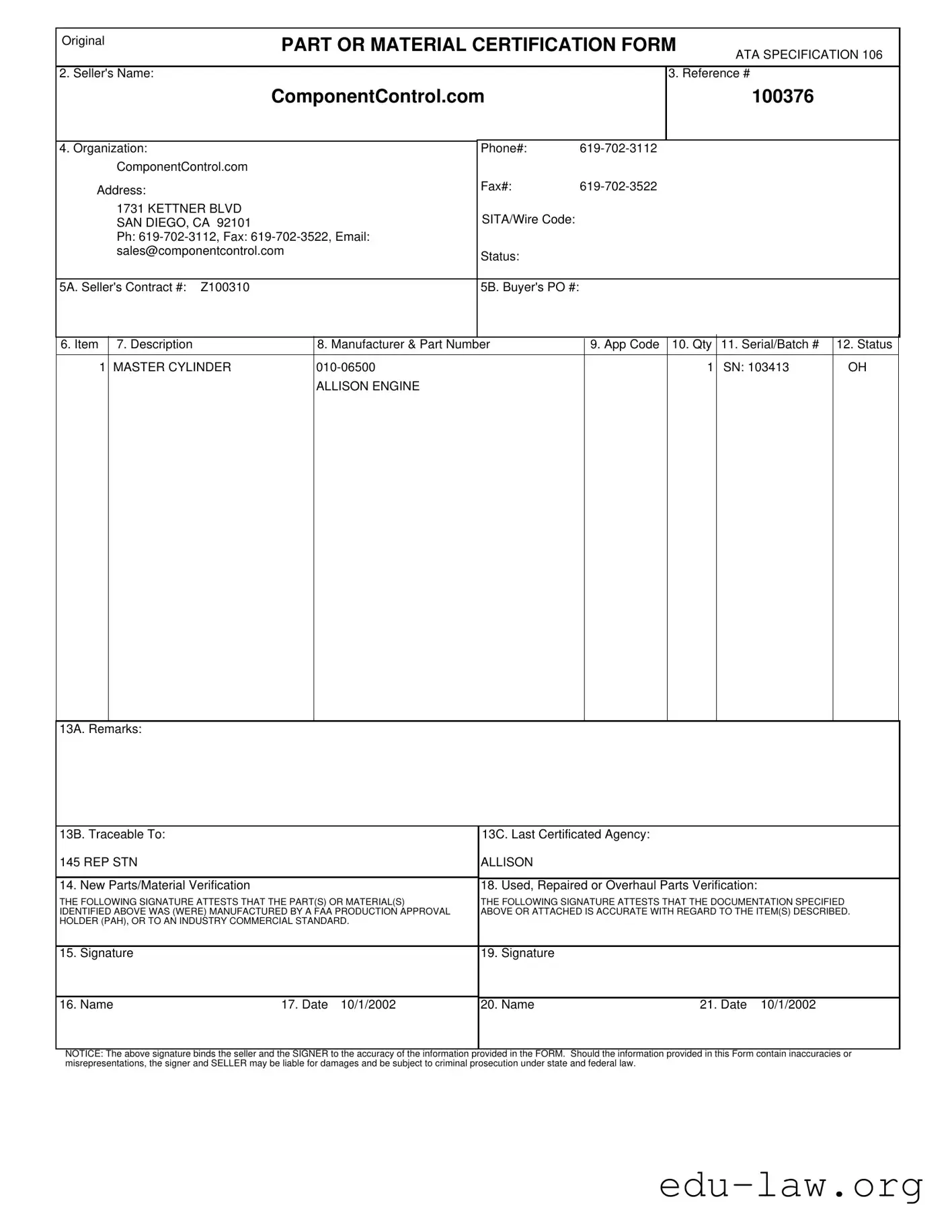
The ATA 106 form is a critical document used in the aviation industry for certifying the authenticity and compliance of aircraft parts and materials. This form is essential for sellers and buyers to ensure that all components meet the necessary regulatory standards. Key elements of the ATA 106 include the seller's information, such as name and contact details, and specific details about the parts being sold, including their description, manufacturer, part number, and serial or batch numbers. Additionally, the form requires signatures from both the seller and buyer, attesting to the accuracy of the information provided. This document also includes sections for remarks and traceability, which further enhance accountability in the supply chain. The importance of this form cannot be overstated, as inaccuracies or misrepresentations can lead to significant legal consequences for the parties involved. By adhering to the guidelines outlined in the ATA 106, companies can foster trust and reliability in their transactions.
Original |
PART OR MATERIAL CERTIFICATION FORM |
|
|
ATA SPECIFICATION 106 |
|
|
|
|
|
|
|
2. Seller's Name:
ComponentControl.com
3. Reference #
100376
4.Organization:
ComponentControl.com
Address:
1731 KETTNER BLVD SAN DIEGO, CA 92101
Ph:
Phone#:619-702-3112
Fax#:619-702-3522
SITA/Wire Code:
Status:
5A. Seller's Contract #: Z100310
5B. Buyer's PO #:
6. Item 7. Description |
8. Manufacturer & Part Number |
9. App Code 10. Qty |
11. Serial/Batch # |
12. Status |
|
|
|
|
|
1 MASTER CYLINDER |
1 |
SN: 103413 |
OH |
|
|
ALLISON ENGINE |
|
|
|
13A. |
Remarks: |
|
|
|
|
|
|
|
|
|
|
||
13B. |
Traceable To: |
|
13C. Last Certificated Agency: |
|
||
145 REP STN |
|
ALLISON |
|
|||
|
|
|
|
|
||
14. |
New Parts/Material Verification |
|
18. |
Used, Repaired or Overhaul Parts Verification: |
||
THE FOLLOWING SIGNATURE ATTESTS THAT THE PART(S) OR MATERIAL(S) |
THE FOLLOWING SIGNATURE ATTESTS THAT THE DOCUMENTATION SPECIFIED |
|||||
IDENTIFIED ABOVE WAS (WERE) MANUFACTURED BY A FAA PRODUCTION APPROVAL |
ABOVE OR ATTACHED IS ACCURATE WITH REGARD TO THE ITEM(S) DESCRIBED. |
|||||
HOLDER (PAH), OR TO AN INDUSTRY COMMERCIAL STANDARD. |
|
|
|
|||
|
|
|
|
|
|
|
15. |
Signature |
|
19. |
Signature |
|
|
|
|
|
|
|
|
|
16. |
Name |
17. Date 10/1/2002 |
20. |
Name |
21. Date 10/1/2002 |
|
|
|
|
|
|
|
|
NOTICE: The above signature binds the seller and the SIGNER to the accuracy of the information provided in the FORM. Should the information provided in this Form contain inaccuracies or misrepresentations, the signer and SELLER may be liable for damages and be subject to criminal prosecution under state and federal law.
| Fact Name | Description | Governing Law |
|---|---|---|
| Seller Information | The form includes detailed seller information, including name, address, and contact details for ComponentControl.com. | California Commercial Code |
| Part Certification | The ATA 106 form certifies that the parts or materials listed meet FAA production approval standards. | Federal Aviation Administration Regulations |
| Signature Requirement | Signatures on the form confirm the accuracy of the information provided and bind the seller to its contents. | California Civil Code |
| Liability Notice | The form includes a notice regarding potential liability for inaccuracies or misrepresentations. | State and Federal Law |
Filling out the ATA 106 form requires attention to detail and accuracy. This form is essential for certifying parts or materials in compliance with aviation regulations. Follow the steps below to complete the form correctly.
What is the purpose of the ATA 106 form?
The ATA 106 form serves as a certification for parts or materials used in aviation. It verifies that the items listed comply with FAA production approval or meet industry standards. This certification is crucial for maintaining safety and regulatory compliance in the aviation sector.
Who is responsible for filling out the ATA 106 form?
The seller is responsible for completing the ATA 106 form. This includes providing accurate details about the parts or materials, such as descriptions, serial numbers, and any relevant certifications. The seller’s signature on the form attests to the accuracy of the information provided, making it essential for them to ensure all data is correct.
What information is required on the ATA 106 form?
The form requires specific information, including the seller's name, contract number, buyer's purchase order number, item description, manufacturer and part number, quantity, and serial or batch numbers. Additionally, it includes sections for remarks and traceability, which are vital for tracking the parts throughout their lifecycle.
What are the consequences of providing inaccurate information on the ATA 106 form?
Providing inaccurate information can lead to serious repercussions. Both the signer and the seller may face liability for damages and could be subject to criminal prosecution under state and federal law. Accuracy is paramount to avoid legal issues and ensure compliance with aviation regulations.
When filling out the ATA 106 form, many individuals make common mistakes that can lead to complications. Here are four mistakes to watch out for:
Incomplete Information: Failing to fill out all required fields can cause delays. Ensure that every section, especially the seller's and buyer's details, is complete.
Incorrect Dates: Entering the wrong date can create confusion. Double-check that all dates, including the signature dates, are accurate.
Missing Signatures: Forgetting to sign the form can invalidate it. Both the seller and buyer must provide their signatures to confirm the information is correct.
Inaccurate Part Numbers: Listing incorrect part numbers can lead to issues with compliance. Verify that the manufacturer and part numbers match what is on the original documentation.
By avoiding these mistakes, you can ensure that your ATA 106 form is filled out correctly and efficiently.
The ATA 106 form is essential for certifying the authenticity and compliance of parts or materials in aviation. Alongside this form, several other documents are commonly used to ensure proper record-keeping and compliance with industry standards. Below is a list of related forms and documents that may accompany the ATA 106.
These documents work together to ensure that all parts and materials used in aviation are safe, compliant, and properly documented. Keeping accurate records is vital for accountability and regulatory compliance in the aviation industry.
The FAA Form 8130-3, also known as the Authorized Release Certificate, is similar to the ATA 106 form in that it certifies the airworthiness of aircraft parts. This form is issued by an FAA-approved organization and ensures that the part meets regulatory standards. Both forms require detailed information about the part, including its serial number and manufacturer, and both serve as a legal document confirming compliance with safety regulations.
The Certificate of Conformance (C of C) is another document that parallels the ATA 106 form. It confirms that a product meets the specified requirements of a purchase order or contract. Like the ATA 106, the C of C includes details about the item, such as its description and manufacturer. This document provides assurance to the buyer that the parts supplied are in accordance with the agreed specifications.
The FAA Form 337 is used for major repairs and alterations to aircraft. It shares similarities with the ATA 106 form in that both documents require detailed information about the work performed on the aircraft parts. Both forms must be signed by authorized personnel, thereby attesting to the accuracy of the information provided. This ensures accountability in the maintenance and repair of aviation components.
The Material Safety Data Sheet (MSDS) is also comparable to the ATA 106 form, albeit in a different context. The MSDS provides essential information about hazardous materials, including their safe handling and potential risks. Both documents aim to ensure safety and compliance, with the ATA 106 focusing on aviation parts and the MSDS on chemical substances.
The Certificate of Authenticity (COA) is another document that resembles the ATA 106 form in its purpose of verifying the legitimacy of an item. The COA is commonly used in the art and collectibles market. It provides proof that the item is genuine and has been produced by a recognized manufacturer. Both documents serve to protect buyers by ensuring that they receive what they are paying for.
The Shipping Document or Bill of Lading is similar to the ATA 106 form in that it provides critical information about the shipment of goods. This document outlines the contents, destination, and terms of transport. Like the ATA 106, it serves as a legal record of the items being transferred, ensuring that all parties involved have a clear understanding of what is being shipped.
The Warranty Certificate is akin to the ATA 106 form in that it provides assurances regarding the quality and durability of a product. This document outlines the terms of the warranty and the responsibilities of both the manufacturer and the buyer. Both documents aim to protect the interests of the buyer by confirming that the product meets certain standards and is backed by the manufacturer.
The Invoice serves a similar purpose to the ATA 106 form in that it provides a detailed account of a transaction. It includes information such as the seller’s and buyer’s details, item descriptions, and prices. Both documents are essential for record-keeping and provide proof of the transaction, ensuring transparency between the parties involved.
The Inspection Report is another document comparable to the ATA 106 form, as it details the findings from an inspection of parts or materials. This report often includes information about compliance with safety standards and specifications. Both documents serve as verification tools, assuring stakeholders that the items meet required criteria.
Finally, the Purchase Order (PO) is similar to the ATA 106 form in that it initiates a transaction between a buyer and a seller. The PO outlines the specifics of the items being purchased, including quantities and descriptions. Both documents are integral to the procurement process and help ensure that all parties are aligned on the terms of the transaction.
When filling out the ATA 106 form, it is important to follow specific guidelines to ensure accuracy and compliance. Here are six things you should and shouldn't do:
This form applies to both new and used parts. It serves as a certification for any part or material, ensuring that all items meet the necessary standards regardless of their condition.
While manufacturers often complete this form, any seller of parts or materials can fill it out. This includes distributors and resellers, as long as they have the required information about the items.
The form does not guarantee quality. It certifies that the information provided is accurate and that the parts meet specific standards. Buyers should still perform their due diligence.
This form is legally binding. The signatures on the form attest to the accuracy of the information, and both the seller and signer can be held liable for any inaccuracies.
While it is widely used in the U.S., the ATA 106 form is recognized internationally. It is part of the ATA specifications, which are used by various countries in the aviation industry.
Changes can be made to the form as long as they are properly documented and signed by the appropriate parties. Keeping accurate records is essential for compliance and accountability.
When filling out and using the ATA 106 form, keep these key takeaways in mind: