The Arkansas Residential Lease Agreement is a crucial document for both landlords and tenants, serving as a foundation for their rental relationship. This form outlines essential terms, including the duration of the lease, rent amount, payment schedule, and security deposit requirements. It specifies the responsibilities of each party, detailing maintenance obligations and rules regarding property use. The agreement also addresses issues such as late fees, termination conditions, and procedures for renewing or ending the lease. By clearly defining these aspects, the form helps to prevent misunderstandings and disputes, fostering a more harmonious living arrangement. Understanding the nuances of this agreement is vital for anyone entering a rental agreement in Arkansas, as it protects the rights and responsibilities of both landlords and tenants alike.
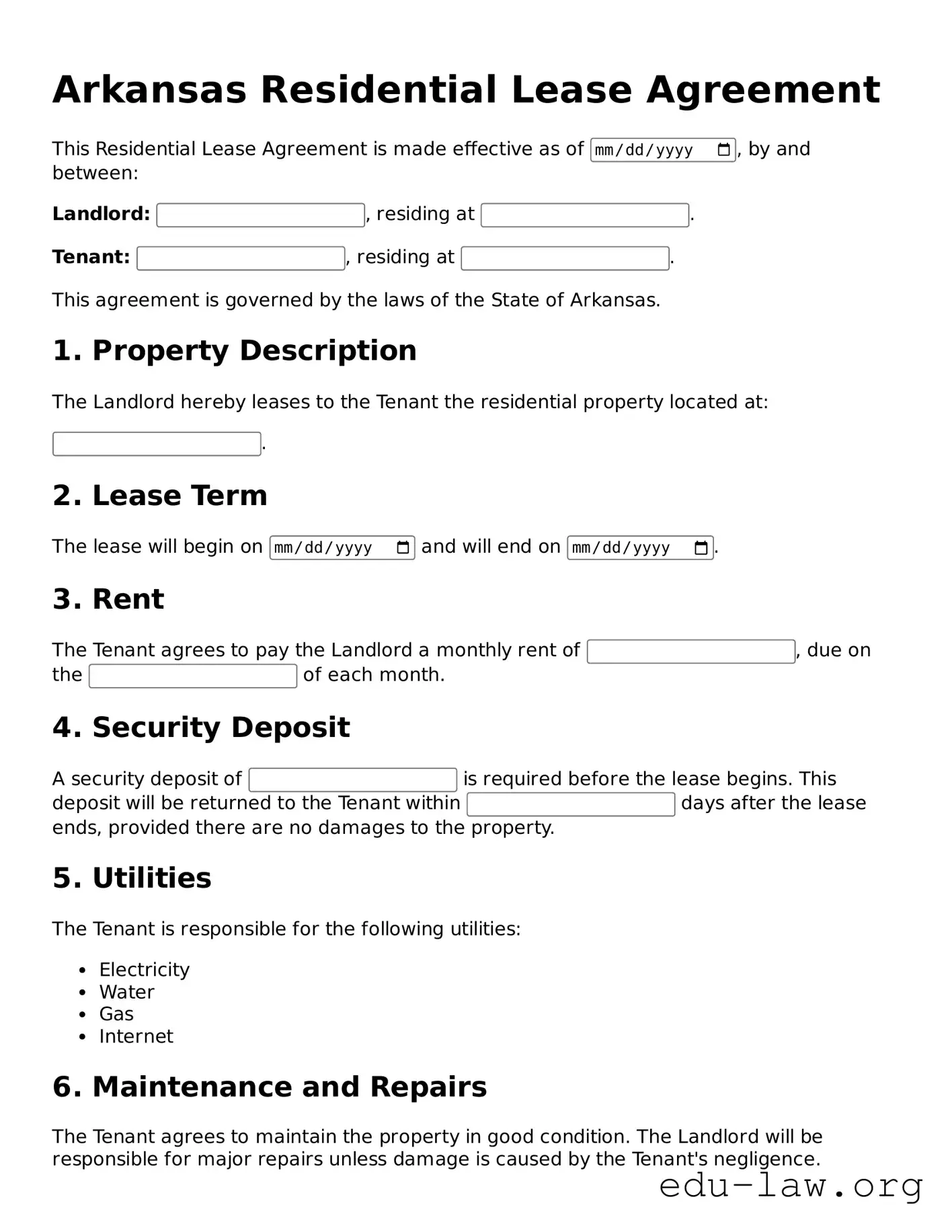
Arkansas Residential Lease Agreement
This Residential Lease Agreement is made effective as of , by and between:
Landlord: , residing at .
Tenant: , residing at .
This agreement is governed by the laws of the State of Arkansas.
1. Property Description
The Landlord hereby leases to the Tenant the residential property located at:
.
2. Lease Term
The lease will begin on and will end on .
3. Rent
The Tenant agrees to pay the Landlord a monthly rent of , due on the of each month.
4. Security Deposit
A security deposit of is required before the lease begins. This deposit will be returned to the Tenant within days after the lease ends, provided there are no damages to the property.
5. Utilities
The Tenant is responsible for the following utilities:
6. Maintenance and Repairs
The Tenant agrees to maintain the property in good condition. The Landlord will be responsible for major repairs unless damage is caused by the Tenant's negligence.
7. Termination
Either party may terminate this lease with a written notice of days.
8. Governing Law
This agreement shall be governed by the laws of the State of Arkansas.
IN WITNESS WHEREOF, the parties have executed this Residential Lease Agreement on the date first above written.
Landlord Signature: ____________________________
Date:
Tenant Signature: ____________________________
Date:
| Fact Name | Details |
|---|---|
| Governing Law | The Arkansas Residential Lease Agreement is governed by the Arkansas Code Annotated Title 18, Chapter 17. |
| Parties Involved | The agreement involves a landlord and a tenant, both of whom must be clearly identified. |
| Duration of Lease | The lease can be for a fixed term or a month-to-month arrangement, depending on the agreement. |
| Security Deposit | Arkansas law allows landlords to collect a security deposit, which cannot exceed two months' rent. |
| Rent Payment | The lease must specify the amount of rent and the due date for payments. |
| Maintenance Responsibilities | The agreement should outline the responsibilities of both the landlord and tenant regarding property maintenance. |
| Termination Notice | Notice requirements for terminating the lease vary based on the lease type, typically ranging from 30 days to the end of the lease term. |
Filling out the Arkansas Residential Lease Agreement form is an important step in establishing a rental agreement between a landlord and tenant. Once completed, this form will set the terms of the lease, including the responsibilities of both parties.
After completing these steps, both parties should keep a copy of the signed lease for their records. This ensures that everyone is aware of their rights and responsibilities under the agreement.
What is an Arkansas Residential Lease Agreement?
An Arkansas Residential Lease Agreement is a legal document that outlines the terms and conditions under which a landlord rents property to a tenant. This agreement typically includes details such as the rental amount, duration of the lease, security deposit requirements, and responsibilities of both parties. It serves to protect the rights of both landlords and tenants while providing a clear framework for the rental relationship.
What are the key components of the lease agreement?
The key components of an Arkansas Residential Lease Agreement include the names of the landlord and tenant, the property address, lease term (fixed or month-to-month), rent amount, payment due dates, security deposit details, maintenance responsibilities, and termination clauses. Additionally, the agreement may specify rules regarding pets, smoking, and other tenant behaviors. Clarity in these components helps prevent misunderstandings and disputes.
How long is a typical lease term in Arkansas?
A typical lease term in Arkansas can vary. Most commonly, leases are either for one year or month-to-month. A one-year lease provides stability for both the landlord and tenant, while a month-to-month lease offers flexibility. However, regardless of the lease term, it is important for both parties to understand their rights and obligations as defined in the agreement.
Can a landlord increase rent during the lease term?
Generally, a landlord cannot increase rent during the lease term unless the lease agreement specifically allows for such increases. For month-to-month agreements, landlords can typically raise the rent with proper notice, usually 30 days. However, any rent increase must comply with local laws and the terms outlined in the lease. Communication between the landlord and tenant is essential in these situations.
What happens if a tenant wants to terminate the lease early?
If a tenant wishes to terminate the lease early, they should first review the lease agreement for any early termination clauses. Many agreements require tenants to provide written notice and may impose penalties or require the tenant to pay rent until a new tenant is found. It is advisable for tenants to discuss their situation with the landlord to seek a mutually agreeable solution.
Are there any specific laws governing residential leases in Arkansas?
Yes, Arkansas has specific laws that govern residential leases. These laws cover various aspects, including security deposits, eviction processes, and tenant rights. For instance, landlords must return security deposits within a certain timeframe after the lease ends, minus any lawful deductions. Familiarity with these laws is crucial for both landlords and tenants to ensure compliance and protect their rights.
Incomplete Tenant Information: Many people forget to fill in all the required details about the tenant, such as full names and contact information. This can lead to confusion later on.
Missing Landlord Details: Just as tenant information is crucial, landlords often neglect to provide their complete name and address. This omission can complicate communication.
Failure to Specify Lease Duration: Some individuals do not clearly state the start and end dates of the lease. This can create uncertainty about the rental period.
Ignoring Rent Amount: It’s common for people to forget to specify the monthly rent amount or the due date. This oversight can lead to disputes over payment expectations.
Not Including Security Deposit Terms: Many lease agreements lack clear terms regarding the security deposit, such as the amount and conditions for its return. This can lead to misunderstandings.
Neglecting Maintenance Responsibilities: Failing to outline who is responsible for maintenance and repairs can lead to disputes between landlords and tenants.
Omitting Pet Policy: If pets are allowed, it’s essential to include specific terms. Some people forget to mention whether pets are permitted or not, leading to potential issues.
Overlooking Signatures: A common mistake is forgetting to sign the lease agreement. Without signatures, the document may not be legally binding.
Not Providing a Copy: After signing, landlords often forget to provide tenants with a copy of the signed lease. This can lead to confusion about the terms agreed upon.
Ignoring Local Laws: Some individuals fail to check local regulations regarding rental agreements. Ignoring these laws can result in unenforceable lease terms.
When entering into a rental agreement in Arkansas, several other forms and documents may accompany the Residential Lease Agreement. These documents help clarify the terms of the lease, protect the rights of both landlords and tenants, and ensure compliance with state laws.
Having these documents prepared and organized can streamline the leasing process and foster a positive landlord-tenant relationship. Each form plays a critical role in ensuring clarity and compliance throughout the rental period.
The Arkansas Residential Lease Agreement is similar to the standard Residential Lease Agreement used in many states across the U.S. Both documents outline the terms and conditions under which a landlord rents property to a tenant. They typically include information about the rental amount, duration of the lease, and responsibilities of both parties. The standard lease agreement serves the same purpose of protecting the rights of landlords and tenants, ensuring that both parties understand their obligations during the rental period.
Another document that resembles the Arkansas Residential Lease Agreement is the Commercial Lease Agreement. While primarily designed for commercial properties, this agreement shares many structural similarities with residential leases. Both types of agreements delineate the terms of occupancy, payment obligations, and maintenance responsibilities. However, commercial leases often include additional clauses related to business operations, which are not typically found in residential leases.
The month-to-month rental agreement is another document that aligns closely with the Arkansas Residential Lease Agreement. This type of agreement provides flexibility for both landlords and tenants. Like the residential lease, it specifies rental terms and conditions, but it allows either party to terminate the lease with short notice. This agreement is particularly beneficial for tenants who may not want to commit to a long-term lease.
The sublease agreement also shares characteristics with the Arkansas Residential Lease Agreement. A sublease allows a tenant to rent out their leased space to another individual. This document typically includes terms similar to those found in a residential lease, such as rental price, duration, and responsibilities. Both agreements aim to protect the interests of the original landlord while outlining the rights and obligations of the new tenant.
A lease-to-own agreement is another document that bears resemblance to the Arkansas Residential Lease Agreement. This type of agreement not only includes rental terms but also provides an option for the tenant to purchase the property after a specified period. Like the residential lease, it details payment terms and maintenance responsibilities, but it also incorporates conditions related to the eventual sale of the property.
The rental application form is a document that, while not a lease agreement itself, is closely related to the Arkansas Residential Lease Agreement. This form is used by landlords to screen potential tenants. It collects personal information, rental history, and financial details. The information gathered through the rental application informs the landlord's decision to enter into a lease agreement, ensuring that the tenant meets the necessary criteria.
Lastly, the rental addendum is a document that complements the Arkansas Residential Lease Agreement. An addendum is used to modify or add specific terms to the original lease. It may address issues such as pet policies, maintenance responsibilities, or additional fees. Like the lease agreement, it is legally binding and ensures that both parties are aware of any changes or additional stipulations regarding the rental arrangement.
When filling out the Arkansas Residential Lease Agreement form, it's crucial to pay attention to detail. Here’s a list of what you should and shouldn’t do:
By following these guidelines, you can help ensure a smoother leasing process and protect your rights as a tenant.
Here are ten common misconceptions about the Arkansas Residential Lease Agreement form, along with clarifications to help you better understand this important document.
This is not true. Lease agreements can be for various lengths, including month-to-month, six months, or longer. The duration is specified in the agreement.
Each lease can be customized to fit the needs of the landlord and tenant. Terms may vary based on specific circumstances or property types.
Negotiation is often possible before signing. Both parties can discuss terms to ensure they are comfortable with the agreement.
Landlords must provide notice before entering the rental unit, except in emergencies. This protects tenant privacy and rights.
Tenants also have the right to terminate the lease under certain conditions, such as breach of contract by the landlord or unsafe living conditions.
Security deposits can be refunded if the property is returned in good condition. Landlords must provide an itemized list of deductions if any money is withheld.
Written agreements are much easier to enforce. Verbal agreements can lead to misunderstandings and are harder to prove in disputes.
Notarization is not typically required for residential leases in Arkansas. However, it can add an extra layer of security.
Pet policies vary by lease. If a tenant wants to have pets, they must check the lease terms and possibly obtain permission from the landlord.
Unless specified in the lease, landlords generally cannot increase rent until the lease is up for renewal. However, there are exceptions based on local laws.
Understanding these misconceptions can help both landlords and tenants navigate their lease agreements more effectively.
When navigating the Arkansas Residential Lease Agreement form, it is essential to understand its components and implications. Here are some key takeaways to consider:
By paying attention to these elements, both landlords and tenants can foster a positive rental experience and mitigate potential conflicts.