In Arkansas, the Power of Attorney form serves as a vital legal tool that empowers individuals to designate someone they trust to make decisions on their behalf. This form can cover a wide range of responsibilities, from managing financial affairs to making healthcare choices. Whether you're planning for the future or addressing immediate needs, understanding the nuances of this document is essential. It allows you to specify the scope of authority granted to your agent, ensuring that your wishes are honored even when you may not be able to communicate them. Additionally, the form can be tailored to be effective immediately or to activate only under certain conditions, providing flexibility based on your unique situation. By taking the time to create a Power of Attorney, you are not only safeguarding your interests but also ensuring that your loved ones can act decisively when it matters most.
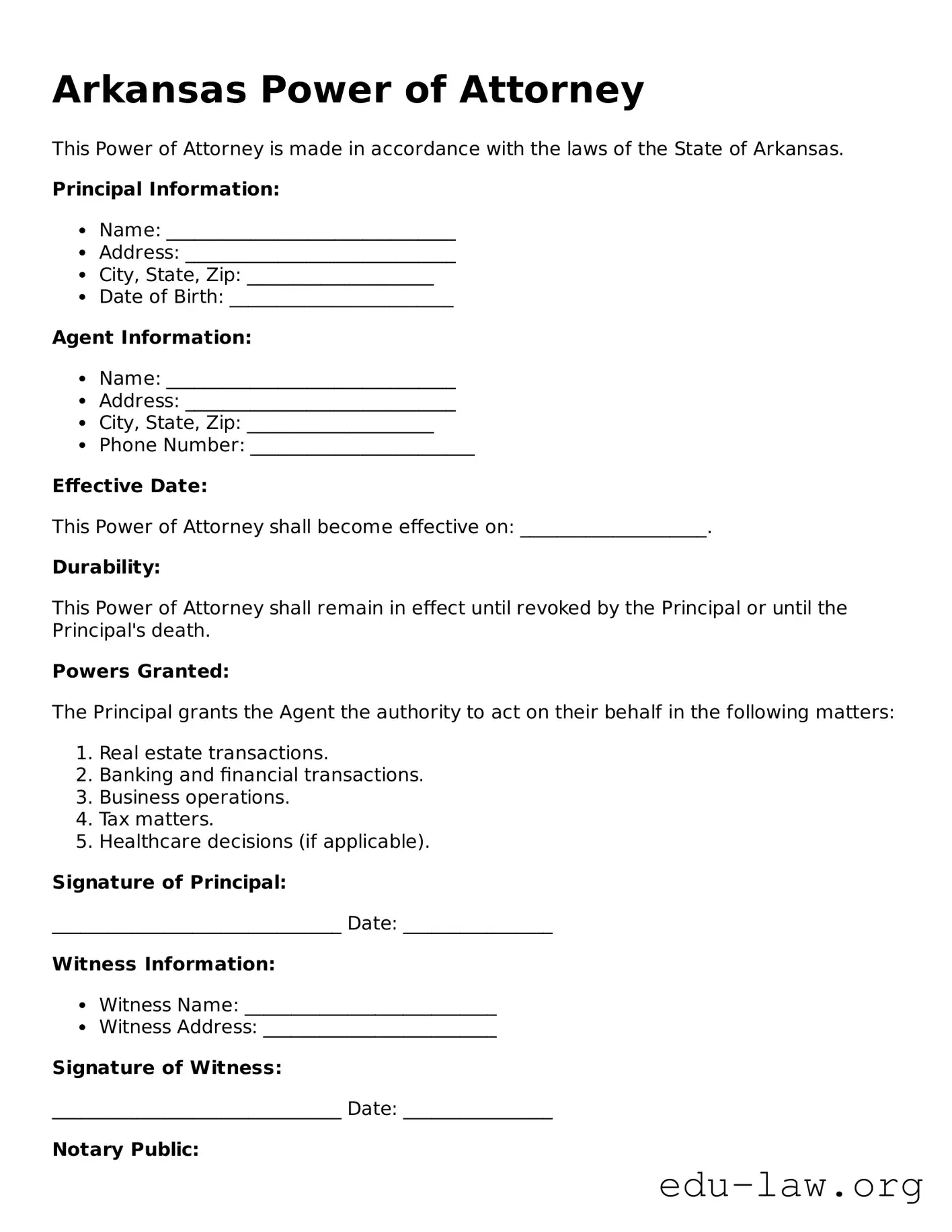
Arkansas Power of Attorney
This Power of Attorney is made in accordance with the laws of the State of Arkansas.
Principal Information:
Agent Information:
Effective Date:
This Power of Attorney shall become effective on: ____________________.
Durability:
This Power of Attorney shall remain in effect until revoked by the Principal or until the Principal's death.
Powers Granted:
The Principal grants the Agent the authority to act on their behalf in the following matters:
Signature of Principal:
_______________________________ Date: ________________
Witness Information:
Signature of Witness:
_______________________________ Date: ________________
Notary Public:
State of Arkansas, County of ________________
Subscribed and sworn before me this _____ day of ____________, 20__.
_______________________________
Notary Public Signature
My Commission Expires: ________________
| Fact Name | Details |
|---|---|
| Purpose | The Arkansas Power of Attorney form allows an individual to designate another person to make decisions on their behalf. |
| Governing Law | This form is governed by the Arkansas Code, Title 28, Chapter 68. |
| Types | There are various types of Power of Attorney forms, including durable, medical, and general. |
| Durability | A durable Power of Attorney remains effective even if the principal becomes incapacitated. |
| Agent Responsibilities | The appointed agent must act in the best interest of the principal and manage affairs responsibly. |
| Revocation | The principal can revoke the Power of Attorney at any time as long as they are competent. |
| Signing Requirements | The form must be signed by the principal and acknowledged before a notary public. |
| Effective Date | The Power of Attorney can be effective immediately or upon a specified future event. |
| Limitations | Some actions, like making a will, cannot be granted through a Power of Attorney. |
Filling out the Arkansas Power of Attorney form is an important step in designating someone to act on your behalf. Once completed, this document allows your chosen agent to manage your affairs as specified in the form. Follow the steps below to ensure you fill out the form correctly.
What is a Power of Attorney in Arkansas?
A Power of Attorney (POA) in Arkansas is a legal document that allows one person, known as the principal, to grant another person, called the agent or attorney-in-fact, the authority to act on their behalf. This can include making financial decisions, managing property, or handling legal matters. The principal can specify the extent of the agent's powers and can limit them to certain tasks or make them broad and general.
Who can be a principal and an agent in Arkansas?
In Arkansas, any adult who is mentally competent can serve as a principal. The agent must also be an adult and can be a trusted friend, family member, or even a professional, such as an attorney. It is important to choose someone reliable and trustworthy, as they will have significant control over your affairs.
How do I create a Power of Attorney in Arkansas?
To create a Power of Attorney in Arkansas, you must complete a written document that clearly states your intentions. The document should include your name, the name of your agent, and the specific powers you wish to grant. It must be signed by you in the presence of a notary public. While not required, it is advisable to have witnesses sign the document as well for added legal protection.
Can I revoke a Power of Attorney in Arkansas?
Yes, you can revoke a Power of Attorney at any time, as long as you are mentally competent. To revoke it, you must create a written notice stating your intention to revoke the POA and provide copies to your agent and any institutions or individuals who may have relied on the original document. This ensures that everyone is aware of the change and prevents any unauthorized actions by the former agent.
What happens if I become incapacitated and have a Power of Attorney?
If you become incapacitated and have a valid Power of Attorney in place, your agent can step in and make decisions on your behalf as outlined in the document. This can include managing your finances, making healthcare decisions, and handling legal matters. It is essential to choose an agent who understands your wishes and will act in your best interest during such a critical time.
Not specifying the powers granted. It is important to clearly outline what powers the agent will have.
Failing to date the form. Without a date, it may create confusion about when the authority begins.
Not signing in front of a notary. A notary's signature is often required for the document to be valid.
Choosing the wrong agent. Selecting someone who is not trustworthy or capable can lead to issues.
Not discussing the decision with the agent beforehand. This can lead to misunderstandings about their role.
Ignoring state-specific requirements. Each state has different rules that must be followed.
Using outdated forms. Always ensure you have the most current version of the Power of Attorney form.
Not revoking previous Powers of Attorney. If you have an existing document, it should be formally revoked.
Leaving sections blank. Every section should be filled out to avoid ambiguity.
Overlooking the need for witnesses. Some situations require additional witnesses for the form to be valid.
When considering a Power of Attorney in Arkansas, it's essential to understand that this document often works in conjunction with several other forms. These additional documents can provide clarity and support for your intentions. Below is a list of commonly used forms that you might encounter alongside a Power of Attorney.
Understanding these documents can help you make informed decisions about your legal and healthcare preferences. Each serves a unique purpose, ensuring that your wishes are respected and followed in various situations. Consider consulting with a legal professional to ensure that all necessary forms are completed accurately and reflect your intentions clearly.
The Arkansas Durable Power of Attorney is similar to the standard Power of Attorney but with one key difference: it remains effective even if the principal becomes incapacitated. This means that if a person is unable to make decisions due to illness or injury, their appointed agent can still act on their behalf. This document provides peace of mind, ensuring that someone trusted can manage financial and legal matters without interruption.
The Medical Power of Attorney allows an individual to designate someone to make healthcare decisions on their behalf. This document is crucial when the individual is unable to communicate their wishes due to medical conditions. Like the Arkansas Power of Attorney, it empowers a trusted person to act in the best interest of the individual, ensuring that their healthcare preferences are honored.
The Limited Power of Attorney grants an agent authority to act on behalf of the principal for specific tasks or a limited time. This document is useful for situations where someone needs to handle a particular transaction, such as selling a car or managing a property, without giving full control over all affairs. It’s a targeted approach that maintains the principal’s overall control while delegating specific responsibilities.
The Springing Power of Attorney only becomes effective under certain conditions, typically when the principal becomes incapacitated. This type of document provides flexibility, allowing the principal to retain control until it’s truly needed. It’s similar to the Durable Power of Attorney but adds a layer of conditionality that can be appealing for those who want to ensure their agent steps in only when necessary.
The Financial Power of Attorney focuses specifically on financial matters. It allows an agent to handle banking, investments, and other financial transactions. This document is essential for individuals who may need assistance managing their finances due to age or health issues. It aligns closely with the general Power of Attorney but narrows the scope to financial affairs.
The Revocation of Power of Attorney is a document that formally cancels a previously granted Power of Attorney. This is important for individuals who wish to change their agent or no longer want anyone to have the authority to act on their behalf. It ensures clarity and prevents any confusion about who has the authority to make decisions.
The Guardianship document is similar in that it allows a designated person to make decisions for someone who cannot make them themselves. However, guardianship is typically established through a court process, whereas a Power of Attorney is created privately. Both documents serve to protect individuals but differ in their level of oversight and the process of establishment.
The Trust Agreement allows for the management and distribution of assets during a person's life and after their death. While a Power of Attorney grants authority to make decisions on behalf of someone, a trust manages assets for the benefit of another. Both documents can work together, with a Power of Attorney handling immediate decisions and a trust overseeing long-term asset management.
When filling out the Arkansas Power of Attorney form, it's essential to follow certain guidelines to ensure that the document is valid and effective. Here’s a list of what you should and shouldn't do:
By following these guidelines, you can help ensure that your Power of Attorney is properly executed and meets your needs.
Understanding the Arkansas Power of Attorney form is crucial for anyone considering this legal document. However, several misconceptions can lead to confusion. Here are seven common misconceptions about the Arkansas Power of Attorney form:
Clarifying these misconceptions can help individuals make informed decisions regarding their Power of Attorney needs in Arkansas.
When considering the Arkansas Power of Attorney form, it is important to keep the following key takeaways in mind:
Being informed about these aspects can help ensure that the Power of Attorney serves its intended purpose effectively.