In Arkansas, the Power of Attorney for a Child form serves as a vital tool for parents and guardians who wish to delegate specific responsibilities regarding their child's care and welfare. This legal document allows a designated individual, often referred to as an agent, to make decisions on behalf of the child, ensuring that their needs are met even in the absence of the parents. Key aspects of this form include the ability to grant authority for medical care, educational decisions, and general day-to-day activities. Importantly, the Power of Attorney can be temporary or durable, depending on the circumstances, providing flexibility for families facing various situations. Additionally, the form requires signatures from both the parent and the agent, and it may need to be notarized to ensure its validity. Understanding the nuances of this document is essential for anyone looking to navigate the complexities of child care and custody arrangements in Arkansas.
Arkansas Power of Attorney for a Child
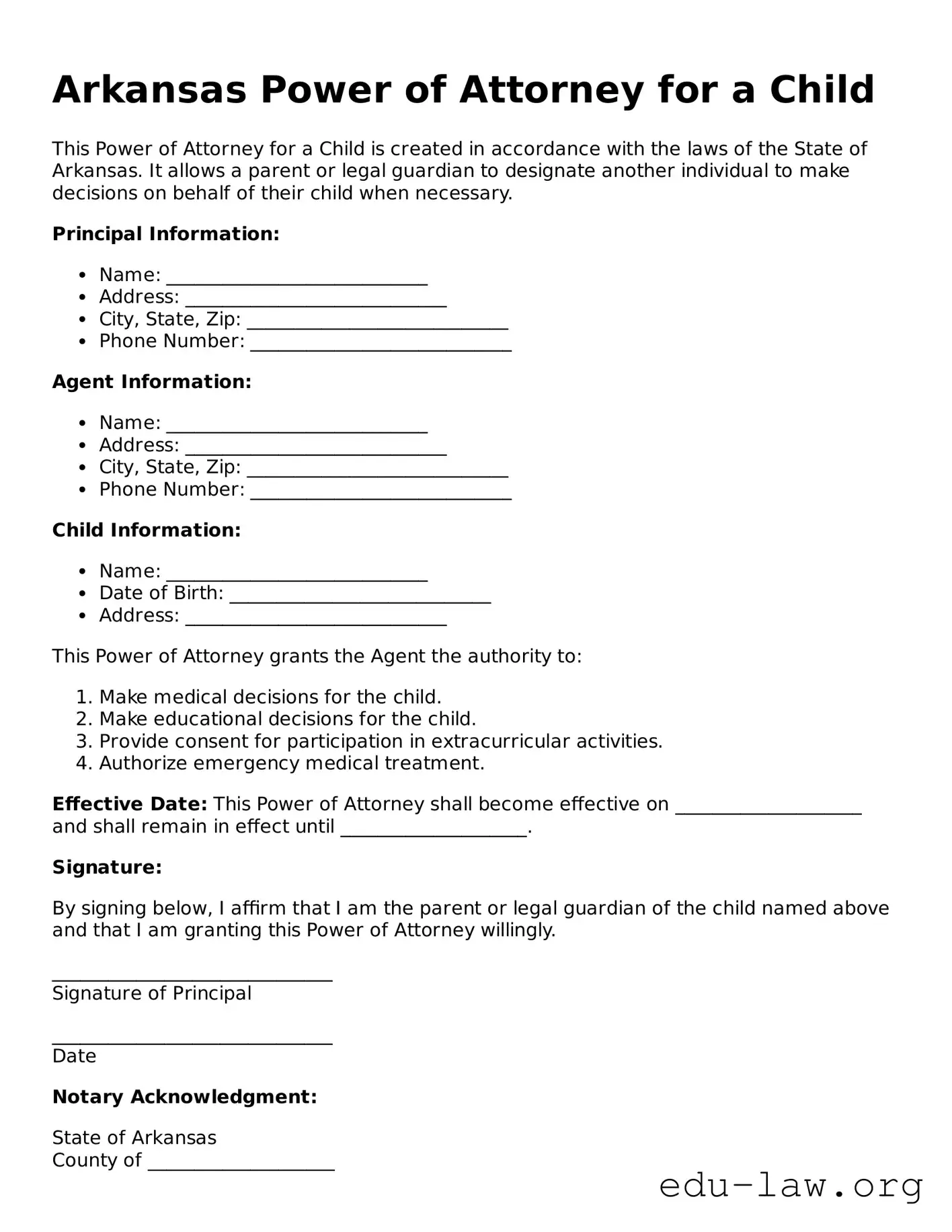
This Power of Attorney for a Child is created in accordance with the laws of the State of Arkansas. It allows a parent or legal guardian to designate another individual to make decisions on behalf of their child when necessary.
Principal Information:
Agent Information:
Child Information:
This Power of Attorney grants the Agent the authority to:
Effective Date: This Power of Attorney shall become effective on ____________________ and shall remain in effect until ____________________.
Signature:
By signing below, I affirm that I am the parent or legal guardian of the child named above and that I am granting this Power of Attorney willingly.
______________________________
Signature of Principal
______________________________
Date
Notary Acknowledgment:
State of Arkansas
County of ____________________
Subscribed and sworn before me this ______ day of ______________, 20__.
______________________________
Notary Public
My Commission Expires: ________________
| Fact Name | Description |
|---|---|
| Purpose | The Arkansas Power of Attorney for a Child form allows a parent or guardian to delegate authority to another adult for the care of their child. |
| Governing Law | This form is governed by Arkansas Code Annotated § 9-26-101 et seq. |
| Duration | The authority granted can be limited to a specific time period or until revoked by the parent or guardian. |
| Eligibility | Any adult can be appointed as an agent, provided they are willing to accept the responsibility. |
| Revocation | The parent or guardian can revoke the Power of Attorney at any time, as long as it is done in writing. |
| Notarization | The form must be signed in the presence of a notary public to be legally binding. |
| Limitations | The agent cannot make decisions regarding the child's medical care unless specifically authorized. |
| Usage | This form is commonly used for temporary situations, such as travel or short-term caregiving arrangements. |
Filling out the Arkansas Power of Attorney for a Child form is a straightforward process that allows a designated individual to make decisions on behalf of a child. After completing the form, ensure that all required signatures are obtained and that it is filed appropriately.
What is a Power of Attorney for a Child in Arkansas?
A Power of Attorney for a Child in Arkansas allows a parent or legal guardian to appoint another adult to make decisions on behalf of their child. This document is often used when the parent is unavailable due to travel, work commitments, or other reasons. The appointed person, known as the agent, can handle various responsibilities, including medical decisions and educational matters.
Who can serve as an agent under this Power of Attorney?
Any responsible adult can serve as an agent. This can be a relative, family friend, or trusted neighbor. It's essential to choose someone who understands your child's needs and can act in their best interest.
Do I need to have the Power of Attorney form notarized?
Yes, the form must be notarized to be valid in Arkansas. This step ensures that the document is legally recognized and that the signatures are authentic. Notarization adds an extra layer of protection for both the child and the agent.
How long does the Power of Attorney for a Child last?
The Power of Attorney can be set for a specific duration or remain in effect until revoked. If you specify a time frame, make sure it aligns with your needs. If no end date is mentioned, the authority generally lasts until the child turns 18 or the document is revoked.
Can I revoke the Power of Attorney for a Child?
Yes, you can revoke the Power of Attorney at any time. To do this, you should provide written notice to the agent and anyone else who may have received a copy of the original document. This ensures that everyone is aware of the change.
What decisions can the agent make on behalf of my child?
The agent can make a range of decisions, including those related to education, healthcare, and general welfare. However, it’s crucial to outline any specific limitations or preferences in the document to ensure your wishes are followed.
Is there a specific form I need to use for the Power of Attorney?
While Arkansas does not require a specific form, it is advisable to use a template that meets state requirements. This ensures that all necessary information is included and that the document is legally binding.
Can I use this Power of Attorney for medical decisions?
Yes, the Power of Attorney can include provisions for medical decisions. However, if you want to focus solely on medical matters, consider a separate medical power of attorney. This can provide more clarity regarding healthcare decisions.
What should I do if I have more questions about the Power of Attorney for a Child?
If you have more questions, consider consulting with a legal professional who specializes in family law. They can provide personalized advice and ensure that you understand all aspects of the Power of Attorney process.
Incomplete Information: Failing to fill out all required fields can lead to delays or rejection of the form. Ensure that all sections, including names and addresses, are fully completed.
Incorrect Signatures: The form must be signed by both the parent and the designated agent. Neglecting to obtain the necessary signatures can invalidate the document.
Not Notarizing: Many states, including Arkansas, require the Power of Attorney to be notarized. Skipping this step can result in the form being deemed unenforceable.
Misunderstanding Authority: Some individuals do not fully understand the powers granted to the agent. Clearly outline what authority is being given to avoid confusion later.
Failure to Specify Duration: Not indicating how long the Power of Attorney will remain in effect can create uncertainty. Specify a start and end date to ensure clarity.
Ignoring State-Specific Requirements: Each state has unique laws regarding Power of Attorney forms. Failing to adhere to Arkansas-specific regulations can lead to complications.
Not Informing the Child: It's important to communicate with the child about the arrangement. Not doing so can lead to misunderstandings and emotional distress.
When preparing a Power of Attorney for a Child in Arkansas, several other forms and documents may be necessary to ensure comprehensive legal authority and clarity. Each document serves a specific purpose in facilitating the care and decision-making for the child involved.
Using these documents in conjunction with the Power of Attorney for a Child can help clarify roles and responsibilities, ensuring that the child's needs are met effectively and legally.
The Arkansas Medical Power of Attorney allows an individual to designate someone to make medical decisions on their behalf if they become unable to do so. Similar to the Power of Attorney for a Child, this document empowers another person to act in the best interest of the individual. Both forms ensure that the designated person can make critical decisions, whether related to health care or the welfare of a child, reflecting the trust placed in them by the principal. The focus in both cases is on the well-being of another person, whether a child or an adult needing assistance.
The Arkansas Durable Power of Attorney is another document that shares similarities with the Power of Attorney for a Child. This form allows an individual to appoint someone to manage their financial and legal affairs, even if they become incapacitated. Like the Power of Attorney for a Child, it is designed to provide continuity and protection. Both documents require the principal to choose a trusted individual to act on their behalf, ensuring that decisions align with their wishes and best interests.
The Guardianship Petition is a legal document that may be filed to establish a guardian for a minor or an incapacitated adult. This document is similar to the Power of Attorney for a Child because it involves the appointment of someone to make decisions for another person. While the Power of Attorney is typically temporary and can be revoked, guardianship is a more permanent arrangement. Both documents aim to protect the vulnerable, but the processes and implications differ significantly.
The Child Custody Agreement outlines the terms of custody and visitation rights for children following a separation or divorce. This document resembles the Power of Attorney for a Child in that it addresses the care and decision-making for a child. Both forms prioritize the child's best interests, ensuring that responsible adults are involved in their upbringing. While a custody agreement often arises from legal proceedings, the Power of Attorney can be established voluntarily by parents or guardians.
The Child Care Authorization form allows a parent or guardian to grant permission for another adult to care for their child temporarily. This document is similar to the Power of Attorney for a Child because it authorizes another person to make decisions regarding the child's care. Both forms facilitate the involvement of trusted adults in a child's life, ensuring that they receive proper care and attention when parents are unavailable. The primary focus remains on the child's welfare in both cases.
When filling out the Arkansas Power of Attorney for a Child form, it is important to follow certain guidelines to ensure the document is valid and effective. Here are five things you should and shouldn't do:
Understanding the Arkansas Power of Attorney for a Child form can be tricky. Many people hold misconceptions about this important document. Let’s clear up some of the most common misunderstandings.
By dispelling these misconceptions, parents can make informed decisions about the care and welfare of their children. Understanding the Power of Attorney for a Child form can empower families to navigate complex situations with confidence.
When filling out and using the Arkansas Power of Attorney for a Child form, consider the following key takeaways: