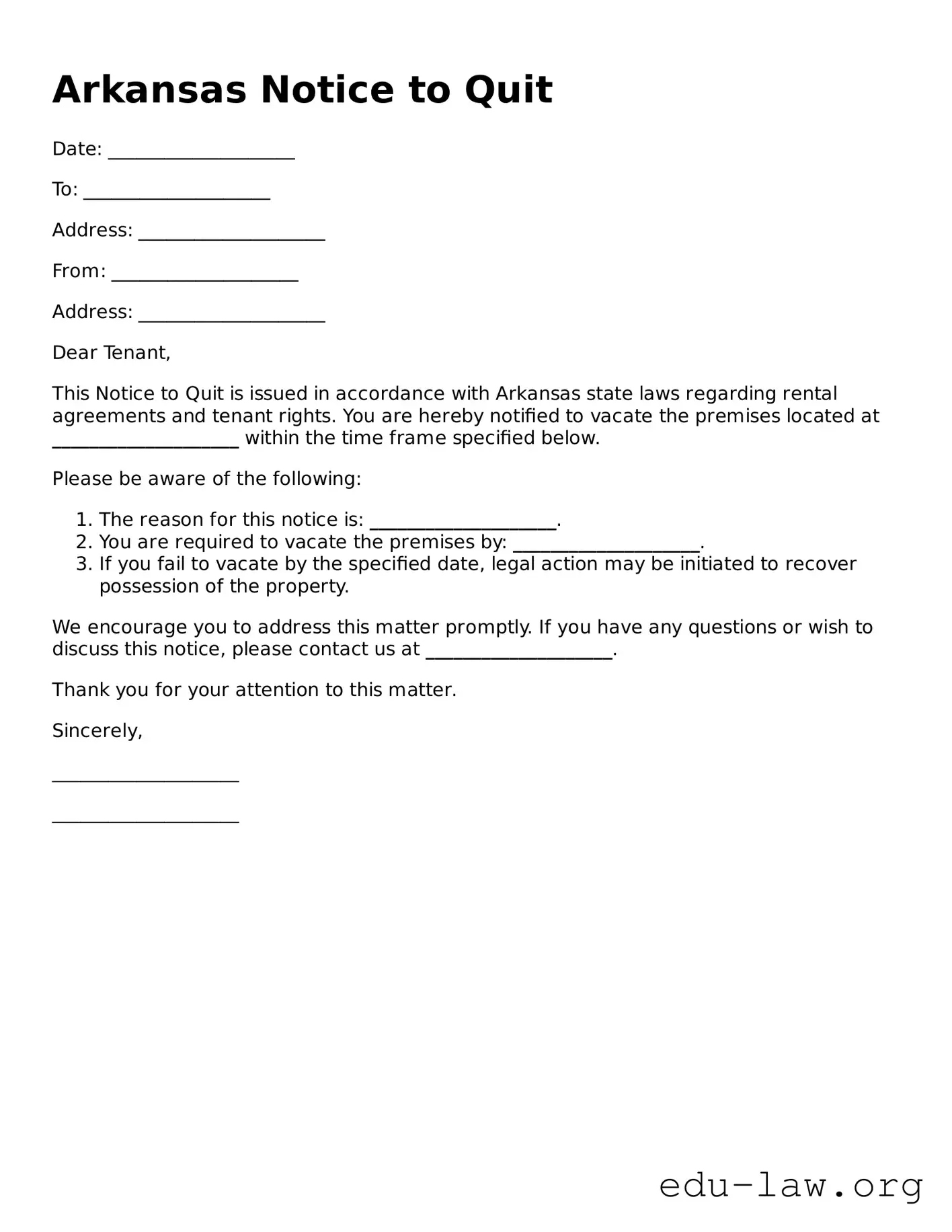
The Arkansas Notice to Quit form serves as an essential tool in the landlord-tenant relationship, particularly when it comes to ending a lease agreement. This document is typically used by landlords to formally request that a tenant vacate the rental property, often due to reasons such as non-payment of rent, lease violations, or the expiration of the lease term. Importantly, the form outlines the specific reasons for the request and provides a timeline for the tenant to respond or vacate. By adhering to the legal requirements associated with this notice, landlords can protect their rights while ensuring tenants are informed of their obligations. The Notice to Quit is not merely a formality; it represents a critical step in the eviction process, allowing both parties to understand their rights and responsibilities. Whether you are a landlord seeking to reclaim your property or a tenant trying to navigate the complexities of a potential eviction, understanding the nuances of this form is vital for a smooth transition and resolution.
Arkansas Notice to Quit
Date: ____________________
To: ____________________
Address: ____________________
From: ____________________
Address: ____________________
Dear Tenant,
This Notice to Quit is issued in accordance with Arkansas state laws regarding rental agreements and tenant rights. You are hereby notified to vacate the premises located at ____________________ within the time frame specified below.
Please be aware of the following:
We encourage you to address this matter promptly. If you have any questions or wish to discuss this notice, please contact us at ____________________.
Thank you for your attention to this matter.
Sincerely,
____________________
____________________
| Fact Name | Description |
|---|---|
| Purpose | The Arkansas Notice to Quit form is used by landlords to inform tenants that they must vacate the rental property. |
| Governing Law | This form is governed by Arkansas Code Annotated § 18-17-701. |
| Delivery Methods | The notice can be delivered in person, by mail, or posted on the property. |
| Timeframe | Tenants typically have 30 days to vacate after receiving the notice. |
| Contents Required | The notice must include the date, tenant's name, address of the property, and reason for termination. |
| Legal Consequences | If a tenant does not comply, the landlord may proceed with eviction proceedings in court. |
After you have gathered the necessary information, you are ready to fill out the Arkansas Notice to Quit form. This form is an important step in the process of addressing tenancy issues. Carefully following the instructions will help ensure that the form is completed accurately and effectively.
Once the form is filled out, it is essential to deliver it to the tenant. This can be done in person, by mail, or through another method that ensures the tenant receives it. Keeping a record of how and when the notice was delivered will be helpful for future reference.
What is an Arkansas Notice to Quit form?
The Arkansas Notice to Quit form is a legal document used by landlords to inform tenants that they must vacate the rental property. This notice is typically issued when a tenant has violated the terms of their lease agreement, such as failing to pay rent or causing damage to the property. It serves as a formal request for the tenant to leave and is a crucial step in the eviction process.
How much notice must be given to the tenant?
In Arkansas, the notice period can vary depending on the reason for the eviction. For non-payment of rent, landlords must provide a 14-day notice. If the tenant has violated other lease terms, a 30-day notice is generally required. It's important for landlords to ensure that the notice is delivered properly, as failure to do so can affect the eviction process.
Can a tenant contest a Notice to Quit?
Yes, tenants have the right to contest a Notice to Quit. If a tenant believes the notice was issued unfairly or if they have resolved the issue (like paying overdue rent), they can respond to the landlord. It's advisable for tenants to document their communications and seek legal advice if they feel their rights are being violated.
What happens if the tenant does not leave after receiving the notice?
If the tenant does not vacate the property after the notice period expires, the landlord can file for eviction in court. This legal process may involve a hearing where both parties can present their case. If the court rules in favor of the landlord, a judgment will be issued, allowing the landlord to proceed with eviction. It's essential for landlords to follow the legal steps carefully to avoid complications.
Failing to Provide Accurate Tenant Information: One common mistake is not filling in the tenant's name or address correctly. This can lead to confusion and may delay the eviction process.
Not Specifying the Reason for Termination: The form requires a clear reason for the notice. Omitting this information can render the notice ineffective and complicate legal proceedings.
Incorrectly Stating the Notice Period: Arkansas law mandates specific notice periods depending on the reason for eviction. Miscalculating this time frame can result in the notice being invalid.
Failure to Sign and Date the Form: A common oversight is neglecting to sign and date the Notice to Quit. Without a signature, the document may not hold legal weight, jeopardizing the eviction process.
When dealing with rental agreements and tenant evictions in Arkansas, several forms and documents often accompany the Notice to Quit. Understanding these forms can help clarify the process and ensure that all necessary steps are taken. Here’s a brief overview of some of the commonly used documents.
Each of these documents plays a crucial role in the landlord-tenant relationship and the eviction process. Familiarity with them can help both parties navigate their rights and responsibilities more effectively.
The Arkansas Notice to Quit form shares similarities with the Eviction Notice, commonly used across various states. Both documents serve as formal notifications to tenants, signaling that they must vacate the premises. An Eviction Notice typically outlines the reasons for termination, whether due to non-payment of rent or lease violations, and specifies a timeframe within which the tenant must respond or leave. This document is essential for landlords seeking to initiate legal proceedings should the tenant fail to comply.
Another document that parallels the Arkansas Notice to Quit is the Lease Termination Letter. This letter can be issued by either the landlord or tenant to formally end a lease agreement. While the Notice to Quit focuses on immediate eviction, the Lease Termination Letter may provide a longer notice period and does not necessarily imply wrongdoing. It simply communicates the intention to terminate the lease, allowing both parties to prepare for the transition.
Similar to these, the Pay or Quit Notice is a specific type of eviction notice that demands payment of overdue rent. This document serves as a warning to tenants who have fallen behind on their rent. It outlines the amount owed and gives a specified timeframe to make payment or face eviction. Like the Arkansas Notice to Quit, it emphasizes the urgency of the situation but is more focused on financial obligations.
The Three-Day Notice to Pay Rent or Quit is another document that shares characteristics with the Arkansas Notice to Quit. This notice is often used in states with stricter timelines, requiring tenants to either pay their rent or vacate the property within three days. The urgency conveyed in this notice mirrors the intent of the Arkansas form, as both aim to prompt swift action from tenants who are in arrears.
The Notice of Non-Renewal is also comparable, as it informs tenants that their lease will not be renewed at the end of the term. While it does not necessarily require immediate action like the Notice to Quit, it serves as a formal communication that the tenant must prepare to vacate the premises. Both documents convey the landlord's intention to end the tenancy, albeit through different mechanisms.
In addition, the Conditional Quit Notice presents another similarity. This document is issued when a tenant has violated specific terms of the lease, such as causing damage or engaging in illegal activities. It gives the tenant a chance to rectify the issue within a specified period before eviction proceedings can commence. Like the Arkansas Notice to Quit, it highlights the necessity for tenants to address issues promptly to avoid further legal action.
The Notice to Cure is another relevant document that shares traits with the Arkansas Notice to Quit. This notice is typically issued when a tenant has breached a lease agreement, allowing them a chance to correct the violation within a certain timeframe. Both documents aim to inform tenants of their obligations and the consequences of failing to comply, although the Notice to Cure focuses on remedying specific issues rather than immediate eviction.
Furthermore, the Notice of Lease Violation serves a similar purpose by informing tenants of breaches in their lease agreements. This notice details the specific violations and provides a timeframe for the tenant to address the issues. Like the Arkansas Notice to Quit, it underscores the importance of adhering to the terms of the lease and the potential repercussions of non-compliance.
The Unlawful Detainer Notice also aligns with the Arkansas Notice to Quit in its function. This document is often part of the legal process initiated by landlords to formally request a court hearing for eviction. While the Notice to Quit serves as a preliminary step, the Unlawful Detainer Notice escalates the situation to a legal level, emphasizing the seriousness of the tenant's failure to vacate the property.
Lastly, the Rent Demand Letter can be compared to the Arkansas Notice to Quit, as it serves as a formal request for overdue rent. This letter typically outlines the amount owed and may serve as a precursor to eviction proceedings if the rent remains unpaid. Both documents aim to prompt action from tenants regarding their financial obligations, highlighting the necessity of maintaining communication between landlords and tenants.
When filling out the Arkansas Notice to Quit form, it is essential to approach the task with care and attention to detail. Here are some important do's and don'ts to consider:
By following these guidelines, you can help ensure that the process is handled correctly and efficiently. Take the time to review your form before submission to avoid any potential issues.
Many people have misunderstandings about the Arkansas Notice to Quit form. Here are some common misconceptions:
Understanding these misconceptions can help both landlords and tenants navigate the process more effectively.
When dealing with rental agreements in Arkansas, understanding the Notice to Quit form is essential for both landlords and tenants. Here are some key takeaways to consider:
By keeping these points in mind, both landlords and tenants can navigate the process more effectively and ensure that their rights and responsibilities are respected.