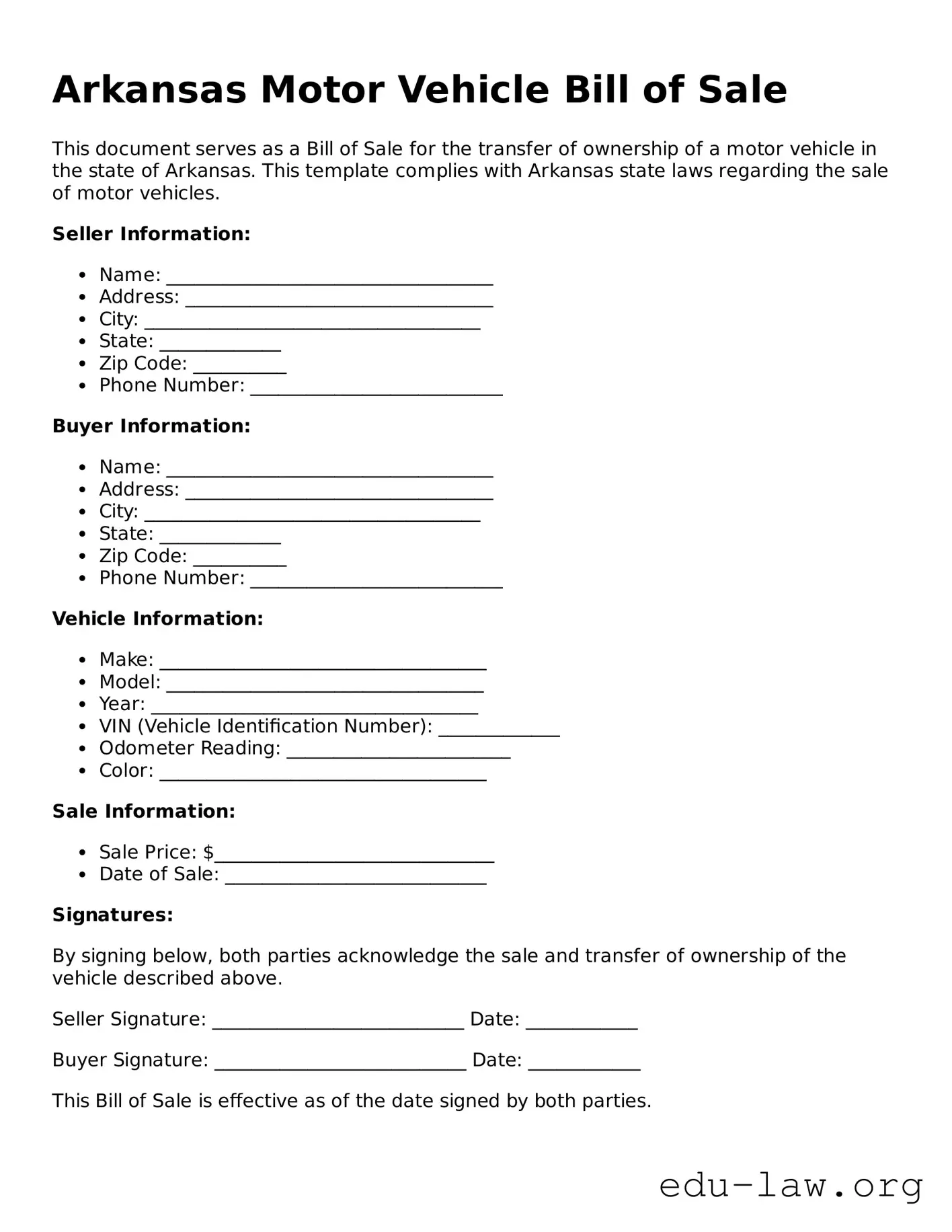
When it comes to buying or selling a vehicle in Arkansas, the Motor Vehicle Bill of Sale form serves as a crucial document that facilitates the transfer of ownership between parties. This form captures essential information, including the names and addresses of both the seller and the buyer, the vehicle's make, model, year, and identification number (VIN), as well as the sale price. By providing a written record of the transaction, the Bill of Sale protects both the buyer and the seller by documenting the terms of the sale. Additionally, it often includes important details such as the date of the sale and any warranties or representations made by the seller regarding the vehicle's condition. This form not only aids in the registration process but also serves as proof of ownership, which can be vital in cases of disputes or future sales. Understanding the significance of the Motor Vehicle Bill of Sale in Arkansas can help ensure a smooth transaction and provide peace of mind for all parties involved.
Arkansas Motor Vehicle Bill of Sale
This document serves as a Bill of Sale for the transfer of ownership of a motor vehicle in the state of Arkansas. This template complies with Arkansas state laws regarding the sale of motor vehicles.
Seller Information:
Buyer Information:
Vehicle Information:
Sale Information:
Signatures:
By signing below, both parties acknowledge the sale and transfer of ownership of the vehicle described above.
Seller Signature: ___________________________ Date: ____________
Buyer Signature: ___________________________ Date: ____________
This Bill of Sale is effective as of the date signed by both parties.
| Fact Name | Description |
|---|---|
| Purpose | The Arkansas Motor Vehicle Bill of Sale serves as a legal document to record the sale of a vehicle between a buyer and a seller. |
| Governing Law | This form is governed by Arkansas Code Annotated § 27-14-101 et seq., which outlines vehicle registration and titling laws. |
| Required Information | The form must include details such as the vehicle identification number (VIN), make, model, year, and odometer reading. |
| Signatures | Both the buyer and seller must sign the document to validate the transaction. |
| Notarization | While notarization is not required, it is recommended to add an extra layer of authenticity. |
| Record Keeping | Both parties should keep a copy of the Bill of Sale for their records after the transaction is completed. |
| Transfer of Ownership | The Bill of Sale acts as proof of ownership transfer and is often required for vehicle registration. |
| Sales Tax | Sales tax may apply to the transaction, and it is the buyer's responsibility to pay it during registration. |
After obtaining the Arkansas Motor Vehicle Bill of Sale form, it is essential to complete it accurately. This document serves as proof of the sale and includes important details about the vehicle and the parties involved. Follow the steps below to ensure all necessary information is provided correctly.
What is a Motor Vehicle Bill of Sale in Arkansas?
A Motor Vehicle Bill of Sale is a legal document that records the sale of a vehicle between a buyer and a seller. This document serves as proof of the transaction and includes essential details such as the vehicle's make, model, year, VIN (Vehicle Identification Number), sale price, and the names and addresses of both parties involved in the sale.
Is a Bill of Sale required to sell a vehicle in Arkansas?
While a Bill of Sale is not legally required in Arkansas, it is highly recommended. This document protects both the buyer and the seller by providing a written record of the transaction. It can also be useful for tax purposes and when registering the vehicle with the state.
What information should be included in the Bill of Sale?
The Bill of Sale should include the following information: the names and addresses of the buyer and seller, the vehicle's make, model, year, and VIN, the sale price, the date of the sale, and any additional terms or conditions agreed upon by both parties. Both parties should sign the document to validate it.
Can I create my own Bill of Sale?
Yes, you can create your own Bill of Sale as long as it includes all the necessary information. However, using a standardized form can help ensure that you do not miss any important details. Various templates are available online that comply with Arkansas regulations.
Do I need to have the Bill of Sale notarized?
Notarization is not required for a Bill of Sale in Arkansas. However, having it notarized can add an extra layer of security and authenticity to the document, which may be beneficial if any disputes arise in the future.
How does a Bill of Sale affect vehicle registration?
A Bill of Sale is often required when registering a vehicle in Arkansas. It serves as proof of ownership and may be needed to complete the registration process with the Arkansas Department of Finance and Administration. Ensure you keep a copy for your records.
What if the vehicle has a lien on it?
If there is a lien on the vehicle, the seller must disclose this information to the buyer. The Bill of Sale should indicate whether the lien has been paid off or if the buyer will assume responsibility for it. It's crucial for the buyer to understand any outstanding obligations before completing the sale.
Where can I obtain a Motor Vehicle Bill of Sale form?
You can find a Motor Vehicle Bill of Sale form through various sources. Many online legal websites offer free or paid templates. Additionally, the Arkansas Department of Finance and Administration may provide a form on their website or in their offices. Always ensure that the form you use complies with state requirements.
Failing to include the date of sale. This is crucial for establishing when the transaction took place.
Not providing the VIN (Vehicle Identification Number). This unique number is essential for identifying the vehicle and ensuring the buyer receives clear title.
Omitting the purchase price. It's important to state how much the vehicle was sold for, as this can affect taxes and registration.
Neglecting to sign the form. Both the seller and buyer must sign to validate the transaction.
Using incorrect or incomplete information for the seller's and buyer's details. Full names and addresses are necessary to avoid confusion later.
Not checking the odometer reading. This figure should be accurately recorded to inform the buyer of the vehicle's mileage.
Forgetting to include any liens or loans on the vehicle. Disclosing this information is important for the buyer's peace of mind.
Leaving out the vehicle description. Details such as make, model, year, and color help to clearly identify the vehicle being sold.
Not keeping a copy of the completed form. Both parties should retain a copy for their records in case of future disputes.
When completing a vehicle transaction in Arkansas, several documents accompany the Motor Vehicle Bill of Sale form to ensure a smooth transfer of ownership. Each document serves a specific purpose in the process, helping both the buyer and seller fulfill legal requirements.
Using these documents in conjunction with the Arkansas Motor Vehicle Bill of Sale form facilitates a clear and legal transfer of vehicle ownership, protecting both parties involved in the transaction.
The Arkansas Motor Vehicle Bill of Sale form shares similarities with the General Bill of Sale. Both documents serve as proof of a transaction involving the sale of personal property. They outline essential details such as the buyer and seller's names, the description of the item being sold, and the sale price. This form can be used for various types of property, not just vehicles, making it versatile for different transactions. Like the Motor Vehicle Bill of Sale, it is important for both parties to retain a copy for their records.
Another document akin to the Arkansas Motor Vehicle Bill of Sale is the Vehicle Title Transfer form. This form is specifically used when ownership of a vehicle changes hands. It typically includes information about the vehicle, such as its VIN, make, model, and year. While the Bill of Sale serves as a receipt for the transaction, the Vehicle Title Transfer formally updates the ownership records with the state. Both documents are crucial in ensuring that the buyer has legal ownership of the vehicle.
The Odometer Disclosure Statement is also similar to the Arkansas Motor Vehicle Bill of Sale. This document is often required when a vehicle is sold, as it provides a record of the vehicle's mileage at the time of sale. The purpose is to prevent fraud and protect buyers from purchasing vehicles with rolled-back odometers. Like the Bill of Sale, it must be completed and signed by both the buyer and seller to be valid.
The Purchase Agreement is another document that resembles the Arkansas Motor Vehicle Bill of Sale. This agreement outlines the terms of the sale, including payment methods, delivery timelines, and any warranties or guarantees. While the Bill of Sale serves as a simple record of the transaction, the Purchase Agreement often contains more detailed terms and conditions. Both documents protect the interests of both parties involved in the sale.
The Affidavit of Vehicle Ownership can also be likened to the Arkansas Motor Vehicle Bill of Sale. This document is used when a person is unable to provide a title for a vehicle, often due to loss or theft. The affidavit serves as a sworn statement affirming the individual’s ownership of the vehicle. While the Bill of Sale provides a record of the transaction, the Affidavit is crucial for establishing ownership in situations where the title is unavailable.
Lastly, the IRS Form 1099-S is similar in that it reports the sale of a vehicle for tax purposes. When a vehicle is sold, the seller may need to report the transaction to the IRS, particularly if the sale results in a profit. While the Arkansas Motor Vehicle Bill of Sale documents the details of the sale, the 1099-S ensures compliance with federal tax regulations. Both forms work together to provide a complete picture of the transaction for both parties.
When filling out the Arkansas Motor Vehicle Bill of Sale form, it’s important to follow certain guidelines. Here are seven things you should and shouldn’t do:
Following these guidelines will help ensure a smooth transaction.
When dealing with the Arkansas Motor Vehicle Bill of Sale form, it's easy to misunderstand certain aspects. Here are seven common misconceptions, along with clarifications to help you navigate the process more effectively.
This is not true. A Bill of Sale is important for any vehicle transaction, regardless of the price. It provides proof of ownership and protects both the buyer and seller.
While notarization can add an extra layer of security, it is not a requirement in Arkansas for the Bill of Sale to be valid. A simple signature from both parties is sufficient.
Generic forms may not meet Arkansas's specific requirements. It’s best to use the official Arkansas Motor Vehicle Bill of Sale form to ensure compliance with state laws.
In Arkansas, the seller is not obligated to provide a warranty unless explicitly stated in the Bill of Sale. Most sales are "as-is," meaning the buyer accepts the vehicle in its current condition.
Even dealerships may require a Bill of Sale for vehicle transactions. It serves as a record of the sale, regardless of whether it’s a private or commercial transaction.
Even after registering the vehicle, the Bill of Sale remains an important document. It can serve as proof of ownership and may be needed for future transactions or disputes.
In Arkansas, federal law requires an odometer disclosure for vehicles under 10 years old. Ignoring this requirement can lead to legal issues down the line.
Understanding these misconceptions can help ensure a smoother transaction process when buying or selling a vehicle in Arkansas.
Filling out and using the Arkansas Motor Vehicle Bill of Sale form is essential for both buyers and sellers in a vehicle transaction. Here are key takeaways to consider:
Understanding these key points can facilitate a smooth transaction and ensure compliance with Arkansas laws.