The Arkansas Medical Power of Attorney form is a crucial document that allows individuals to designate a trusted person to make healthcare decisions on their behalf in the event they become unable to do so. This form empowers the appointed agent to act in accordance with the individual's wishes regarding medical treatment and care, ensuring that personal values and preferences are respected. It is essential to choose someone who understands your healthcare desires and can advocate effectively for you. The form typically includes sections for the principal to outline specific instructions, limitations, or preferences related to medical interventions, such as life-sustaining treatments. Additionally, it provides clarity on the scope of authority granted to the agent, which can include decisions about medications, surgeries, and end-of-life care. By completing this form, individuals can gain peace of mind knowing that their healthcare choices will be honored, even when they are unable to communicate them directly. Understanding the significance of this document is vital for anyone looking to ensure their medical decisions align with their personal beliefs and values.
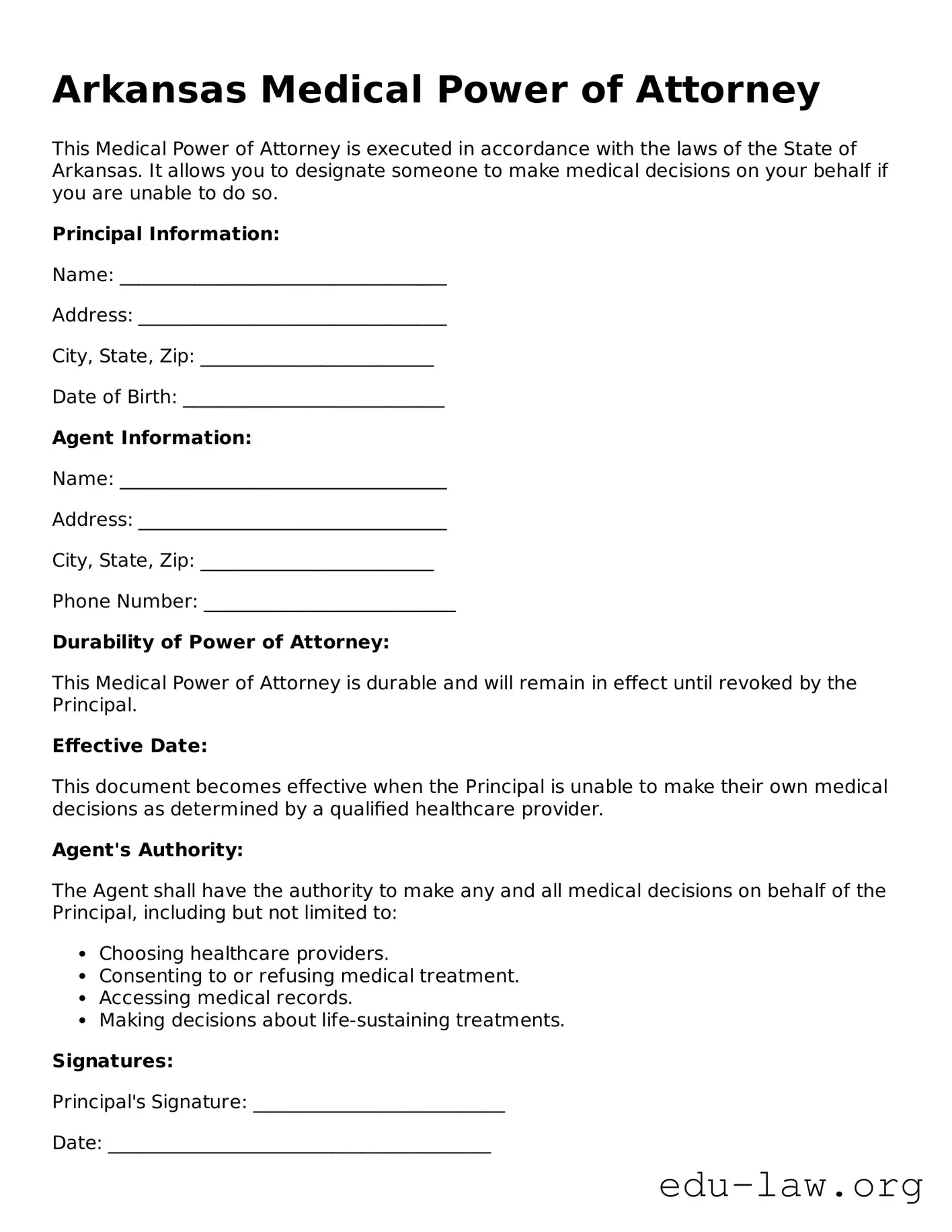
Arkansas Medical Power of Attorney
This Medical Power of Attorney is executed in accordance with the laws of the State of Arkansas. It allows you to designate someone to make medical decisions on your behalf if you are unable to do so.
Principal Information:
Name: ___________________________________
Address: _________________________________
City, State, Zip: _________________________
Date of Birth: ____________________________
Agent Information:
Name: ___________________________________
Address: _________________________________
City, State, Zip: _________________________
Phone Number: ___________________________
Durability of Power of Attorney:
This Medical Power of Attorney is durable and will remain in effect until revoked by the Principal.
Effective Date:
This document becomes effective when the Principal is unable to make their own medical decisions as determined by a qualified healthcare provider.
Agent's Authority:
The Agent shall have the authority to make any and all medical decisions on behalf of the Principal, including but not limited to:
Signatures:
Principal's Signature: ___________________________
Date: _________________________________________
Witness Signature: _____________________________
Date: _________________________________________
Notary Acknowledgment:
State of Arkansas
County of _________________________________
Subscribed and sworn before me this _____ day of __________, 20__.
Notary Public: ______________________________
My Commission Expires: _____________________
| Fact Name | Description |
|---|---|
| Purpose | The Arkansas Medical Power of Attorney form allows an individual to designate someone to make healthcare decisions on their behalf if they become unable to do so. |
| Governing Law | This form is governed by the Arkansas Code Annotated, specifically under Title 20, Chapter 6, which addresses health care decisions and powers of attorney. |
| Requirements | To be valid, the form must be signed by the principal in the presence of two witnesses or a notary public. Witnesses cannot be related to the principal or have any claim to the principal's estate. |
| Revocation | The principal can revoke the Medical Power of Attorney at any time, as long as they are mentally competent. This can be done verbally or in writing. |
Filling out the Arkansas Medical Power of Attorney form is an important step in ensuring your healthcare decisions are honored when you are unable to make them yourself. It’s crucial to complete this form accurately and promptly to avoid any delays in your medical care.
Once you have filled out the form, ensure that it is stored in a safe place and that your appointed agent knows where to find it. This will help facilitate your healthcare decisions when necessary.
What is a Medical Power of Attorney in Arkansas?
A Medical Power of Attorney (MPOA) is a legal document that allows you to appoint someone to make healthcare decisions on your behalf if you become unable to do so. This trusted individual, known as your agent or proxy, will act according to your wishes regarding medical treatment and care. It's an important tool to ensure your healthcare preferences are honored when you cannot communicate them yourself.
Who can be appointed as my agent in the Medical Power of Attorney?
In Arkansas, you can choose almost anyone to be your agent, as long as they are at least 18 years old and capable of making decisions. This could be a family member, close friend, or even a trusted advisor. However, it’s essential to select someone who understands your values and preferences regarding medical care.
Do I need a lawyer to create a Medical Power of Attorney?
No, you do not need a lawyer to create a Medical Power of Attorney in Arkansas. The state provides a simple form that you can fill out on your own. However, consulting with a legal professional can help ensure that your document is valid and reflects your wishes accurately, especially if your situation is complex.
What happens if I don’t have a Medical Power of Attorney?
If you do not have a Medical Power of Attorney in place and become incapacitated, medical decisions will be made by your family members or healthcare providers according to state laws. This can lead to disagreements among family members or decisions that may not align with your personal wishes. Having an MPOA in place helps avoid these complications.
Can I revoke or change my Medical Power of Attorney?
Yes, you can revoke or change your Medical Power of Attorney at any time, as long as you are mentally competent. To revoke it, you should inform your agent and any healthcare providers about your decision. It’s also wise to create a new MPOA if you wish to appoint someone else or change your preferences.
Is my Medical Power of Attorney valid in other states?
Generally, a Medical Power of Attorney created in Arkansas is recognized in other states, but it’s advisable to check the specific laws of the state where you are located. Some states have different requirements or forms, so if you spend significant time in another state, consider creating an MPOA that complies with that state’s laws.
What should I discuss with my agent before signing the MPOA?
Before signing your Medical Power of Attorney, have an open conversation with your chosen agent about your healthcare preferences, values, and any specific wishes you have regarding medical treatment. Discuss scenarios that may arise and how you would like them to be handled. This conversation will ensure that your agent is prepared to make decisions that align with your desires.
How do I ensure my Medical Power of Attorney is legally binding?
To ensure your Medical Power of Attorney is legally binding in Arkansas, you must sign the document in the presence of a notary public or two witnesses who are not related to you or beneficiaries of your estate. This step verifies your identity and confirms that you are signing the document voluntarily. Make sure to keep copies of the signed MPOA for your records and provide copies to your agent and healthcare providers.
Not clearly identifying the principal. It's crucial to include the full name and address of the person granting authority. Omitting this information can lead to confusion about who the document pertains to.
Failing to choose an appropriate agent. Selecting someone who is not trustworthy or lacks the ability to make tough decisions can result in complications during critical times.
Not specifying the powers granted. Be explicit about what decisions the agent can make. Vague language can lead to misunderstandings and limit the effectiveness of the document.
Neglecting to sign and date the form. A Medical Power of Attorney is not valid without the principal's signature and the date it was signed. This step is essential for legal recognition.
Forgetting to have witnesses or a notary. Arkansas law requires that the form be signed in the presence of two witnesses or a notary public. Skipping this step can invalidate the document.
Not reviewing the document regularly. Life circumstances change, and so do relationships. Failing to update the form can lead to outdated decisions being made on behalf of the principal.
Overlooking state-specific requirements. Each state has its own rules regarding Medical Power of Attorney forms. Not adhering to Arkansas-specific guidelines can render the document ineffective.
Assuming verbal agreements are enough. Relying on spoken promises instead of formal documentation can lead to disputes and challenges when decisions need to be made.
Not discussing the document with the chosen agent. It's essential for the agent to understand their responsibilities and the principal's wishes. Lack of communication can lead to conflicts and confusion.
When preparing a Medical Power of Attorney in Arkansas, it is beneficial to consider additional forms and documents that can complement this important legal tool. These documents help ensure that your healthcare preferences are respected and that your wishes are clear in various situations.
Having these documents in place alongside your Medical Power of Attorney can provide peace of mind. They help ensure that your healthcare and personal preferences are honored, even when you cannot advocate for yourself.
The Arkansas Medical Power of Attorney form is similar to a General Power of Attorney. Both documents allow individuals to designate someone to make decisions on their behalf. However, the General Power of Attorney covers a broader range of decisions, including financial and legal matters, while the Medical Power of Attorney specifically focuses on health care decisions. This distinction is crucial for individuals who want to ensure that their medical preferences are clearly articulated and respected during times of incapacity.
Another document that shares similarities is the Living Will. While the Medical Power of Attorney appoints someone to make health care decisions, a Living Will outlines specific wishes regarding medical treatment in situations where a person is unable to communicate. Both documents work together to ensure that an individual's health care preferences are honored. The Living Will provides guidance to the appointed agent in the Medical Power of Attorney, ensuring that decisions align with the individual's values and wishes.
The Health Care Proxy is also comparable to the Arkansas Medical Power of Attorney. Like the Medical Power of Attorney, the Health Care Proxy allows an individual to appoint someone to make medical decisions if they become incapacitated. The key difference lies in the terminology and potential state-specific regulations. In some states, the terms may be used interchangeably, but the intent remains the same: to ensure that someone trusted can advocate for the individual's health care preferences when they cannot do so themselves.
A Do Not Resuscitate (DNR) order is another related document. While the Medical Power of Attorney allows for the appointment of a decision-maker, a DNR specifically instructs medical personnel not to perform CPR in the event of cardiac arrest. Both documents reflect an individual's wishes regarding end-of-life care. However, the DNR is more focused on immediate medical intervention, while the Medical Power of Attorney encompasses a wider range of health care decisions.
Finally, the Advance Directive is similar to the Arkansas Medical Power of Attorney in that it encompasses both a Medical Power of Attorney and a Living Will. An Advance Directive combines these elements into one comprehensive document, allowing individuals to express their wishes about medical treatment and appoint a decision-maker. This holistic approach ensures that all aspects of health care preferences are addressed, providing clarity and guidance to both the appointed agent and medical professionals.
Filling out a Medical Power of Attorney form is an important step in ensuring your healthcare wishes are respected. Here are some key things to keep in mind as you navigate this process.
By following these guidelines, you can help ensure that your Medical Power of Attorney reflects your values and preferences. Your voice matters, even when you may not be able to speak for yourself.
Many people have misunderstandings about the Arkansas Medical Power of Attorney form. These misconceptions can lead to confusion and poor decision-making regarding healthcare choices. Here are six common misconceptions:
Understanding these misconceptions can help you make informed choices about your healthcare decisions and ensure that your wishes are respected.
Filling out and using the Arkansas Medical Power of Attorney form is an important step in ensuring that your healthcare preferences are respected. Here are some key takeaways to keep in mind: