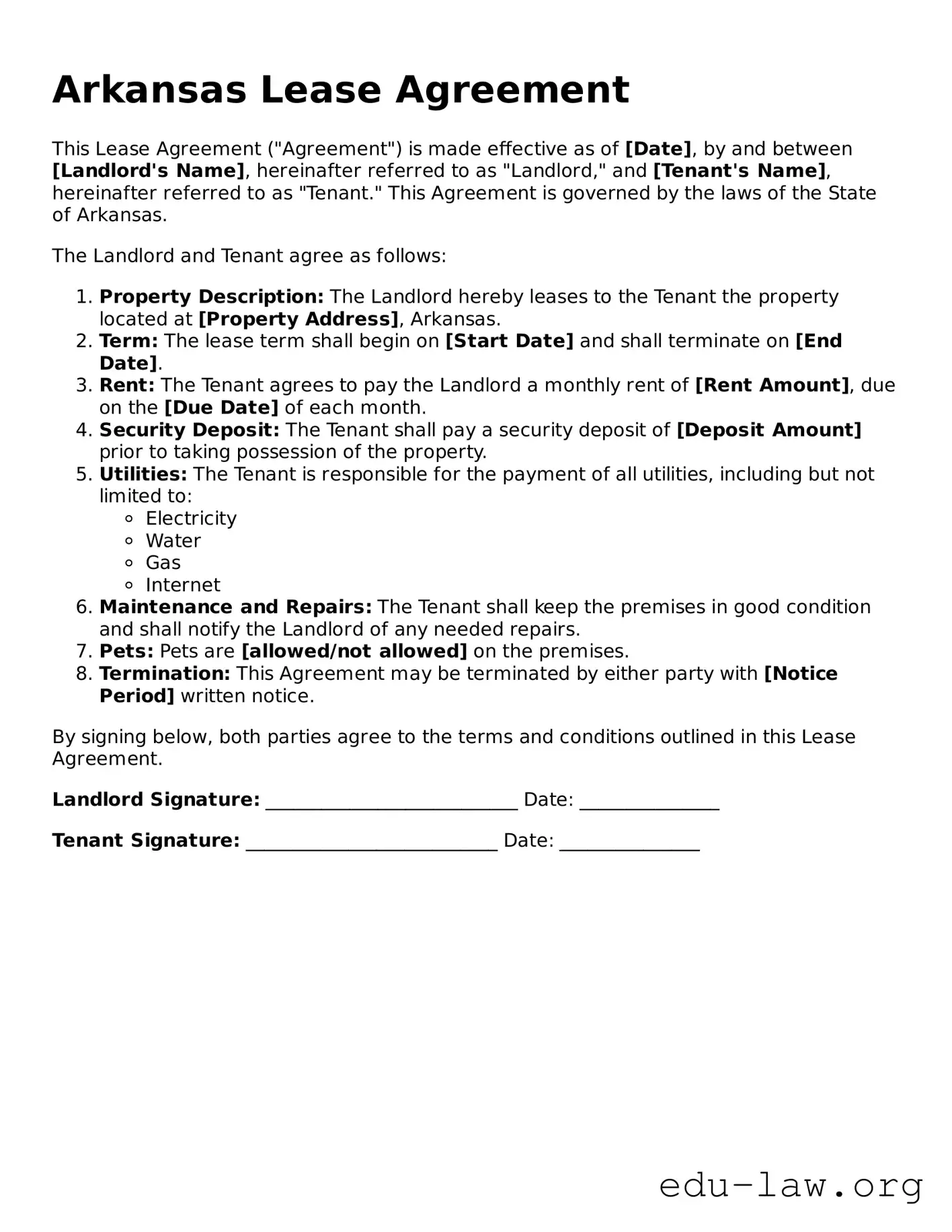
The Arkansas Lease Agreement form serves as a crucial document in the rental process, establishing a clear understanding between landlords and tenants. This form outlines essential terms and conditions that govern the rental relationship, including the duration of the lease, the amount of rent due, and the responsibilities of both parties. It typically specifies the security deposit requirements, maintenance obligations, and rules regarding property use. Furthermore, the agreement may address important issues such as the procedures for lease termination and the handling of disputes. By detailing these aspects, the lease agreement not only protects the interests of landlords and tenants but also fosters a sense of transparency and trust in the rental process. Understanding the components of this form is vital for anyone involved in renting property in Arkansas, whether they are seasoned landlords or first-time tenants.
Arkansas Lease Agreement
This Lease Agreement ("Agreement") is made effective as of [Date], by and between [Landlord's Name], hereinafter referred to as "Landlord," and [Tenant's Name], hereinafter referred to as "Tenant." This Agreement is governed by the laws of the State of Arkansas.
The Landlord and Tenant agree as follows:
By signing below, both parties agree to the terms and conditions outlined in this Lease Agreement.
Landlord Signature: ___________________________ Date: _______________
Tenant Signature: ___________________________ Date: _______________
| Fact Name | Description |
|---|---|
| Governing Law | The Arkansas Lease Agreement is governed by the Arkansas Code, Title 18, Chapter 16. |
| Types of Leases | This form can be used for residential, commercial, and agricultural leases. |
| Duration | The lease can specify a term of months or years, depending on the agreement between parties. |
| Security Deposit | Arkansas law allows landlords to collect a security deposit, typically not exceeding two months' rent. |
| Termination Notice | Tenants must provide a written notice of intent to vacate, usually 30 days before the lease ends. |
| Rent Payment | The lease must clearly outline the rent amount, due date, and acceptable payment methods. |
Completing the Arkansas Lease Agreement form is an essential step in establishing a rental relationship. This process ensures that both the landlord and tenant understand their rights and responsibilities. Follow these steps to fill out the form accurately.
What is an Arkansas Lease Agreement form?
An Arkansas Lease Agreement form is a legal document that outlines the terms and conditions under which a landlord agrees to rent property to a tenant. This form typically includes details such as the rental amount, duration of the lease, and responsibilities of both parties. It serves to protect the rights of both landlords and tenants and ensures that everyone understands their obligations.
What are the key components of an Arkansas Lease Agreement?
Key components of an Arkansas Lease Agreement include the names of the landlord and tenant, property address, lease term, rental payment details, security deposit information, maintenance responsibilities, and rules regarding pets or smoking. Each of these elements helps to clarify expectations and responsibilities, minimizing the potential for disputes.
How long is a typical lease term in Arkansas?
In Arkansas, lease terms can vary widely. They may be month-to-month, six months, or a year, depending on the agreement between the landlord and tenant. A longer lease term often provides stability for both parties, while a month-to-month agreement offers flexibility for tenants who may need to relocate more frequently.
Can a landlord raise the rent during the lease term?
Generally, a landlord cannot raise the rent during the lease term unless the lease explicitly allows for such increases. If the lease is month-to-month, the landlord can typically increase the rent with proper notice, usually 30 days. For fixed-term leases, any rent increase would take effect only after the lease expires, unless otherwise stated in the agreement.
What happens if a tenant wants to break the lease early?
If a tenant wishes to break the lease early, they may be subject to penalties as outlined in the lease agreement. Common consequences include forfeiting the security deposit or paying a portion of the remaining rent. It is advisable for tenants to communicate with their landlord and review the lease terms to understand their options and any potential fees involved.
Is it necessary to have a written lease agreement?
While verbal agreements can be legally binding, having a written lease agreement is strongly recommended. A written document provides clear evidence of the terms agreed upon and helps protect both parties in case of disputes. It is much easier to refer to a written lease than to rely on memory or verbal discussions.
What should a tenant do if the landlord fails to make necessary repairs?
If a landlord fails to make necessary repairs, the tenant should first notify the landlord in writing, detailing the issues and requesting action. If the landlord does not respond or take action within a reasonable time, tenants may have the right to pursue further action. This could include contacting local housing authorities or seeking legal advice to understand their rights under Arkansas law.
Failing to include all necessary parties: It's important to list all tenants and landlords involved in the lease agreement. Omitting a party can lead to disputes later.
Not specifying the rental property address: Ensure that the complete address of the rental property is clearly stated. This avoids confusion about the location covered by the lease.
Ignoring the lease term: Clearly define the duration of the lease. Whether it’s a month-to-month agreement or a year-long lease, this information is crucial.
Overlooking rent payment details: Include the amount of rent, due date, and acceptable payment methods. Clarity on these points helps prevent misunderstandings.
Not addressing security deposits: Specify the amount of the security deposit and the conditions under which it may be withheld. This protects both parties’ interests.
Neglecting maintenance responsibilities: Clearly outline who is responsible for property maintenance and repairs. This prevents future conflicts over upkeep.
Failing to include rules and regulations: Any specific rules regarding the use of the property should be included. This may cover issues like pets, smoking, or noise.
Not providing a termination clause: Include details on how either party can terminate the lease. This should outline notice periods and any penalties.
Forgetting to sign and date the agreement: Both parties must sign and date the lease for it to be valid. Without signatures, the agreement may not hold up in court.
When entering into a rental agreement in Arkansas, several other forms and documents may be necessary to ensure a smooth process. These documents help clarify responsibilities and protect both landlords and tenants.
These documents are essential in managing rental agreements effectively. They help ensure that both parties understand their rights and obligations, promoting a positive rental experience.
The Arkansas Rental Application is similar to the Lease Agreement form in that both documents are essential for establishing a rental relationship. The Rental Application is typically completed by prospective tenants to provide landlords with information about their background, income, and rental history. This helps landlords assess the suitability of applicants before entering into a Lease Agreement. While the Lease Agreement formalizes the terms of the rental, the Rental Application serves as the initial screening tool.
The Arkansas Month-to-Month Lease Agreement is another document closely related to the standard Lease Agreement. This type of lease allows tenants to rent on a monthly basis without a long-term commitment. Like the standard Lease Agreement, it outlines the rights and responsibilities of both parties. However, it offers more flexibility, allowing either party to terminate the lease with proper notice, unlike a fixed-term lease that binds tenants for a specific duration.
The Arkansas Commercial Lease Agreement is designed for business properties and shares many similarities with residential leases. Both agreements detail the terms of occupancy, including rent, duration, and maintenance responsibilities. However, the Commercial Lease Agreement often includes additional clauses specific to business operations, such as permitted use of the property and modifications to the space, reflecting the different needs of commercial tenants.
The Arkansas Sublease Agreement allows a tenant to rent out their leased property to another individual, making it similar to the Lease Agreement. Both documents outline the terms of occupancy, but the Sublease Agreement specifically addresses the relationship between the original tenant and the subtenant. It typically requires the original landlord's approval and may include clauses that protect the original tenant’s interests.
The Arkansas Lease Termination Letter is related to the Lease Agreement as it serves as a formal notice to end the rental relationship. This document specifies the intent to terminate the lease and provides the necessary notice period as outlined in the Lease Agreement. Both documents ensure that the process of ending a tenancy is clear and legally compliant, protecting the rights of both landlords and tenants.
The Arkansas Rent Receipt is another document that complements the Lease Agreement. While the Lease Agreement outlines the terms of payment, the Rent Receipt serves as proof of payment for rent. It provides a record for both the tenant and the landlord, ensuring transparency in financial transactions. This document can be important for tax purposes and dispute resolution.
The Arkansas Move-In/Move-Out Checklist is similar to the Lease Agreement in that it helps document the condition of the property at the beginning and end of a tenancy. This checklist protects both landlords and tenants by providing a clear record of any existing damages or issues. It can be referenced in case of disputes over security deposits or property condition at the end of the lease term.
The Arkansas Security Deposit Agreement is closely related to the Lease Agreement as it outlines the terms regarding the security deposit required from tenants. Both documents specify the amount of the deposit, the conditions under which it may be withheld, and the timeline for its return. This agreement helps protect landlords from potential damages while ensuring tenants understand their financial obligations.
The Arkansas Notice to Quit is another document associated with the Lease Agreement, particularly in situations where a landlord needs to terminate a tenancy due to lease violations or non-payment of rent. This notice serves as a formal communication to the tenant, indicating the need to vacate the property. It is a crucial step in the eviction process and must comply with state laws, similar to the procedures outlined in the Lease Agreement.
When filling out the Arkansas Lease Agreement form, it is essential to approach the task with care. Here are six important dos and don’ts to consider:
By following these guidelines, individuals can help ensure a smoother leasing process in Arkansas.
When it comes to lease agreements in Arkansas, several misconceptions can lead to confusion for both landlords and tenants. Understanding these misconceptions can help clarify the responsibilities and rights of each party involved. Below is a list of common misconceptions about the Arkansas Lease Agreement form.
Understanding these misconceptions can help both landlords and tenants navigate their rights and responsibilities more effectively. Clear communication and a well-drafted lease agreement can prevent misunderstandings and disputes.
When filling out and using the Arkansas Lease Agreement form, it is important to consider several key points. The following takeaways can help ensure that the process is completed correctly and effectively.
Reviewing these points can help ensure that the lease agreement is comprehensive and serves the needs of both the landlord and tenant.