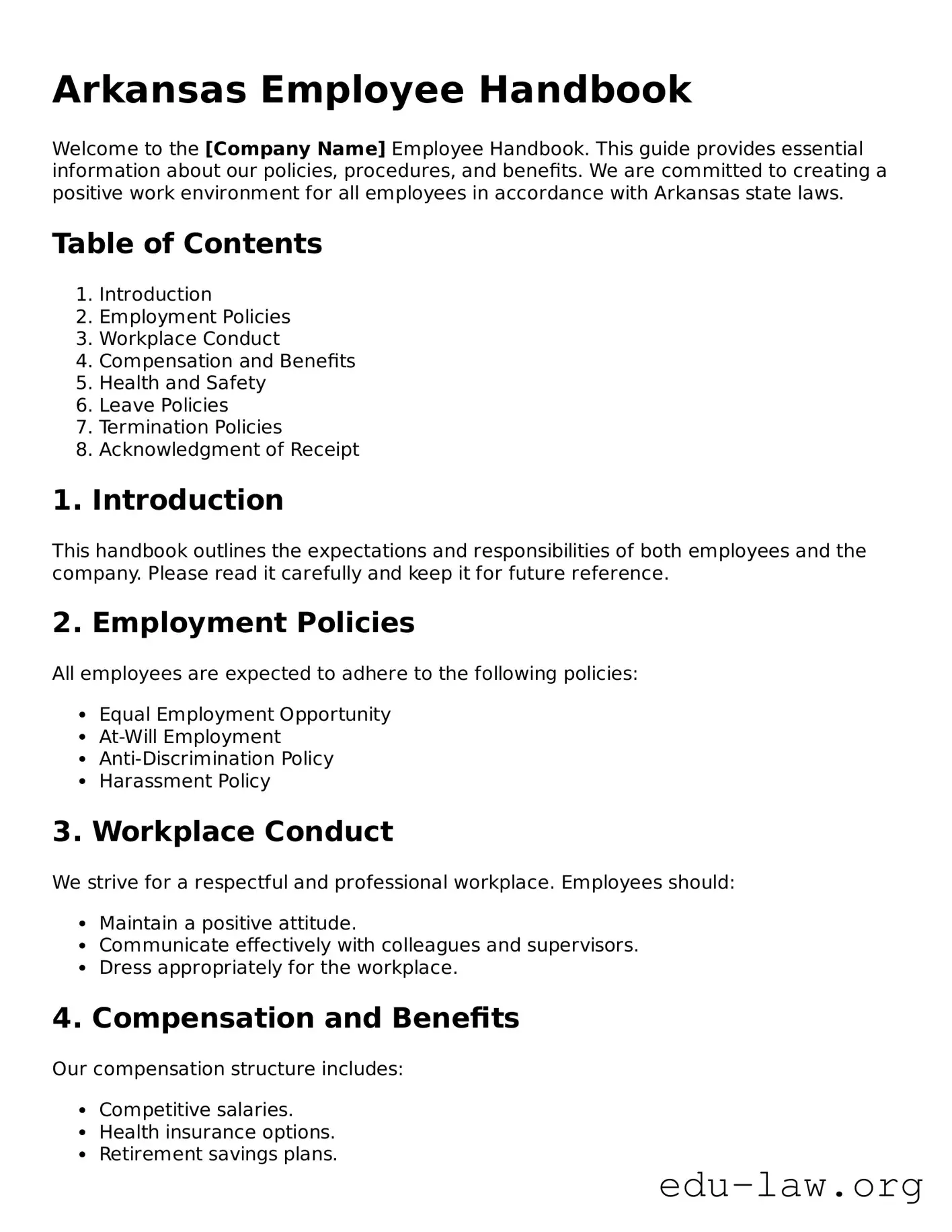
The Arkansas Employee Handbook form serves as a vital resource for both employers and employees within the state. This document outlines essential policies, procedures, and expectations that govern the workplace environment. It typically includes sections on employee rights, workplace conduct, attendance policies, and disciplinary procedures. Additionally, the handbook addresses benefits, safety protocols, and anti-discrimination policies, ensuring that employees understand their rights and responsibilities. By providing clear guidelines, the handbook helps foster a positive work culture and can serve as a reference point for resolving disputes. Employers in Arkansas are encouraged to customize the form to reflect their specific organizational values and practices, making it a crucial tool for effective human resource management.
Arkansas Employee Handbook
Welcome to the [Company Name] Employee Handbook. This guide provides essential information about our policies, procedures, and benefits. We are committed to creating a positive work environment for all employees in accordance with Arkansas state laws.
Table of Contents
1. Introduction
This handbook outlines the expectations and responsibilities of both employees and the company. Please read it carefully and keep it for future reference.
2. Employment Policies
All employees are expected to adhere to the following policies:
3. Workplace Conduct
We strive for a respectful and professional workplace. Employees should:
4. Compensation and Benefits
Our compensation structure includes:
5. Health and Safety
Your safety is our priority. We adhere to Arkansas state laws regarding workplace safety. Employees are encouraged to:
6. Leave Policies
Employees are entitled to various types of leave, including:
7. Termination Policies
Termination of employment may occur under various circumstances, including:
8. Acknowledgment of Receipt
By signing below, you acknowledge that you have received and understood the [Company Name] Employee Handbook.
Employee Name: ________________________
Date: ________________________
| Fact Name | Description |
|---|---|
| Purpose | The Arkansas Employee Handbook provides guidelines for employees regarding company policies and procedures. |
| Content | It typically includes information on workplace expectations, benefits, and employee rights. |
| Governing Law | The handbook is governed by Arkansas state employment laws. |
| Updates | Employers should regularly update the handbook to reflect changes in laws or company policies. |
| Distribution | Employees must receive a copy of the handbook upon hire and whenever it is updated. |
| Acknowledgment | Employees are often required to sign an acknowledgment form indicating they have received and read the handbook. |
| At-Will Employment | The handbook may state that employment is at-will, meaning either party can terminate employment at any time. |
| Non-Discrimination Policy | A non-discrimination policy is usually included to promote a fair workplace. |
| Grievance Procedure | Many handbooks outline a procedure for employees to report grievances or complaints. |
| Legal Compliance | Handbooks should comply with federal and state laws to avoid legal issues. |
Completing the Arkansas Employee Handbook form is an important step in ensuring that both employees and employers understand their rights and responsibilities within the workplace. Following these steps will help you fill out the form accurately and efficiently.
What is the purpose of the Arkansas Employee Handbook form?
The Arkansas Employee Handbook form serves as a vital document for employers and employees alike. It outlines the company's policies, procedures, and expectations. This handbook helps ensure that employees understand their rights and responsibilities within the workplace. It also provides guidance on important topics such as workplace conduct, benefits, and disciplinary procedures, fostering a transparent work environment.
Who should receive a copy of the Employee Handbook?
Every employee should receive a copy of the Employee Handbook upon their hiring. This ensures that all staff members have access to the same information regarding company policies. Additionally, it is a good practice for employers to provide updates whenever changes are made to the handbook, ensuring that employees are always informed about the latest policies and procedures.
How often should the Employee Handbook be updated?
Updating the Employee Handbook is essential to reflect changes in laws, regulations, or company policies. Ideally, a review should occur at least annually. However, if significant changes arise—such as new labor laws or shifts in company structure—an update may be necessary sooner. Regular updates help maintain compliance and ensure that employees are aware of any new expectations or benefits.
What should be included in the Employee Handbook?
The Employee Handbook should cover a range of topics. Key sections typically include an introduction to the company, employment policies, code of conduct, anti-discrimination policies, benefits and compensation, leave policies, and procedures for reporting grievances. Additionally, including a disclaimer that the handbook is not a contract can help clarify the nature of the employment relationship.
Is it necessary to have employees sign an acknowledgment of receipt for the handbook?
Yes, having employees sign an acknowledgment of receipt is highly recommended. This practice provides proof that employees have received and reviewed the handbook. It can be beneficial in case of disputes regarding policies or procedures. An acknowledgment form can serve as a record that employees are aware of and agree to adhere to the guidelines outlined in the handbook.
Filling out the Arkansas Employee Handbook form requires attention to detail. Here are nine common mistakes people make:
Taking time to avoid these mistakes can help ensure that the form is filled out correctly and completely. This can lead to a smoother onboarding process and a better understanding of workplace policies.
When developing an employee handbook in Arkansas, several other forms and documents may also be utilized to ensure comprehensive coverage of employment policies and practices. Each of these documents serves a specific purpose in the workplace, contributing to a clear understanding of employee rights and responsibilities.
Utilizing these forms and documents alongside the employee handbook can help create a structured and transparent work environment. Each document plays a role in enhancing communication and setting clear expectations between employees and employers.
The Arkansas Employee Handbook form is similar to the Employee Manual, which serves as a comprehensive guide for employees regarding company policies and procedures. Both documents outline expectations for employee behavior, workplace rules, and benefits. The Employee Manual typically includes sections on attendance, dress code, and disciplinary actions, mirroring the structure found in an Employee Handbook. Both documents aim to ensure that employees understand their rights and responsibilities within the organization.
Another document comparable to the Arkansas Employee Handbook is the Workplace Safety Policy. This policy outlines the safety protocols and procedures that employees must follow to maintain a safe working environment. Like the Employee Handbook, the Workplace Safety Policy provides guidelines for reporting hazards, emergency procedures, and the responsibilities of both employees and management. The focus on safety and compliance is a common thread between these two documents.
The Orientation Guide is also similar to the Arkansas Employee Handbook. This guide is often provided to new hires and includes essential information about the company, its culture, and operational procedures. Both documents aim to familiarize employees with the organization’s mission and values. The Orientation Guide may contain specific details about training programs, benefits enrollment, and key contacts, paralleling the information typically found in an Employee Handbook.
The Code of Conduct shares similarities with the Arkansas Employee Handbook as well. This document establishes the ethical standards and behavioral expectations for employees. Both the Code of Conduct and the Employee Handbook address issues such as harassment, discrimination, and conflict of interest. They provide a framework for maintaining a respectful and productive workplace, ensuring that employees understand the consequences of violating company policies.
Lastly, the Leave of Absence Policy is akin to the Arkansas Employee Handbook. This policy outlines the procedures and eligibility requirements for taking leave from work, whether for medical reasons, family emergencies, or personal matters. Similar to the Employee Handbook, the Leave of Absence Policy provides clarity on the process for requesting leave and the rights of employees during their absence. Both documents aim to ensure that employees are informed about their options and the company’s obligations regarding leave.
When filling out the Arkansas Employee Handbook form, it’s important to keep a few key points in mind. Here are some dos and don’ts to guide you:
When it comes to the Arkansas Employee Handbook form, several misconceptions can lead to confusion among employers and employees alike. Understanding these misconceptions is crucial for creating a clear and effective handbook. Here are four common misunderstandings:
While it's true that not every business is legally required to have an employee handbook, many employers find that having one helps clarify policies and expectations. It can also serve as a valuable tool in defending against potential legal issues.
Every business is unique, and so are its policies. While there are common elements that many handbooks share, such as anti-discrimination policies and workplace conduct guidelines, each handbook should be tailored to fit the specific needs and culture of the organization.
This is a common misconception. Laws change, and so do business practices. Regularly reviewing and updating the employee handbook ensures that it remains relevant and compliant with current regulations.
Just because a handbook is provided does not mean that employees will fully understand its contents. Employers should encourage questions and discussions about the handbook to ensure that all employees are on the same page regarding policies and expectations.
When it comes to filling out and utilizing the Arkansas Employee Handbook form, several important considerations can help ensure that the process is smooth and effective. Here are some key takeaways to keep in mind:
By keeping these points in mind, employers can create a more effective and user-friendly Employee Handbook that benefits everyone in the workplace.