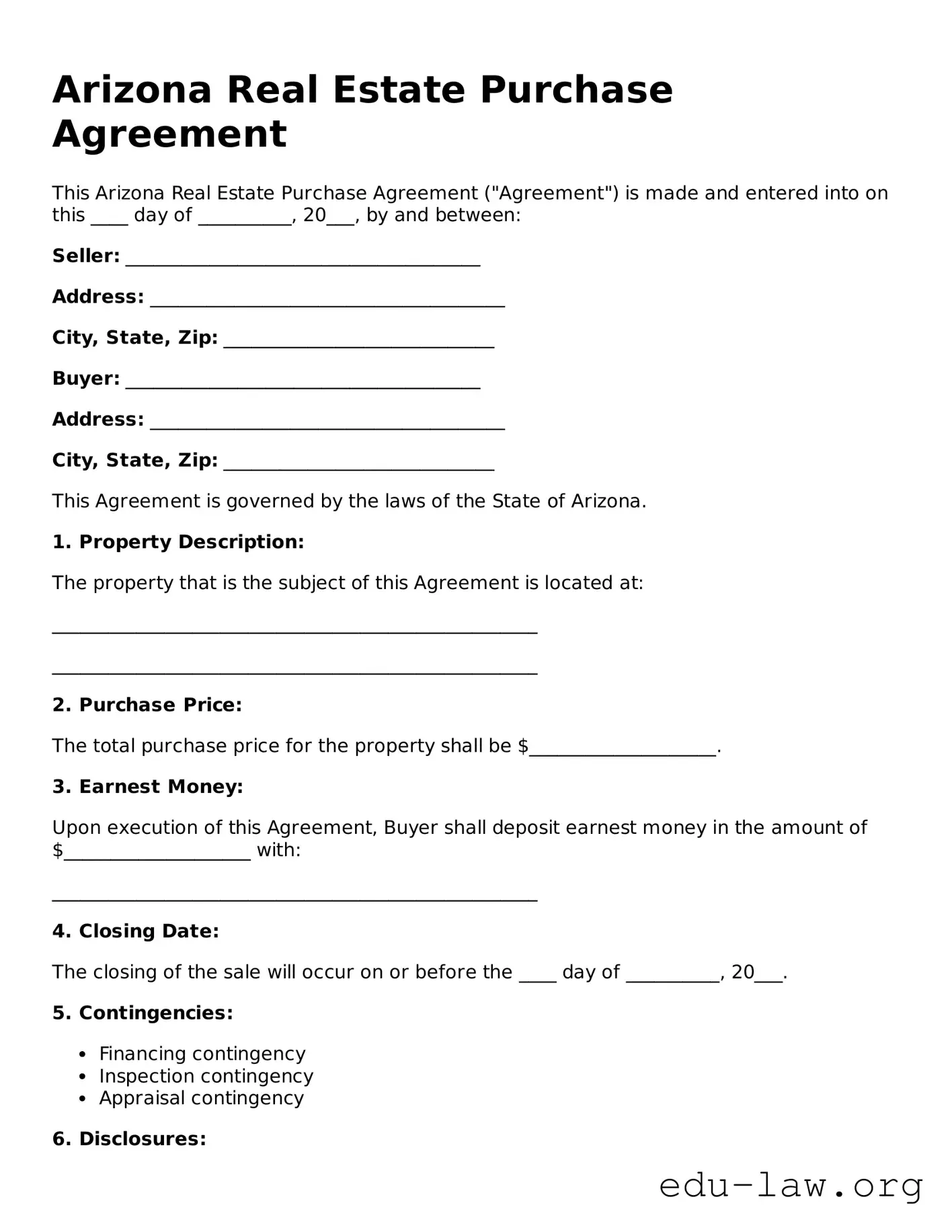
The Arizona Real Estate Purchase Agreement form serves as a crucial document in the process of buying or selling property within the state. This form outlines the terms and conditions agreed upon by both the buyer and the seller, ensuring that all parties have a clear understanding of their obligations. Key components include the purchase price, financing details, and the closing date, which are essential for setting expectations. Additionally, the form addresses contingencies, such as inspections and appraisals, allowing buyers to protect their interests before finalizing the sale. It also specifies the legal description of the property, ensuring that there is no ambiguity about what is being sold. By providing a structured framework for the transaction, the Arizona Real Estate Purchase Agreement helps facilitate a smooth transfer of ownership while minimizing potential disputes between the involved parties.
Arizona Real Estate Purchase Agreement
This Arizona Real Estate Purchase Agreement ("Agreement") is made and entered into on this ____ day of __________, 20___, by and between:
Seller: ______________________________________
Address: ______________________________________
City, State, Zip: _____________________________
Buyer: ______________________________________
Address: ______________________________________
City, State, Zip: _____________________________
This Agreement is governed by the laws of the State of Arizona.
1. Property Description:
The property that is the subject of this Agreement is located at:
____________________________________________________
____________________________________________________
2. Purchase Price:
The total purchase price for the property shall be $____________________.
3. Earnest Money:
Upon execution of this Agreement, Buyer shall deposit earnest money in the amount of $____________________ with:
____________________________________________________
4. Closing Date:
The closing of the sale will occur on or before the ____ day of __________, 20___.
5. Contingencies:
6. Disclosures:
Seller agrees to provide all required disclosures as mandated by Arizona law.
7. Signatures:
In witness whereof, the parties hereto have executed this Agreement as of the date first above written.
Seller's Signature: ____________________________
Date: ______________________________________
Buyer's Signature: ____________________________
Date: ______________________________________
| Fact Name | Description |
|---|---|
| Governing Law | The Arizona Real Estate Purchase Agreement is governed by Arizona state law. |
| Purpose | This form serves as a legally binding document outlining the terms of a real estate transaction. |
| Buyer and Seller Information | It requires detailed information about both the buyer and seller, including names and contact details. |
| Property Description | A clear description of the property being sold is essential, including the address and legal description. |
| Purchase Price | The agreement specifies the total purchase price and any earnest money deposit required. |
| Contingencies | Buyers can include contingencies, such as home inspections or financing approvals, to protect their interests. |
| Closing Date | The form outlines the proposed closing date, when ownership of the property will be transferred. |
| Signatures | Both parties must sign the agreement for it to be valid and enforceable. |
| Amendments | Any changes to the agreement must be documented in writing and signed by both parties. |
After obtaining the Arizona Real Estate Purchase Agreement form, you will need to complete it accurately to ensure a smooth transaction. Follow these steps carefully to fill out the form correctly.
Once the form is filled out, review it for accuracy before submitting it to the appropriate parties. This ensures that all information is correct and helps avoid potential issues later on.
What is the Arizona Real Estate Purchase Agreement form?
The Arizona Real Estate Purchase Agreement form is a legal document used when buying or selling real estate in Arizona. It outlines the terms and conditions of the sale, including the purchase price, financing details, and any contingencies that must be met before the transaction can be completed.
Who should use this form?
This form is intended for use by buyers and sellers of real estate in Arizona. It can be utilized by individuals, couples, or entities involved in a property transaction. Both parties should understand the terms outlined in the agreement before signing.
What key information is included in the agreement?
The agreement typically includes the names of the buyer and seller, property description, purchase price, earnest money deposit, financing details, contingencies (like inspections or appraisals), and closing date. Each of these components plays a crucial role in the transaction process.
Is the Arizona Real Estate Purchase Agreement form legally binding?
Yes, once both parties sign the agreement, it becomes a legally binding contract. This means that both the buyer and seller are obligated to fulfill the terms outlined in the document. It is essential to read and understand all provisions before signing.
Can the agreement be modified after signing?
Yes, modifications can be made to the agreement after it has been signed, but both parties must agree to the changes. Any amendments should be documented in writing and signed by both the buyer and seller to ensure clarity and enforceability.
What happens if one party breaches the agreement?
If one party fails to comply with the terms of the agreement, it can be considered a breach of contract. The non-breaching party may have the right to seek legal remedies, which could include enforcing the contract or seeking damages. It is advisable to consult with a legal professional in such situations.
Are there any contingencies that can be included in the agreement?
Yes, contingencies are common in real estate agreements. They allow one or both parties to back out of the deal under specific conditions. Common contingencies include financing, home inspections, and appraisal conditions. Including these can protect the interests of both parties.
How does earnest money work in the agreement?
Earnest money is a deposit made by the buyer to show their commitment to purchasing the property. This money is typically held in escrow and applied toward the purchase price at closing. If the deal falls through due to a contingency, the buyer may be entitled to a refund of the earnest money.
Is it necessary to have an attorney review the agreement?
While it is not legally required to have an attorney review the Arizona Real Estate Purchase Agreement, it is highly recommended. An attorney can provide valuable insights and ensure that the agreement protects your interests and complies with state laws.
Where can I obtain the Arizona Real Estate Purchase Agreement form?
The Arizona Real Estate Purchase Agreement form can be obtained from various sources, including real estate agents, online legal document services, or local real estate associations. It is important to ensure that you are using the most current version of the form to comply with Arizona laws.
Incomplete Information: One common mistake is failing to fill in all required fields. Buyers and sellers should ensure that names, addresses, and other essential details are fully provided.
Incorrect Dates: Entering wrong dates can lead to confusion. Make sure to double-check the contract dates, including the offer date and closing date.
Missing Signatures: It's crucial that all parties involved sign the agreement. A missing signature can render the contract invalid.
Ignoring Contingencies: Not including necessary contingencies can be a big mistake. Consider adding clauses for financing, inspections, or other conditions that need to be met.
Not Reviewing Terms: Failing to read the terms carefully can lead to misunderstandings. Both parties should review all terms and conditions before signing.
Forgetting to Attach Addenda: If there are additional agreements or disclosures, make sure to attach them. This includes anything like home warranties or repair agreements.
In Arizona, several forms and documents accompany the Real Estate Purchase Agreement to facilitate the transaction process. Each document serves a specific purpose, ensuring that both buyers and sellers are protected and informed throughout the real estate transaction.
These documents work together to ensure a smooth real estate transaction in Arizona. Each plays a vital role in protecting the interests of both buyers and sellers, providing clarity and structure to the process.
The Arizona Residential Lease Agreement is similar to the Real Estate Purchase Agreement in that both documents outline the terms of an arrangement involving property. While the purchase agreement focuses on the sale of a property, the lease agreement sets the terms for renting a property. Both documents detail important aspects such as the parties involved, the property description, payment terms, and the duration of the agreement. They also require signatures from all parties to make the agreements legally binding.
The Arizona Exclusive Right to Sell Listing Agreement is another document that shares similarities with the Real Estate Purchase Agreement. This agreement is used by real estate agents to secure the right to sell a property on behalf of the seller. It outlines the responsibilities of the agent and the seller, including commission rates and marketing strategies. Like the purchase agreement, it establishes clear terms and conditions to ensure all parties understand their obligations during the selling process.
The Arizona Counteroffer form is also akin to the Real Estate Purchase Agreement. When a buyer makes an offer on a property, the seller may respond with a counteroffer, which modifies the original terms. This document is crucial in negotiations, as it helps clarify the new terms proposed by the seller. Both the counteroffer and the purchase agreement aim to reach a mutual understanding between the buyer and seller, ultimately leading to a successful transaction.
The Arizona Seller's Disclosure Statement is another important document that complements the Real Estate Purchase Agreement. This statement requires sellers to disclose any known issues or defects with the property. By providing this information, sellers help buyers make informed decisions. Transparency is key in both documents, as the purchase agreement may reference disclosures that could affect the buyer's decision to proceed with the purchase.
The Arizona Title Report is another document that complements the Real Estate Purchase Agreement. This report provides information about the property's ownership history and any liens or encumbrances that may affect the sale. It is essential for buyers to review the title report to ensure they are purchasing a clear title. Both the title report and the purchase agreement are critical in facilitating a smooth transfer of ownership and ensuring that buyers are aware of any potential issues.
Lastly, the Arizona Closing Disclosure is closely related to the Real Estate Purchase Agreement. This document outlines the final terms of the loan and the costs associated with the transaction. It is provided to the buyer a few days before closing, allowing them to review all financial aspects of the sale. Both documents play a vital role in the closing process, ensuring that all parties are informed and in agreement before the final transfer of ownership occurs.
When filling out the Arizona Real Estate Purchase Agreement form, attention to detail is crucial. Here are some important dos and don’ts to keep in mind.
By following these guidelines, you can help ensure a smoother transaction and avoid potential pitfalls.
Understanding the Arizona Real Estate Purchase Agreement form is crucial for anyone involved in a real estate transaction in the state. Unfortunately, there are several misconceptions that can lead to confusion and mistakes. Here are seven common misconceptions:
Many believe that the Arizona Real Estate Purchase Agreement is a one-size-fits-all document. In reality, each transaction is unique, and details such as contingencies, financing terms, and closing dates should be tailored to fit the specific situation.
This is a common misunderstanding. Both the buyer and the seller must sign the agreement for it to be legally binding. Without both parties' signatures, the contract holds no legal weight.
While it’s true that a signed agreement is binding, changes can be made if both parties agree to amend the contract. It’s essential to document any changes in writing to avoid future disputes.
Signing the agreement does not guarantee that the sale will be completed. Various factors, such as financing issues or inspection problems, can derail a transaction even after the agreement is signed.
While many terms can be negotiated, some are set by law or local regulations. Understanding which elements can be adjusted and which cannot is vital for a smooth transaction.
Price is just one aspect of the agreement. Other important factors include contingencies, closing costs, and the timeline for the sale. Each of these elements can significantly impact the transaction.
Even though many people fill out the agreement without assistance, it’s wise to consult with a real estate professional or attorney. Their expertise can help ensure that the agreement is filled out correctly and protects your interests.
By understanding these misconceptions, buyers and sellers can approach the Arizona Real Estate Purchase Agreement with greater confidence and clarity. Always consider seeking guidance from a knowledgeable professional to navigate the complexities of real estate transactions.
When dealing with the Arizona Real Estate Purchase Agreement form, there are several important points to keep in mind. Understanding these can help ensure a smooth transaction.
By keeping these key takeaways in mind, you can better navigate the process of filling out and utilizing the Arizona Real Estate Purchase Agreement form.