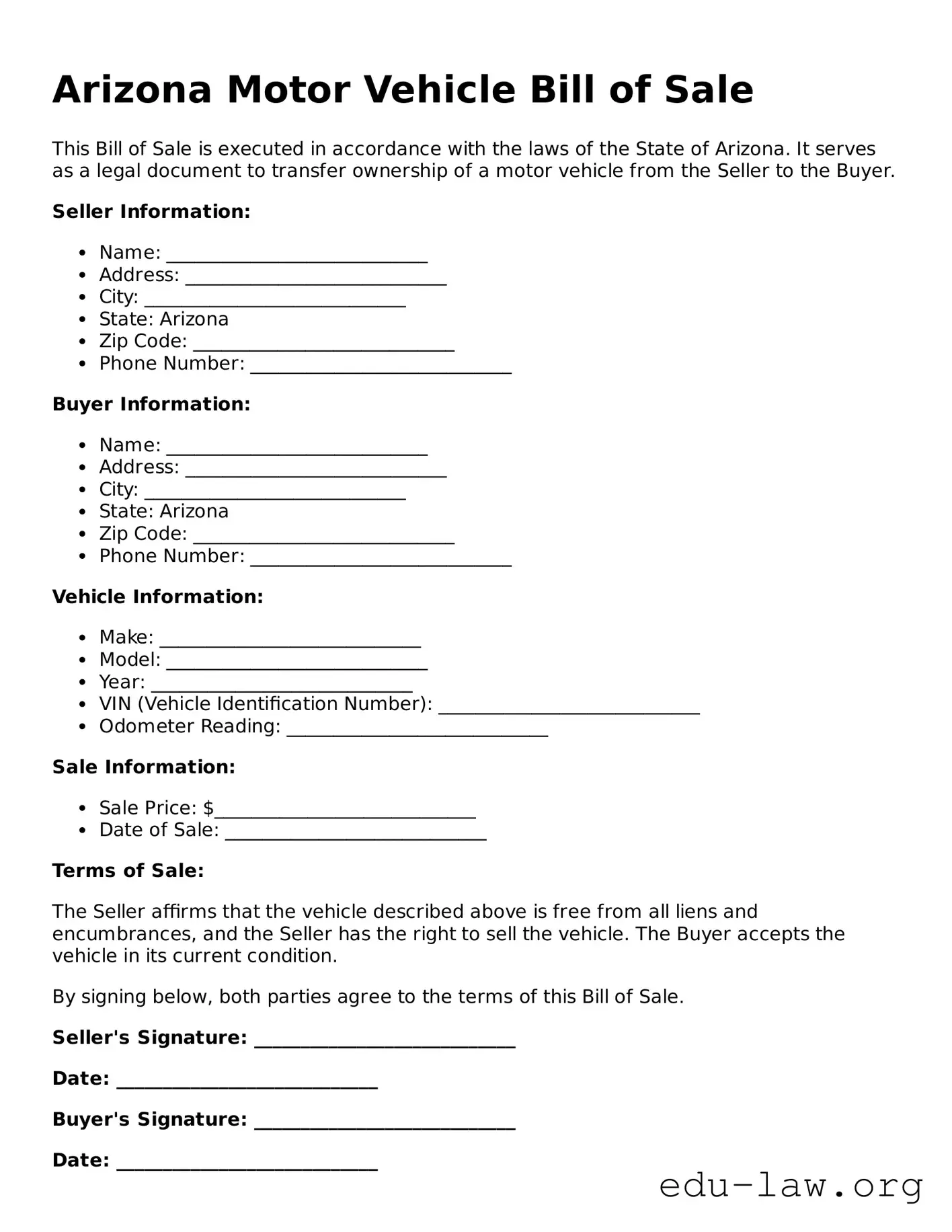
The Arizona Motor Vehicle Bill of Sale form serves as a crucial document in the transfer of ownership for motor vehicles within the state. This form outlines essential details such as the names and addresses of both the seller and buyer, the vehicle's identification number (VIN), make, model, year, and odometer reading at the time of sale. It also includes the sale price, which is important for tax purposes, and may specify any warranties or conditions associated with the vehicle. By documenting the transaction, the Bill of Sale provides legal protection for both parties and helps to establish a clear record of the sale. In Arizona, this form is particularly significant as it may be required when registering the vehicle in the new owner's name. Additionally, it can serve as proof of ownership should any disputes arise in the future. Understanding the components and importance of the Arizona Motor Vehicle Bill of Sale form is essential for anyone involved in buying or selling a vehicle in the state.
Arizona Motor Vehicle Bill of Sale
This Bill of Sale is executed in accordance with the laws of the State of Arizona. It serves as a legal document to transfer ownership of a motor vehicle from the Seller to the Buyer.
Seller Information:
Buyer Information:
Vehicle Information:
Sale Information:
Terms of Sale:
The Seller affirms that the vehicle described above is free from all liens and encumbrances, and the Seller has the right to sell the vehicle. The Buyer accepts the vehicle in its current condition.
By signing below, both parties agree to the terms of this Bill of Sale.
Seller's Signature: ____________________________
Date: ____________________________
Buyer's Signature: ____________________________
Date: ____________________________
This document serves as a record of the transaction and should be kept by both parties for their records.
| Fact Name | Description |
|---|---|
| Purpose | The Arizona Motor Vehicle Bill of Sale serves as a legal document to transfer ownership of a vehicle from one party to another. |
| Governing Law | This form is governed by Arizona Revised Statutes, Title 28, Chapter 2. |
| Required Information | The form must include details such as the vehicle identification number (VIN), make, model, year, and the sale price. |
| Signatures | Both the seller and the buyer must sign the Bill of Sale to validate the transaction. |
| Notarization | While notarization is not required, it is recommended for added security and to prevent disputes. |
| Record Keeping | Both parties should keep a copy of the Bill of Sale for their records after the transaction is completed. |
| Tax Implications | The sale may be subject to sales tax, which the buyer is responsible for paying at the time of registration. |
| Use in Registration | The Bill of Sale is often required for vehicle registration in Arizona, especially for used vehicles. |
| Vehicle Condition | It is advisable to note the condition of the vehicle on the form to avoid future disputes. |
| Legality | Completing the Bill of Sale does not guarantee the legality of the sale; both parties should ensure that the vehicle has a clear title. |
After obtaining the Arizona Motor Vehicle Bill of Sale form, you'll need to fill it out accurately to ensure a smooth transfer of ownership. This document is crucial for both the seller and the buyer, as it serves as proof of the transaction. Here’s how to complete the form step by step.
Once the form is completed, both parties should keep a copy for their records. This documentation will assist in future transactions or in case any disputes arise regarding the sale.
What is a Motor Vehicle Bill of Sale in Arizona?
A Motor Vehicle Bill of Sale is a legal document that records the sale of a vehicle from one party to another. In Arizona, this form serves as proof of the transaction and includes essential details such as the vehicle's make, model, year, VIN (Vehicle Identification Number), sale price, and the names and addresses of both the buyer and seller. This document is important for both parties as it protects their interests and can be used for registration and title transfer purposes.
Is a Bill of Sale required to sell a vehicle in Arizona?
While a Bill of Sale is not legally required in Arizona, it is highly recommended. Having this document can help clarify the terms of the sale and provide evidence of the transaction. It can also assist in avoiding disputes regarding ownership or the sale price in the future. If the buyer intends to register the vehicle, they will need the Bill of Sale to complete the process at the Arizona Department of Transportation.
What information should be included in the Arizona Motor Vehicle Bill of Sale?
The Bill of Sale should include the following information: the full names and addresses of both the buyer and seller, the vehicle’s make, model, year, and VIN, the sale price, the date of the transaction, and any disclosures regarding the vehicle’s condition. Additionally, both parties should sign the document. Including this information ensures clarity and provides a comprehensive record of the sale.
Can I create my own Bill of Sale for a vehicle in Arizona?
Yes, you can create your own Bill of Sale in Arizona. However, it is crucial that the document contains all necessary information to be valid. Many templates are available online that can guide you in drafting a comprehensive Bill of Sale. Alternatively, you may also obtain an official form from the Arizona Department of Transportation to ensure compliance with state requirements.
What should I do after completing the Bill of Sale?
After completing the Bill of Sale, both the buyer and seller should retain a copy for their records. The seller should provide the buyer with the signed document, as it is essential for the buyer to register the vehicle in their name. Additionally, the seller may want to notify their insurance company of the sale and remove the vehicle from their policy. This step helps prevent any future liability associated with the vehicle.
Incomplete Information: Many individuals forget to fill out all required fields. This can include missing the buyer's or seller's name, address, or vehicle identification number (VIN). Each detail is crucial for a valid transaction.
Incorrect Vehicle Information: Errors in the vehicle description can lead to confusion. Double-check the make, model, year, and VIN. A small mistake can create big problems later.
Failure to Sign: Some people neglect to sign the document. Without a signature, the bill of sale is not legally binding. Both the buyer and seller must sign to finalize the transaction.
Not Keeping a Copy: After completing the form, it’s important to keep a copy for personal records. Failing to do so can lead to disputes or difficulties in future transactions.
When purchasing or selling a vehicle in Arizona, the Motor Vehicle Bill of Sale is an essential document. However, several other forms and documents may accompany this bill of sale to ensure a smooth transaction and compliance with state regulations. Below is a list of some commonly used documents in conjunction with the Arizona Motor Vehicle Bill of Sale.
Having these documents ready can streamline the buying or selling process and help avoid potential legal complications. Each form serves a specific purpose in ensuring that both parties are protected and that the transaction is conducted in accordance with Arizona law.
The Arizona Vehicle Title Application serves a similar purpose as the Motor Vehicle Bill of Sale. This document is used to apply for a title when ownership of a vehicle changes. Like the Bill of Sale, it requires details about the vehicle, such as the Vehicle Identification Number (VIN), make, model, and year. Both documents help establish legal ownership and facilitate the transfer process in a clear and documented manner.
The Vehicle Registration form is another document that shares similarities with the Motor Vehicle Bill of Sale. This form is necessary for registering a vehicle with the state after purchase. It typically includes information about the buyer, seller, and vehicle, mirroring the details found in a Bill of Sale. Both documents serve to provide proof of ownership and ensure that the vehicle is legally registered in the new owner's name.
A Lien Release form is closely related to the Motor Vehicle Bill of Sale, especially when a vehicle is sold while still under a loan. This document indicates that the lender has released their claim to the vehicle, allowing the new owner to take full possession. Similar to the Bill of Sale, it must be signed by the seller and may require notarization to be legally binding.
The Power of Attorney for Vehicle Transactions is another relevant document. This form allows one person to act on behalf of another in matters related to vehicle ownership. It can facilitate the sale process, enabling a designated individual to sign the Bill of Sale and other related documents. Both documents are essential for transferring ownership and ensuring that all parties are represented legally.
The odometer disclosure statement is often included with the Motor Vehicle Bill of Sale. This document provides information about the vehicle's mileage at the time of sale. It protects both the buyer and seller by ensuring transparency regarding the vehicle's condition. Like the Bill of Sale, it is a crucial part of the transaction process and helps prevent fraud.
The Vehicle History Report is another document that complements the Motor Vehicle Bill of Sale. While not required, it offers valuable information about the vehicle's past, including accidents, title issues, and service records. Buyers often request this report to make informed decisions. Both documents contribute to the overall transparency and legality of the vehicle sale.
The Seller's Disclosure Statement is similar to the Motor Vehicle Bill of Sale in that it provides essential information about the vehicle being sold. This document outlines any known issues or defects that the seller is aware of. It protects the buyer by ensuring they are fully informed before completing the sale, similar to the transparency offered by the Bill of Sale.
The Purchase Agreement is another document that shares characteristics with the Motor Vehicle Bill of Sale. This formal contract outlines the terms of the sale, including the purchase price, payment method, and any conditions of the sale. Both documents serve to protect the interests of both the buyer and seller, providing a clear record of the transaction.
The Certificate of Title is a crucial document that directly relates to the Motor Vehicle Bill of Sale. This document proves ownership of the vehicle and must be transferred to the new owner upon sale. The Bill of Sale often accompanies the title transfer, ensuring that both the change of ownership and the legal documentation are completed correctly.
Finally, the Insurance Verification form is relevant in the context of vehicle transactions. While it does not directly relate to the sale, it is often required when registering a newly purchased vehicle. This document confirms that the buyer has obtained insurance coverage, which is essential for legal operation on public roads. Both the Insurance Verification and the Bill of Sale are integral to completing the vehicle ownership transfer process.
When filling out the Arizona Motor Vehicle Bill of Sale form, it is crucial to follow certain guidelines to ensure accuracy and compliance. Below are seven important dos and don'ts to keep in mind.
By adhering to these guidelines, you can facilitate a smooth transaction and avoid potential complications in the future.
Understanding the Arizona Motor Vehicle Bill of Sale form is essential for anyone buying or selling a vehicle in the state. However, several misconceptions can lead to confusion. Here are four common misunderstandings:
Many people believe that a Bill of Sale is optional when transferring ownership of a vehicle. In reality, while it is not legally required, having a Bill of Sale provides important documentation for both the buyer and the seller, helping to protect their interests.
Another misconception is that the Bill of Sale must be notarized to be valid. This is not true in Arizona. Although notarization can add an extra layer of security, it is not a requirement for the form to be legally binding.
Some individuals think that only the seller's signature is necessary on the Bill of Sale. However, both the buyer and the seller should sign the document to ensure that both parties acknowledge the transaction.
While a Bill of Sale is beneficial for most vehicle transactions, it is not required for every type of vehicle. For example, vehicles that are being gifted or inherited may have different documentation requirements.
Being aware of these misconceptions can help facilitate a smoother transaction and ensure that all necessary steps are taken when buying or selling a vehicle in Arizona.
When dealing with the Arizona Motor Vehicle Bill of Sale form, it’s essential to understand its significance and the correct way to fill it out. Here are some key takeaways to ensure a smooth transaction:
By following these guidelines, you can ensure that the process of buying or selling a vehicle in Arizona is efficient and legally sound.