In Arizona, a lease agreement serves as a crucial document that outlines the terms and conditions between a landlord and a tenant. This legally binding contract addresses key aspects such as the duration of the lease, rental amount, and payment methods. Additionally, it specifies responsibilities regarding property maintenance, utilities, and any applicable rules or regulations governing the premises. The agreement often includes provisions for security deposits, late fees, and conditions under which the lease can be terminated or renewed. By clearly delineating the rights and obligations of both parties, the Arizona Lease Agreement form helps to mitigate potential disputes and fosters a clearer understanding of expectations. Whether you are a seasoned property owner or a first-time renter, familiarity with this form is essential for navigating the rental landscape in Arizona.
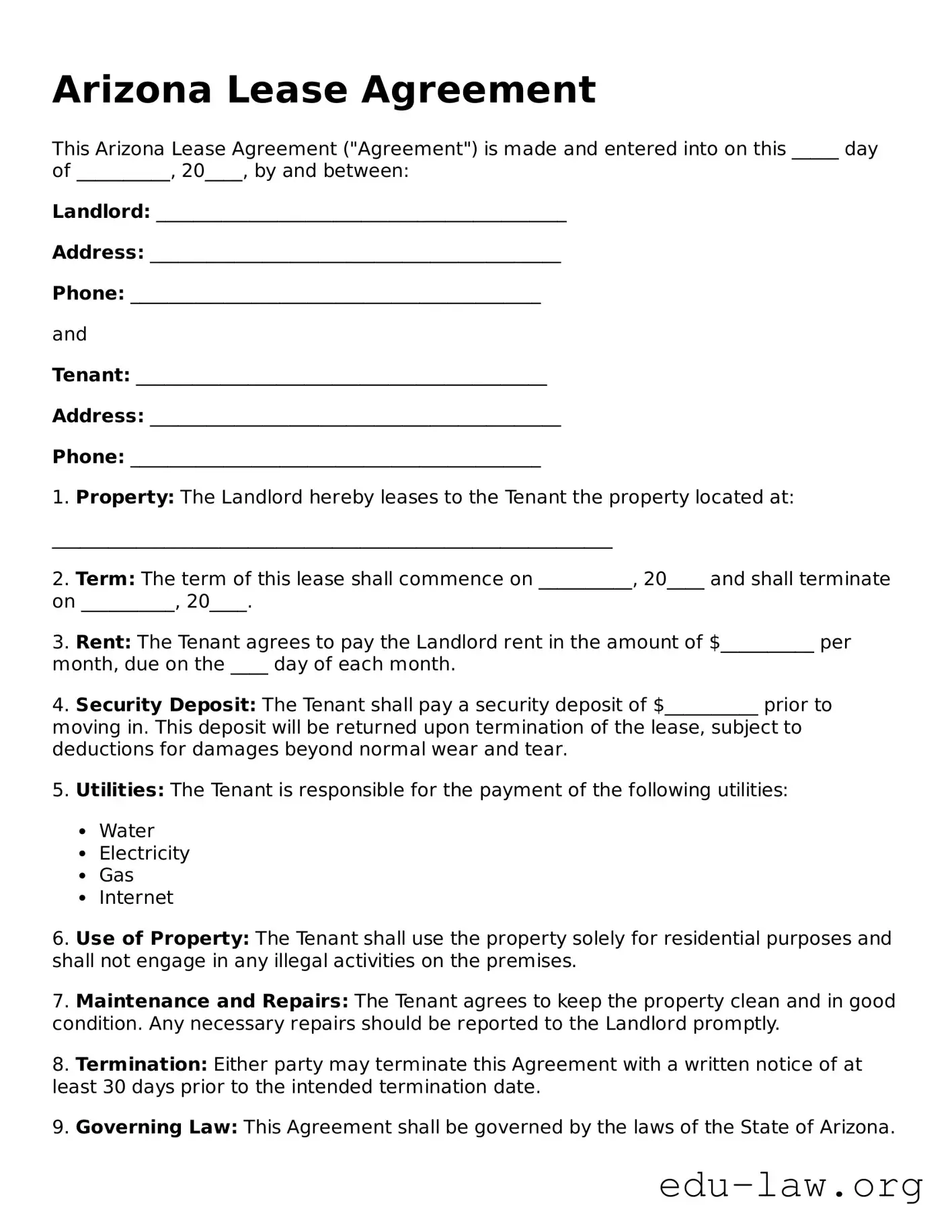
Arizona Lease Agreement
This Arizona Lease Agreement ("Agreement") is made and entered into on this _____ day of __________, 20____, by and between:
Landlord: ____________________________________________
Address: ____________________________________________
Phone: ____________________________________________
and
Tenant: ____________________________________________
Address: ____________________________________________
Phone: ____________________________________________
1. Property: The Landlord hereby leases to the Tenant the property located at:
____________________________________________________________
2. Term: The term of this lease shall commence on __________, 20____ and shall terminate on __________, 20____.
3. Rent: The Tenant agrees to pay the Landlord rent in the amount of $__________ per month, due on the ____ day of each month.
4. Security Deposit: The Tenant shall pay a security deposit of $__________ prior to moving in. This deposit will be returned upon termination of the lease, subject to deductions for damages beyond normal wear and tear.
5. Utilities: The Tenant is responsible for the payment of the following utilities:
6. Use of Property: The Tenant shall use the property solely for residential purposes and shall not engage in any illegal activities on the premises.
7. Maintenance and Repairs: The Tenant agrees to keep the property clean and in good condition. Any necessary repairs should be reported to the Landlord promptly.
8. Termination: Either party may terminate this Agreement with a written notice of at least 30 days prior to the intended termination date.
9. Governing Law: This Agreement shall be governed by the laws of the State of Arizona.
IN WITNESS WHEREOF, the parties hereto have executed this Agreement as of the date first above written.
Landlord Signature: _______________________________
Date: ___________________________________________
Tenant Signature: ________________________________
Date: ___________________________________________
| Fact Name | Description |
|---|---|
| Governing Law | The Arizona Lease Agreement is governed by Arizona state law, specifically Title 33 of the Arizona Revised Statutes. |
| Types of Leases | This form can be used for residential, commercial, and agricultural leases. |
| Duration | The lease can be for a fixed term or month-to-month, depending on the agreement between the landlord and tenant. |
| Security Deposit | Arizona law allows landlords to collect a security deposit, typically not exceeding one and a half times the monthly rent. |
| Written Requirement | While oral leases are valid for terms less than one year, a written lease is recommended for clarity and legal protection. |
| Tenant Rights | Tenants have specific rights, including the right to habitable premises and the right to privacy. |
| Landlord Obligations | Landlords must maintain the property and make necessary repairs to ensure it is livable. |
| Termination Notice | For month-to-month leases, either party must provide at least 30 days' written notice to terminate the agreement. |
| Dispute Resolution | Disputes can be resolved through mediation or small claims court, depending on the amount involved. |
| Additional Clauses | Parties may include additional clauses for pets, maintenance responsibilities, or other specific agreements. |
Completing the Arizona Lease Agreement form is a straightforward process that ensures both parties understand their rights and responsibilities. Follow these steps carefully to ensure all necessary information is accurately provided.
What is an Arizona Lease Agreement?
An Arizona Lease Agreement is a legally binding document that outlines the terms and conditions between a landlord and a tenant regarding the rental of a residential property. This agreement typically includes details about the rental amount, duration of the lease, security deposits, and responsibilities of both parties.
What key elements should be included in the lease agreement?
Essential elements of an Arizona Lease Agreement include the names of the landlord and tenant, the property address, the lease term (fixed or month-to-month), rent amount and due date, security deposit details, maintenance responsibilities, and any rules or regulations that apply to the property.
How long is a typical lease term in Arizona?
Lease terms in Arizona can vary widely. Commonly, leases are for one year, but they can also be shorter or longer. Month-to-month leases are another option, offering flexibility for both landlords and tenants.
Is a security deposit required in Arizona?
Yes, a security deposit is typically required. Arizona law allows landlords to charge a security deposit that cannot exceed one and a half times the monthly rent. This deposit protects the landlord against damages or unpaid rent at the end of the lease.
What are the tenant's rights regarding the lease agreement?
Tenants in Arizona have several rights, including the right to a habitable living environment, the right to privacy, and the right to receive a written notice before any entry by the landlord. Additionally, tenants can challenge unfair lease terms and seek legal remedies if their rights are violated.
Can a lease agreement be terminated early in Arizona?
Yes, a lease can be terminated early under certain circumstances. If both parties agree to end the lease, or if a tenant has a legal reason such as domestic violence or unsafe living conditions, they may terminate the lease without penalty. However, it's essential to follow the proper legal procedures.
What happens if a tenant fails to pay rent?
If a tenant fails to pay rent, the landlord has the right to issue a notice to pay or vacate. If the tenant does not respond or pay within the specified time, the landlord may proceed with eviction proceedings. It’s crucial for tenants to communicate with their landlord if they are facing financial difficulties.
Are there any specific laws that govern lease agreements in Arizona?
Yes, Arizona has specific laws that govern lease agreements, primarily found in the Arizona Residential Landlord and Tenant Act. This act outlines the rights and responsibilities of both landlords and tenants, ensuring fair treatment and legal recourse if disputes arise.
Can a landlord increase rent during the lease term?
Generally, landlords cannot increase rent during a fixed-term lease unless the lease specifically allows for it. For month-to-month leases, landlords can raise the rent, but they must provide written notice, typically 30 days in advance, before the increase takes effect.
What should I do if I have a dispute with my landlord?
If a dispute arises, it’s best to first communicate directly with your landlord to try to resolve the issue amicably. If that doesn’t work, you may consider mediation or contacting local housing authorities for assistance. Legal action is also an option, but it should be a last resort after other avenues have been exhausted.
Failing to include all tenant names. It's crucial to list everyone who will be living in the rental unit. Omitting a tenant can lead to disputes later.
Not specifying the lease term. Clearly state the duration of the lease, whether it’s month-to-month or a fixed term. This helps avoid confusion about when the lease ends.
Overlooking security deposit details. Make sure to include the amount of the security deposit and the conditions for its return. This protects both the landlord and the tenant.
Ignoring maintenance responsibilities. Clearly outline who is responsible for repairs and maintenance. This can prevent misunderstandings down the line.
Not reviewing the termination clauses. Ensure that the terms for ending the lease are clearly stated. Knowing how to properly terminate the lease is essential for both parties.
When entering into a lease agreement in Arizona, several other forms and documents are often utilized to ensure clarity and protection for both parties involved. Here’s a list of important documents that complement the Arizona Lease Agreement:
Utilizing these documents alongside the Arizona Lease Agreement can help create a smoother rental experience. They provide essential protections and clarify responsibilities for both landlords and tenants.
The Arizona Lease Agreement is similar to a Rental Agreement, which is often used interchangeably with a lease. Both documents outline the terms under which a tenant can occupy a property. However, a Rental Agreement typically covers shorter time frames, such as month-to-month arrangements, while a Lease Agreement usually spans a longer duration, often a year. Both documents detail the responsibilities of the landlord and tenant, including payment terms, maintenance obligations, and rules regarding the property, ensuring clarity for both parties involved.
Another document akin to the Arizona Lease Agreement is the Commercial Lease Agreement. This type of lease is specifically tailored for business properties rather than residential ones. While both agreements serve to establish a legal relationship between the landlord and tenant, a Commercial Lease often includes additional provisions related to business operations, such as permitted uses of the space, signage rights, and leasehold improvements. The complexity of commercial agreements can be greater due to the nature of business needs and the potential for higher financial stakes.
A Sublease Agreement is also comparable to the Arizona Lease Agreement. This document allows a tenant to rent out their leased property to another party, known as the subtenant. While the original lease remains in effect between the landlord and the primary tenant, the Sublease Agreement creates a new relationship between the primary tenant and the subtenant. It must adhere to the terms of the original lease, ensuring that the landlord's rights are preserved while allowing the primary tenant to recoup costs or accommodate changes in their living situation.
The Roommate Agreement is another related document that shares similarities with the Arizona Lease Agreement. This agreement is typically used when two or more individuals share a rental property. While it may not replace the formal lease, it outlines the responsibilities of each roommate, such as rent payment, utility sharing, and household chores. By establishing clear expectations, a Roommate Agreement helps to prevent disputes and fosters a cooperative living environment, much like a lease does for a landlord and tenant.
A Lease Option Agreement is also noteworthy in this context. This document provides a tenant with the option to purchase the property at a later date, often after a specified period. Like a Lease Agreement, it outlines the terms of occupancy and rent. However, it introduces an additional layer by giving the tenant the opportunity to buy the property, which can be beneficial for both parties. The tenant gains time to secure financing, while the landlord has the potential for a future sale.
Lastly, the Lease Purchase Agreement is similar to the Arizona Lease Agreement but combines elements of both leasing and purchasing. This document allows a tenant to rent a property with the intention of buying it at the end of the lease term. It establishes the rental terms while also setting a purchase price or method for determining it. This arrangement can be advantageous for tenants who may not currently qualify for a mortgage but wish to secure a home for the future, while landlords benefit from guaranteed rental income during the lease period.
When filling out the Arizona Lease Agreement form, it’s important to approach the task with care and attention. Here are some helpful tips on what to do and what to avoid:
When it comes to lease agreements in Arizona, many people hold misconceptions that can lead to confusion and potential issues. Understanding the truth behind these beliefs is essential for both landlords and tenants. Here are eight common misconceptions about the Arizona Lease Agreement form:
By debunking these misconceptions, both landlords and tenants can navigate the leasing process more effectively, ensuring a smoother and more positive rental experience.
When filling out and using the Arizona Lease Agreement form, there are several important points to keep in mind to ensure a smooth rental experience. Here are some key takeaways:
Taking these steps will help create a clear and effective lease agreement that protects the interests of both landlords and tenants.