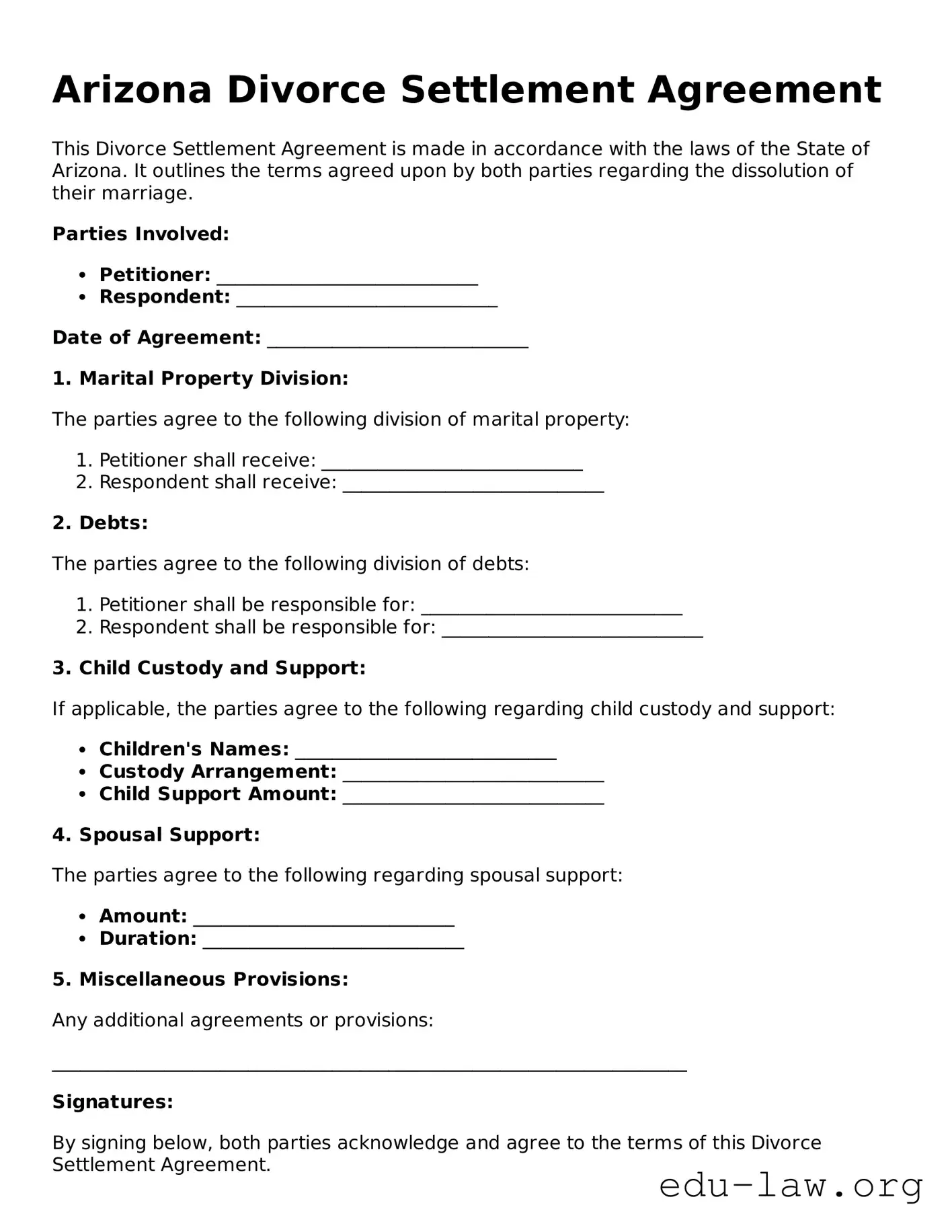
In the process of navigating a divorce in Arizona, individuals often encounter the Divorce Settlement Agreement form, a crucial document that outlines the terms of the separation. This form serves as a comprehensive blueprint for how assets, debts, and responsibilities will be divided between the parties involved. Key aspects of the agreement include the division of property, spousal support, and arrangements for any children, such as custody and visitation rights. It is essential for both parties to clearly articulate their needs and expectations within this document to avoid future disputes. The form also addresses financial obligations, ensuring that both individuals understand their rights and responsibilities moving forward. By carefully considering each element of the agreement, individuals can foster a smoother transition into their new lives, minimizing conflict and promoting clarity during a challenging time.
Arizona Divorce Settlement Agreement
This Divorce Settlement Agreement is made in accordance with the laws of the State of Arizona. It outlines the terms agreed upon by both parties regarding the dissolution of their marriage.
Parties Involved:
Date of Agreement: ____________________________
1. Marital Property Division:
The parties agree to the following division of marital property:
2. Debts:
The parties agree to the following division of debts:
3. Child Custody and Support:
If applicable, the parties agree to the following regarding child custody and support:
4. Spousal Support:
The parties agree to the following regarding spousal support:
5. Miscellaneous Provisions:
Any additional agreements or provisions:
____________________________________________________________________
Signatures:
By signing below, both parties acknowledge and agree to the terms of this Divorce Settlement Agreement.
Petitioner Signature: ____________________________ Date: ____________________________
Respondent Signature: ____________________________ Date: ____________________________
This agreement is binding upon both parties once signed and dated.
| Fact Name | Description |
|---|---|
| Governing Law | The Arizona Divorce Settlement Agreement is governed by Arizona state law, specifically under Title 25 of the Arizona Revised Statutes. |
| Purpose | This form outlines the terms agreed upon by both parties regarding the division of assets, debts, and other marital issues during a divorce. |
| Mutual Agreement | Both spouses must voluntarily agree to the terms outlined in the settlement agreement for it to be valid. |
| Filing Requirement | The completed agreement must be filed with the court as part of the divorce proceedings to ensure it is legally binding. |
| Child Custody and Support | If children are involved, the agreement should include provisions for custody arrangements and child support obligations. |
| Spousal Support | The agreement can also address spousal support, detailing any financial assistance one spouse may provide to the other post-divorce. |
| Modification | Once finalized, the terms can be modified only if both parties agree and submit the changes to the court for approval. |
Completing the Arizona Divorce Settlement Agreement form is an important step in finalizing your divorce. This document outlines the terms agreed upon by both parties regarding the division of assets, debts, and other relevant matters. After filling out the form, you will need to file it with the court as part of your divorce proceedings.
What is a Divorce Settlement Agreement in Arizona?
A Divorce Settlement Agreement is a legal document that outlines the terms and conditions agreed upon by both spouses during a divorce. This agreement typically covers important aspects such as the division of property, spousal support, child custody, and visitation rights. It serves as a comprehensive guide to ensure that both parties understand their rights and responsibilities following the divorce.
Who needs to file a Divorce Settlement Agreement?
Both spouses involved in the divorce process need to file a Divorce Settlement Agreement if they wish to resolve their issues amicably. This document is essential for those who have reached an understanding regarding the terms of their divorce. Filing this agreement with the court helps formalize the decisions made by both parties.
How do I create a Divorce Settlement Agreement?
Creating a Divorce Settlement Agreement involves several steps. First, both spouses should openly discuss their expectations and needs. It is beneficial to list all assets, debts, and any children involved. Once an understanding is reached, the terms should be clearly outlined in writing. Many people find it helpful to consult with a legal professional to ensure that the agreement complies with Arizona laws and adequately protects their interests.
Can I modify the Divorce Settlement Agreement after it is filed?
Yes, it is possible to modify a Divorce Settlement Agreement after it has been filed, but both parties must agree to the changes. If circumstances change significantly—such as a job loss or relocation—a modification may be necessary. The request for modification must be submitted to the court, and it is advisable to seek legal guidance to navigate this process effectively.
What happens if one party does not comply with the Divorce Settlement Agreement?
If one party fails to comply with the terms outlined in the Divorce Settlement Agreement, the other party may seek enforcement through the court. This could involve filing a motion to compel compliance or requesting a hearing. Courts take these agreements seriously, and failure to adhere to the terms can result in legal consequences.
Is a Divorce Settlement Agreement legally binding?
Yes, once signed and filed with the court, a Divorce Settlement Agreement becomes a legally binding contract. Both parties are required to follow the terms set forth in the agreement. If either party fails to do so, the other party has the right to pursue legal action to enforce the agreement.
Do I need a lawyer to draft a Divorce Settlement Agreement?
While it is not mandatory to have a lawyer draft your Divorce Settlement Agreement, it is highly recommended. A legal professional can provide valuable insights and ensure that the agreement is fair, comprehensive, and compliant with state laws. Having legal representation can also help prevent future disputes and misunderstandings.
How long does it take to finalize a Divorce Settlement Agreement?
The time it takes to finalize a Divorce Settlement Agreement can vary widely depending on the complexity of the issues involved and how well both parties communicate. If both spouses are in agreement and work collaboratively, the process can be relatively quick. However, if there are disputes or negotiations are lengthy, it may take several weeks or even months to reach a final agreement.
What should I do if my spouse and I cannot agree on the terms?
If you and your spouse cannot agree on the terms of the Divorce Settlement Agreement, consider mediation as a potential solution. A neutral third party can help facilitate discussions and guide both parties toward a mutually acceptable resolution. If mediation fails, it may be necessary to proceed to court, where a judge will make the final decisions regarding the divorce terms.
Where can I find the Arizona Divorce Settlement Agreement form?
The Arizona Divorce Settlement Agreement form can typically be found on the Arizona court's official website or through local family law courts. Many legal aid organizations also provide resources and templates that can assist you in preparing the agreement. It is essential to ensure that you are using the most current version of the form to comply with state regulations.
Inadequate Information: Failing to provide complete personal details, such as full names and addresses, can lead to delays or complications in the divorce process.
Incorrect Financial Disclosure: Omitting or inaccurately reporting income, assets, and debts can result in unfair settlements and potential legal repercussions.
Ignoring Child Support Guidelines: Not adhering to state guidelines for child support calculations may lead to disputes and future modifications.
Neglecting to Address Property Division: Failing to clearly outline how marital property will be divided can create confusion and conflict later on.
Not Considering Tax Implications: Overlooking the tax consequences of asset division can affect financial outcomes post-divorce.
Overlooking Spousal Support: Failing to specify terms for spousal support may lead to misunderstandings and disputes in the future.
Skipping Legal Review: Not having the agreement reviewed by a legal professional can result in missed legal rights or obligations.
Not Updating the Agreement: Failing to revise the agreement after major life changes can lead to complications down the line.
Rushing the Process: Completing the form hastily can lead to errors that may complicate the divorce proceedings.
Ignoring State-Specific Requirements: Not familiarizing oneself with Arizona-specific divorce laws can result in non-compliance and rejection of the form.
When navigating the divorce process in Arizona, several forms and documents complement the Divorce Settlement Agreement. Each of these documents serves a specific purpose and is essential for ensuring a smooth transition through the legal proceedings. Below is a list of commonly used forms that individuals may encounter.
Each of these documents plays a vital role in the divorce process. Understanding their functions can help individuals navigate the complexities of divorce proceedings more effectively. It is advisable to consult with a legal professional to ensure that all necessary forms are completed accurately and submitted in a timely manner.
The Arizona Parenting Plan is a document that outlines how parents will share responsibilities and make decisions regarding their children after a divorce. Similar to the Divorce Settlement Agreement, it aims to provide clarity and structure, ensuring that both parents understand their roles and obligations. The Parenting Plan addresses issues such as custody arrangements, visitation schedules, and child support, much like the Divorce Settlement Agreement covers the division of assets and responsibilities. Both documents are essential for establishing a cooperative co-parenting relationship and minimizing conflict.
The Child Support Order is another important document that parallels the Divorce Settlement Agreement. This order specifically details the financial support that one parent must provide to the other for the care of their children. Like the Divorce Settlement Agreement, it is legally binding and designed to ensure the well-being of the children involved. Both documents require careful consideration of the family's financial situation and aim to create a fair arrangement that supports the children's needs.
The Marital Settlement Agreement serves a similar purpose as the Divorce Settlement Agreement, but it is specifically focused on the division of marital property and debts. This document outlines how assets such as homes, vehicles, and bank accounts will be divided between spouses. While the Divorce Settlement Agreement may include broader terms related to the divorce process, the Marital Settlement Agreement hones in on the financial aspects, ensuring that both parties leave the marriage with a clear understanding of their financial responsibilities.
The Spousal Support Agreement is another document that is closely related to the Divorce Settlement Agreement. This agreement outlines any financial support one spouse may provide to the other after the divorce. Just as the Divorce Settlement Agreement addresses the division of property and responsibilities, the Spousal Support Agreement focuses on the ongoing financial obligations that may arise from the marriage. Both documents aim to provide stability and clarity to both parties during a significant life transition.
Finally, the Legal Separation Agreement shares similarities with the Divorce Settlement Agreement in that it also addresses the rights and responsibilities of spouses who are no longer living together but have not yet finalized a divorce. This document outlines the division of assets, child custody, and support obligations, much like the Divorce Settlement Agreement. Both agreements serve to protect the interests of both parties while providing a framework for their new living arrangements, whether they choose to reconcile or move forward with a divorce.
When filling out the Arizona Divorce Settlement Agreement form, there are several important considerations to keep in mind. Here’s a list of things you should and shouldn't do:
Understanding the Arizona Divorce Settlement Agreement form is crucial for anyone going through a divorce in the state. However, several misconceptions can lead to confusion. Here are ten common misunderstandings about this important document:
By addressing these misconceptions, individuals can better navigate the divorce process in Arizona and ensure they understand the purpose and importance of the Divorce Settlement Agreement form.
Filling out and using the Arizona Divorce Settlement Agreement form can seem daunting, but understanding key elements can simplify the process. Here are some important takeaways to keep in mind:
By keeping these points in mind, you can approach the Arizona Divorce Settlement Agreement with greater confidence and clarity.