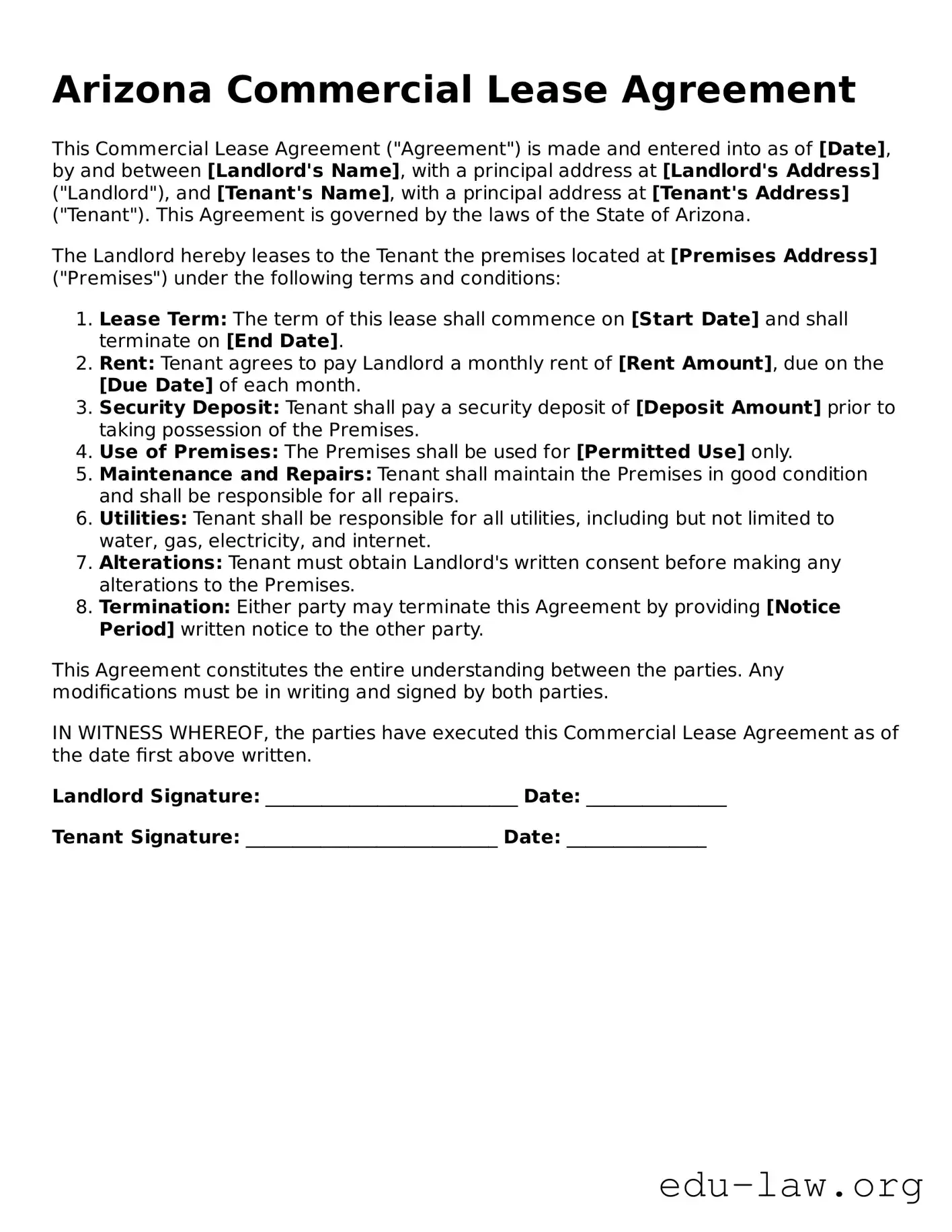
In the vibrant landscape of Arizona's commercial real estate, the Arizona Commercial Lease Agreement form plays a pivotal role in establishing clear and mutually beneficial relationships between landlords and tenants. This document serves as a comprehensive framework that outlines the terms and conditions governing the rental of commercial properties, ensuring that both parties understand their rights and obligations. Key components of the form include the lease duration, rental payment details, and maintenance responsibilities, all of which contribute to a well-structured agreement. Additionally, it addresses essential aspects such as security deposits, permitted use of the premises, and renewal options, which provide clarity and protection for both landlords and tenants. By incorporating provisions for dispute resolution and outlining the consequences of default, this agreement not only facilitates a smooth leasing process but also fosters a sense of security and trust between the involved parties. Understanding these elements is crucial for anyone looking to navigate the complexities of commercial leasing in Arizona.
Arizona Commercial Lease Agreement
This Commercial Lease Agreement ("Agreement") is made and entered into as of [Date], by and between [Landlord's Name], with a principal address at [Landlord's Address] ("Landlord"), and [Tenant's Name], with a principal address at [Tenant's Address] ("Tenant"). This Agreement is governed by the laws of the State of Arizona.
The Landlord hereby leases to the Tenant the premises located at [Premises Address] ("Premises") under the following terms and conditions:
This Agreement constitutes the entire understanding between the parties. Any modifications must be in writing and signed by both parties.
IN WITNESS WHEREOF, the parties have executed this Commercial Lease Agreement as of the date first above written.
Landlord Signature: ___________________________ Date: _______________
Tenant Signature: ___________________________ Date: _______________
| Fact Name | Description |
|---|---|
| Governing Law | The Arizona Commercial Lease Agreement is governed by the laws of the State of Arizona. |
| Parties Involved | The agreement typically involves a landlord (lessor) and a tenant (lessee), both of whom must be clearly identified. |
| Lease Duration | Leases can vary in length, often ranging from one year to several years, depending on the agreement between the parties. |
| Rent Payment Terms | The agreement specifies the amount of rent, payment schedule, and acceptable payment methods. |
| Security Deposit | A security deposit is usually required and its amount and conditions for return are detailed in the lease. |
| Use of Premises | The lease outlines permitted uses of the property, ensuring that the tenant understands what activities are allowed. |
| Termination Conditions | Conditions for termination of the lease are specified, including notice periods and any penalties for early termination. |
Filling out the Arizona Commercial Lease Agreement form requires careful attention to detail. This document outlines the terms and conditions of the lease, ensuring both parties understand their rights and obligations. Completing the form accurately is essential for a smooth leasing process.
What is an Arizona Commercial Lease Agreement?
An Arizona Commercial Lease Agreement is a legal document that outlines the terms and conditions under which a tenant can rent commercial property from a landlord. This agreement typically includes details such as the duration of the lease, rental payment amounts, maintenance responsibilities, and any specific rules or regulations that must be followed. It serves to protect both parties by clearly defining their rights and obligations.
What are the key components of a Commercial Lease Agreement?
Several important components should be included in a Commercial Lease Agreement. These typically consist of the lease term, which specifies how long the tenant will occupy the space; the rent amount and payment schedule; security deposit requirements; maintenance responsibilities; and any restrictions on the use of the property. Additionally, clauses regarding renewal options, termination conditions, and dispute resolution are often included to provide clarity and protection for both parties.
How long does a commercial lease typically last in Arizona?
The duration of a commercial lease in Arizona can vary widely, depending on the needs of the tenant and the landlord. Common lease terms range from one year to five years, but longer leases are not uncommon. Some agreements may even offer options to renew for additional terms. It is important for both parties to negotiate a term that suits their respective business plans and financial situations.
What happens if the tenant wants to terminate the lease early?
If a tenant wishes to terminate the lease early, they must refer to the specific terms outlined in the Commercial Lease Agreement. Many agreements include an early termination clause that may require the tenant to provide notice, pay a fee, or forfeit their security deposit. It is crucial for tenants to understand these terms before signing the lease, as breaking a lease can lead to financial penalties and legal issues.
Are there any specific laws governing commercial leases in Arizona?
Yes, commercial leases in Arizona are governed by state laws, which provide a framework for landlord-tenant relationships. While many aspects of commercial leases are negotiable, certain laws protect both parties. For instance, Arizona law requires landlords to maintain the property in a safe and habitable condition. Tenants also have rights regarding the return of their security deposit. Understanding these laws can help both parties navigate their responsibilities and rights effectively.
Can a commercial lease be modified after it has been signed?
Yes, a commercial lease can be modified after it has been signed, but both parties must agree to the changes. Modifications should be documented in writing and signed by both the landlord and the tenant to ensure clarity and enforceability. This could involve changes to the lease term, rent amount, or other specific terms. Always ensure that any modifications do not violate existing laws or regulations.
What should a tenant do if they have a dispute with their landlord?
If a tenant encounters a dispute with their landlord, the first step is to review the Commercial Lease Agreement to understand their rights and obligations. Open communication is often the best approach; discussing the issue directly with the landlord can lead to a resolution. If the dispute cannot be resolved amicably, tenants may consider mediation or legal action, depending on the situation. Seeking legal advice can also provide guidance on the best course of action.
Not Reading the Entire Agreement
Many individuals overlook the importance of reading the entire lease agreement. Skimming through can lead to missing crucial details that affect the lease terms.
Incorrectly Filling Out the Property Description
Providing an inaccurate description of the leased property can create confusion. It's essential to clearly identify the location and specific details of the space being leased.
Forgetting to Specify Lease Duration
Some people neglect to clearly state the lease duration. This oversight can lead to misunderstandings about the length of the lease agreement.
Ignoring Rent Payment Details
Failing to include specific details about rent payments, such as the amount, due date, and payment method, can result in disputes later on.
Overlooking Maintenance Responsibilities
Not addressing who is responsible for maintenance and repairs can lead to conflicts. Clearly defining these responsibilities in the lease is crucial.
Not Including Terms for Renewal or Termination
Some people forget to add terms regarding lease renewal or termination. This can create uncertainty about what happens when the lease expires.
Neglecting to Sign the Agreement
Finally, one of the most common mistakes is not signing the lease. Without signatures from both parties, the agreement may not be legally binding.
When entering into a commercial lease agreement in Arizona, several additional forms and documents may be necessary to ensure a smooth process. These documents help clarify the terms of the lease, protect the rights of both parties, and provide essential information about the property and its use.
These documents work together with the Arizona Commercial Lease Agreement to create a comprehensive understanding between landlords and tenants. Being well-prepared with the necessary paperwork can lead to a successful leasing experience.
The Arizona Residential Lease Agreement is similar to the Commercial Lease Agreement in that both documents outline the terms and conditions under which property is rented. While the Residential Lease is designed for living spaces, the Commercial Lease focuses on business premises. Each agreement specifies the duration of the lease, the amount of rent, and the responsibilities of both the landlord and tenant. Both documents aim to protect the rights of the parties involved and ensure a clear understanding of the leasing arrangement.
The Arizona Month-to-Month Lease Agreement shares similarities with the Commercial Lease Agreement in its flexibility. Both agreements allow tenants to occupy a space without a long-term commitment. The Month-to-Month Lease can be terminated with short notice, just like certain provisions in a Commercial Lease. This type of lease is ideal for businesses that may need to adjust their space requirements frequently or are uncertain about their long-term plans.
The Arizona Lease Option Agreement is another document that resembles the Commercial Lease Agreement. It provides tenants with the option to purchase the property at a later date. This agreement typically includes terms for rent payments and purchase price, similar to how a Commercial Lease outlines rent and property use. Both documents serve as a means to secure the tenant's interest in the property while offering the landlord a reliable income stream.
The Arizona Sublease Agreement is akin to the Commercial Lease Agreement in that it allows a tenant to lease all or part of their rented space to another party. Both agreements require the original tenant to adhere to the terms set forth in the primary lease. This arrangement is common in commercial settings where businesses may need to share space or reduce their overhead costs, while still maintaining their lease obligations.
The Arizona Assignment of Lease Agreement is similar to the Commercial Lease Agreement as it allows a tenant to transfer their lease rights and obligations to another party. This document ensures that the new tenant assumes the responsibilities outlined in the original lease. Both agreements focus on the continuity of the lease terms, providing a clear pathway for the landlord to maintain their rental income while accommodating changes in tenancy.
The Arizona Commercial Rental Application is related to the Commercial Lease Agreement as it serves as a preliminary step in the leasing process. This document collects essential information about potential tenants, including their financial background and business history. Both the application and the lease agreement aim to establish a trustworthy relationship between landlords and tenants, ensuring that each party understands the expectations before entering into a formal agreement.
The Arizona Commercial Lease Termination Agreement is similar to the Commercial Lease Agreement in that it outlines the process for ending a lease. This document specifies the conditions under which a lease can be terminated, including notice periods and any obligations that must be fulfilled before vacating the premises. Both agreements are crucial in providing a clear understanding of the rights and responsibilities of both parties when it comes to concluding the leasing arrangement.
When filling out the Arizona Commercial Lease Agreement form, attention to detail is crucial. Here are some key dos and don'ts to keep in mind:
Understanding the Arizona Commercial Lease Agreement form is crucial for both landlords and tenants. However, several misconceptions can lead to confusion. Here are nine common misconceptions:
Being aware of these misconceptions can help both landlords and tenants navigate the leasing process more effectively.
When filling out and using the Arizona Commercial Lease Agreement form, there are several important aspects to keep in mind. Here are key takeaways that can help ensure a smooth leasing process:
By keeping these takeaways in mind, both landlords and tenants can navigate the Arizona Commercial Lease Agreement process more effectively.