In Arizona, a Cease and Desist Letter serves as a formal request for an individual or entity to stop engaging in specific actions that may infringe upon the rights of another party. This letter is often used in situations involving harassment, intellectual property disputes, or contract violations. The form typically includes essential details such as the sender's contact information, a clear description of the behavior that is being challenged, and the legal basis for the request. Additionally, it may outline the potential consequences of non-compliance, emphasizing the importance of taking the matter seriously. By providing a structured way to communicate grievances, the Cease and Desist Letter can help resolve disputes without resorting to litigation, making it a valuable tool for individuals and businesses alike. Understanding how to properly draft and deliver this letter can significantly impact the outcome of the situation at hand.
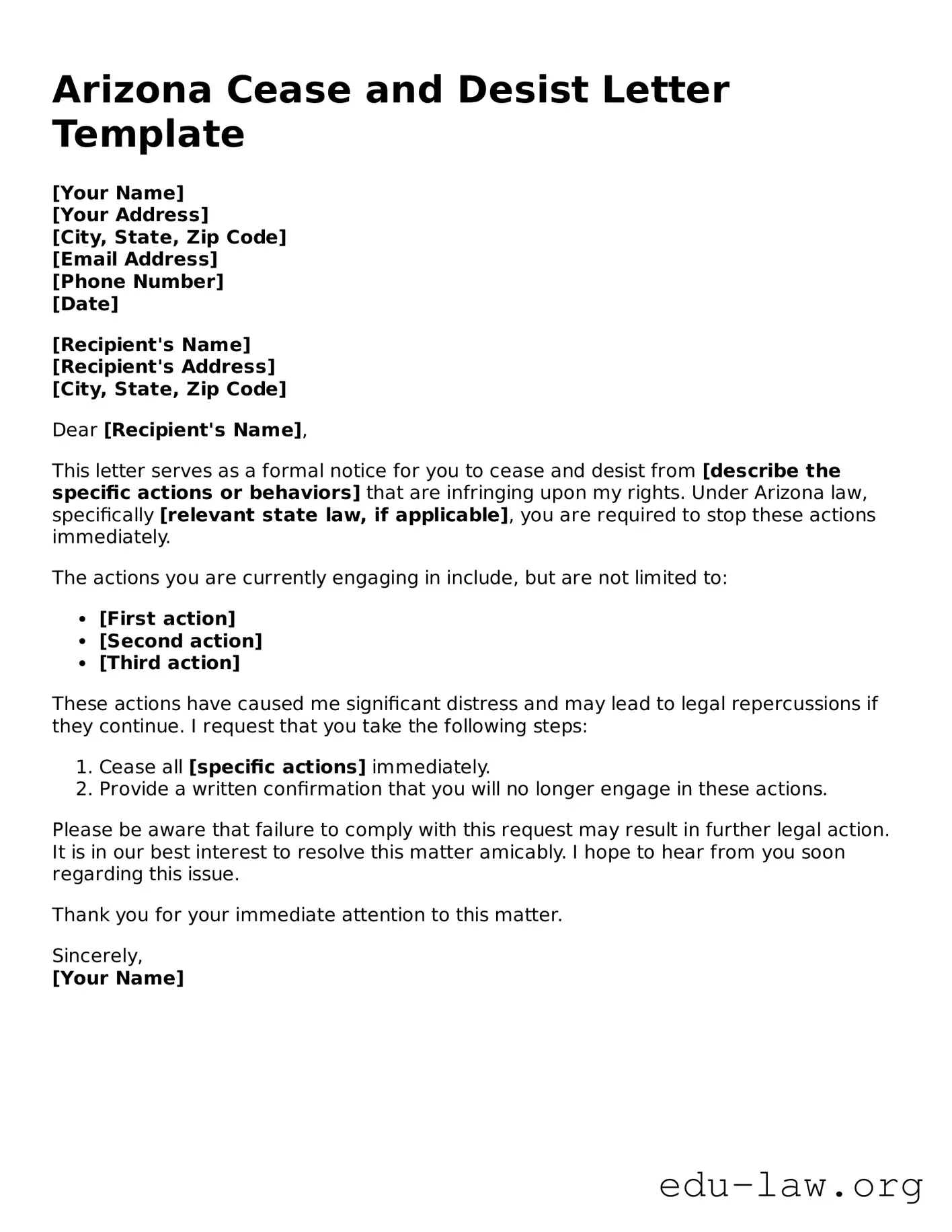
Arizona Cease and Desist Letter Template
[Your Name]
[Your Address]
[City, State, Zip Code]
[Email Address]
[Phone Number]
[Date]
[Recipient's Name]
[Recipient's Address]
[City, State, Zip Code]
Dear [Recipient's Name],
This letter serves as a formal notice for you to cease and desist from [describe the specific actions or behaviors] that are infringing upon my rights. Under Arizona law, specifically [relevant state law, if applicable], you are required to stop these actions immediately.
The actions you are currently engaging in include, but are not limited to:
These actions have caused me significant distress and may lead to legal repercussions if they continue. I request that you take the following steps:
Please be aware that failure to comply with this request may result in further legal action. It is in our best interest to resolve this matter amicably. I hope to hear from you soon regarding this issue.
Thank you for your immediate attention to this matter.
Sincerely,
[Your Name]
| Fact Name | Details |
|---|---|
| Definition | A Cease and Desist Letter is a formal request to stop an alleged illegal activity. |
| Purpose | It aims to notify the recipient of a perceived violation and requests that they cease the activity. |
| Governing Law | In Arizona, these letters are governed by state law, including contract and tort law. |
| Usage | Commonly used in disputes over intellectual property, harassment, or contract violations. |
| Format | The letter should be clear, concise, and include specific details about the alleged violation. |
| Recipient | It is typically sent to an individual or organization believed to be infringing on rights. |
| Response | The recipient may respond with compliance, a counterclaim, or ignore the letter. |
| Legal Standing | A Cease and Desist Letter itself does not have legal authority but can precede legal action. |
After obtaining the Arizona Cease and Desist Letter form, the next step involves carefully filling it out to ensure that all necessary information is included. This form will help communicate your request effectively, so attention to detail is important.
Once the form is filled out, it is important to send it to the recipient using a method that provides proof of delivery, such as certified mail. This ensures that you have documentation of the communication.
What is a Cease and Desist Letter?
A Cease and Desist Letter is a formal request for an individual or organization to stop an activity that is believed to be illegal or harmful. This letter serves as a warning, outlining the specific behavior that needs to stop and often includes a request for the recipient to confirm that they will comply.
When should I use a Cease and Desist Letter in Arizona?
You should consider using a Cease and Desist Letter when someone is infringing on your rights, such as copyright or trademark violations, harassment, or defamation. It’s often a first step before pursuing legal action, providing the other party an opportunity to resolve the issue amicably.
Do I need a lawyer to write a Cease and Desist Letter?
While you can write a Cease and Desist Letter on your own, consulting with a lawyer can be beneficial. A legal professional can ensure that your letter is well-crafted, clearly states your position, and includes the necessary legal references to strengthen your case.
What should I include in my Cease and Desist Letter?
Your letter should include your contact information, a clear description of the behavior you want to stop, evidence supporting your claims, and a deadline for compliance. It’s also important to state the potential consequences if the recipient fails to comply, such as legal action.
Is a Cease and Desist Letter legally binding?
A Cease and Desist Letter is not legally binding on its own. However, it can serve as an important document in legal proceedings, demonstrating that you attempted to resolve the issue before escalating it to court. It’s a way to show that you took the matter seriously and gave the other party a chance to correct their behavior.
How do I deliver a Cease and Desist Letter?
You can deliver the letter via certified mail, email, or even in person, depending on the situation. Using certified mail provides proof of delivery, which can be helpful if you need to take further action later. Ensure that you keep a copy for your records.
What happens if the recipient ignores the Cease and Desist Letter?
If the recipient ignores your letter, you may need to consider further action, such as filing a lawsuit. The letter serves as a documented attempt to resolve the issue, which can be valuable if you decide to escalate the matter legally.
Can I use a Cease and Desist Letter for non-legal disputes?
Yes, a Cease and Desist Letter can be used for non-legal disputes as well. For example, if someone is harassing you or violating a personal agreement, you can use this letter to formally request that they stop their behavior. It's a way to assert your rights and communicate your boundaries clearly.
Failing to Clearly Identify the Parties: It is crucial to accurately identify both the sender and the recipient of the letter. Missing names or incorrect addresses can lead to confusion and weaken your position.
Not Specifying the Conduct to Cease: Clearly outline the specific actions or behaviors that you want the recipient to stop. Vague language can result in misunderstandings.
Ignoring the Importance of Evidence: Providing evidence to support your claims strengthens your case. Failing to include relevant documentation can make your demands less compelling.
Omitting a Deadline for Compliance: It is essential to specify a reasonable deadline by which the recipient must comply with your demands. Without a deadline, there may be no urgency to respond.
Using Aggressive or Hostile Language: While the situation may be frustrating, using overly aggressive language can escalate tensions. A professional tone is more likely to yield positive results.
Neglecting to Include Contact Information: Always provide your contact information. This allows the recipient to reach out for clarification or to discuss the matter further.
Failing to Keep a Copy: Always retain a copy of the letter for your records. This is important for future reference and any potential legal proceedings.
Not Seeking Legal Advice: If the situation is complex, consider consulting a legal professional. They can provide guidance to ensure your letter is effective and legally sound.
When dealing with disputes or potential legal issues, a Cease and Desist Letter is often just one part of the process. Several other documents may accompany it to ensure clarity and protection of rights. Below is a list of forms and documents that are frequently used alongside the Arizona Cease and Desist Letter.
Understanding these additional documents can help individuals navigate the complexities of legal disputes more effectively. Each serves a unique purpose and can enhance communication and resolution efforts between parties involved.
The Arizona Cease and Desist Letter serves as a formal request to stop certain actions. A similar document is the Demand Letter. A Demand Letter outlines specific grievances and requests that the recipient take corrective action. Both documents aim to resolve disputes without resorting to litigation, but a Demand Letter often includes a request for monetary compensation, while a Cease and Desist Letter focuses on stopping specific behaviors.
Another comparable document is the Notice of Violation. This document is typically used to inform someone that they are in breach of a law or regulation. Like a Cease and Desist Letter, a Notice of Violation demands that the recipient cease their infringing actions. However, a Notice of Violation is often issued by governmental bodies, whereas a Cease and Desist Letter can be sent by individuals or businesses.
The Settlement Agreement also shares similarities with the Cease and Desist Letter. A Settlement Agreement is used to resolve disputes and typically involves both parties agreeing to certain terms. While a Cease and Desist Letter demands immediate action to stop specific conduct, a Settlement Agreement often outlines a more comprehensive resolution to avoid future conflicts.
A Letter of Intent can resemble a Cease and Desist Letter in that it outlines the intentions of one party toward another. It may express a desire to negotiate or establish terms, similar to how a Cease and Desist Letter communicates the need for a change in behavior. However, a Letter of Intent is generally more focused on future agreements rather than immediate cessation of actions.
The Warning Letter is another document that aligns closely with the Cease and Desist Letter. A Warning Letter serves as a preliminary notice to inform someone of their potential misconduct. Both documents aim to alert the recipient to problematic behavior, but a Warning Letter may not always demand immediate cessation, while a Cease and Desist Letter does.
Additionally, the Non-Disclosure Agreement (NDA) can be seen as similar in its intent to protect interests. An NDA restricts parties from sharing sensitive information, while a Cease and Desist Letter seeks to halt specific actions that may infringe on rights or agreements. Both documents are preventive in nature, aiming to safeguard against future issues.
The Temporary Restraining Order (TRO) also bears resemblance to the Cease and Desist Letter. A TRO is a legal order to maintain the status quo and prevent further harm. While a Cease and Desist Letter is a request, a TRO is enforceable by law, providing immediate relief to the aggrieved party. Both documents serve to stop unwanted actions, but the TRO carries legal weight.
The Release of Liability form can be considered similar as well. This document is used to protect one party from legal claims by another. While a Cease and Desist Letter seeks to prevent further actions, a Release of Liability often addresses past actions. Both documents aim to clarify rights and responsibilities, helping to avoid future disputes.
Lastly, the Arbitration Agreement can be likened to the Cease and Desist Letter. An Arbitration Agreement establishes a process for resolving disputes outside of court. While a Cease and Desist Letter seeks to halt specific actions, an Arbitration Agreement sets the stage for resolving those disputes if they escalate. Both documents aim to manage conflict and provide a framework for resolution.
When filling out the Arizona Cease and Desist Letter form, it is important to follow certain guidelines to ensure clarity and effectiveness. Here is a list of things you should and shouldn't do:
Many individuals have misunderstandings about the Arizona Cease and Desist Letter form. It’s important to clarify these misconceptions to ensure proper use and understanding of this legal document. Here are five common misconceptions:
This is not true. While lawyers can draft these letters, anyone can create a Cease and Desist Letter. It serves as a formal request to stop an action that is believed to be unlawful or harmful.
While these letters can be effective in prompting a response, they do not guarantee that the recipient will comply. The recipient may choose to ignore the letter or dispute its claims.
This misconception limits the scope of the letter. It can address various issues, including harassment, defamation, and trademark infringement, among others.
Sending a letter does not obligate you to pursue legal action. It can serve as a first step to resolve a dispute amicably without escalating to litigation.
This is a misconception. A Cease and Desist Letter is a request, not a legally binding document. It may lead to further discussions or negotiations, but it does not settle the matter on its own.
Understanding these points can help individuals use the Arizona Cease and Desist Letter form more effectively and navigate potential disputes with greater confidence.
When filling out and using the Arizona Cease and Desist Letter form, keep the following key points in mind:
Using this form properly can help protect your rights and resolve disputes efficiently.