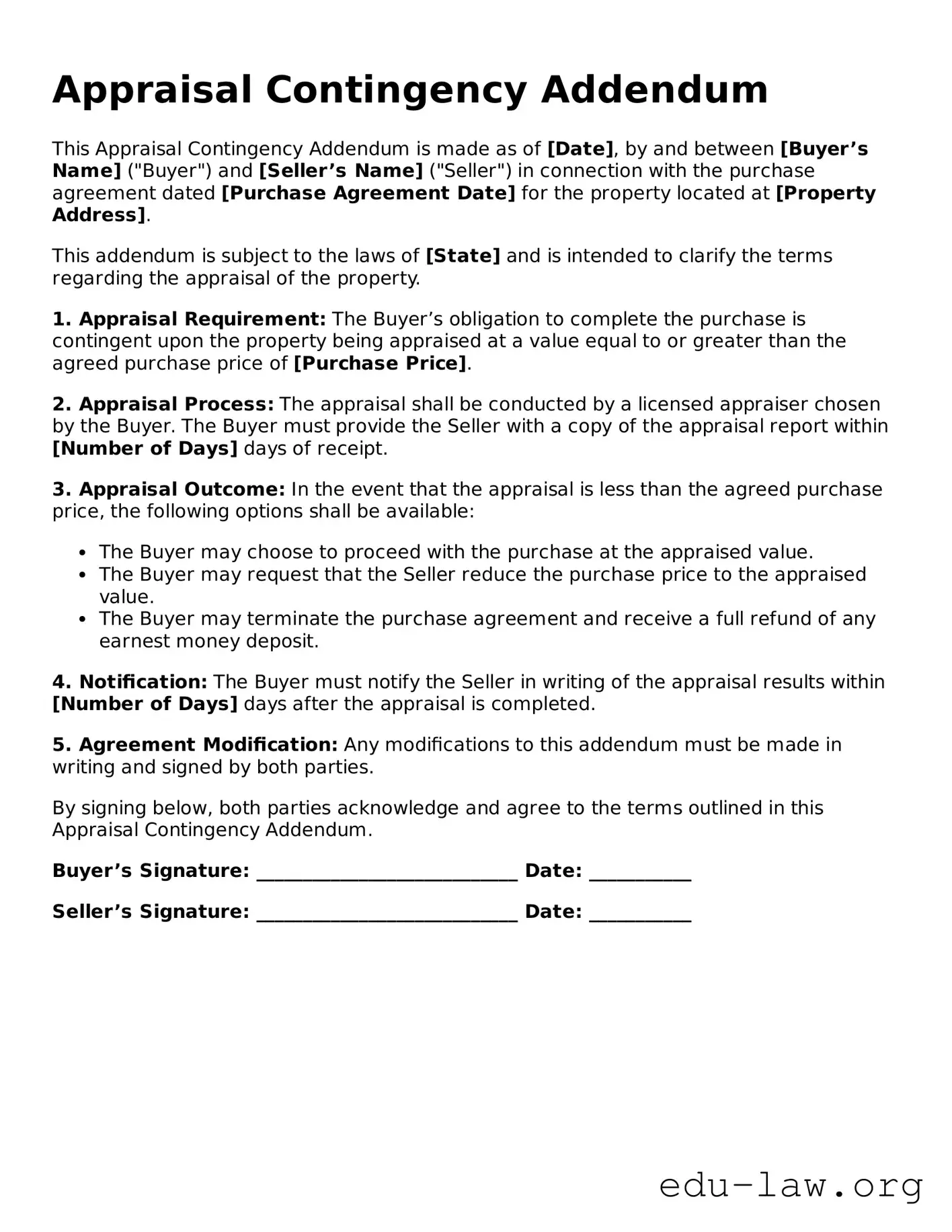
The Appraisal Contingency Addendum is an essential document in real estate transactions, particularly for buyers seeking to safeguard their investment. This form acts as a protective measure, allowing buyers to ensure that the property they are purchasing is valued appropriately. When a buyer includes this addendum in their purchase agreement, it stipulates that the sale is contingent upon the property receiving a satisfactory appraisal. If the appraisal comes in lower than the agreed purchase price, the buyer has several options, including renegotiating the price, requesting repairs, or even walking away from the deal without penalty. By incorporating this addendum, buyers can mitigate the risk of overpaying for a property, while sellers are also informed of the potential hurdles they may face in the sale process. Understanding the nuances of this form is crucial for both parties, as it not only impacts the financial aspects of the transaction but also influences negotiations and timelines. The Appraisal Contingency Addendum serves as a key tool in fostering transparency and fairness in real estate dealings, ensuring that both buyers and sellers are on the same page regarding the property's value.
Appraisal Contingency Addendum
This Appraisal Contingency Addendum is made as of [Date], by and between [Buyer’s Name] ("Buyer") and [Seller’s Name] ("Seller") in connection with the purchase agreement dated [Purchase Agreement Date] for the property located at [Property Address].
This addendum is subject to the laws of [State] and is intended to clarify the terms regarding the appraisal of the property.
1. Appraisal Requirement: The Buyer’s obligation to complete the purchase is contingent upon the property being appraised at a value equal to or greater than the agreed purchase price of [Purchase Price].
2. Appraisal Process: The appraisal shall be conducted by a licensed appraiser chosen by the Buyer. The Buyer must provide the Seller with a copy of the appraisal report within [Number of Days] days of receipt.
3. Appraisal Outcome: In the event that the appraisal is less than the agreed purchase price, the following options shall be available:
4. Notification: The Buyer must notify the Seller in writing of the appraisal results within [Number of Days] days after the appraisal is completed.
5. Agreement Modification: Any modifications to this addendum must be made in writing and signed by both parties.
By signing below, both parties acknowledge and agree to the terms outlined in this Appraisal Contingency Addendum.
Buyer’s Signature: ____________________________ Date: ___________
Seller’s Signature: ____________________________ Date: ___________
| Fact Name | Description |
|---|---|
| Purpose | The Appraisal Contingency Addendum is used to protect buyers in real estate transactions by ensuring the property appraises at or above the purchase price. |
| Governing Law | This addendum is governed by the real estate laws of the respective state where the property is located. |
| Timeframe | Typically, the buyer must complete the appraisal within a specified time frame, often set in the purchase agreement. |
| Outcome Options | If the appraisal comes in low, buyers can negotiate repairs, lower the purchase price, or cancel the contract without penalty. |
| Financing Impact | Lenders require appraisals for financing, making this addendum crucial for buyers seeking loans. |
| State Variations | Different states may have specific forms and requirements for the Appraisal Contingency Addendum, so it's important to check local regulations. |
When preparing to fill out the Appraisal Contingency Addendum form, it’s important to gather the necessary information beforehand. This will help ensure a smooth process. Follow these steps to complete the form accurately.
Once you have completed the form, ensure that both parties retain a copy for their records. This will help keep everyone informed as the transaction progresses.
What is an Appraisal Contingency Addendum?
The Appraisal Contingency Addendum is a document used in real estate transactions that allows buyers to protect themselves against overpaying for a property. Essentially, it stipulates that the purchase is contingent upon the property being appraised at or above a certain value. If the appraisal comes in lower than expected, the buyer has the right to renegotiate the purchase price or, in some cases, withdraw from the transaction without penalty.
Why is an Appraisal Contingency important for buyers?
This addendum is crucial for buyers because it safeguards their financial interests. Real estate markets can be unpredictable, and properties may sometimes be listed at inflated prices. By including an appraisal contingency, buyers ensure that they are not stuck paying more than the market value for a home. This protection can help prevent financial strain and allows for informed decision-making throughout the buying process.
How does the appraisal process work in relation to the addendum?
Once the Appraisal Contingency Addendum is included in the purchase agreement, the buyer typically hires a licensed appraiser to evaluate the property. The appraiser examines various factors, including the home’s condition, location, and comparable sales in the area. After completing the assessment, the appraiser provides a report with the determined value. If this value meets or exceeds the agreed-upon purchase price, the sale can proceed. If it falls short, the buyer can negotiate or decide to walk away.
Can sellers refuse to accept an appraisal contingency?
Sellers can choose whether or not to accept an appraisal contingency in an offer. In a competitive market, some sellers may prefer offers without contingencies to minimize the risk of the sale falling through. However, buyers should weigh their options carefully. If a seller refuses to accept an appraisal contingency, buyers must decide if they are comfortable proceeding without that protection, potentially exposing themselves to financial risk.
What happens if the appraisal comes in lower than the purchase price?
If the appraisal value is lower than the purchase price, the buyer has several options. They can negotiate with the seller to lower the sale price to match the appraised value. Alternatively, the buyer may choose to cover the difference out of pocket, particularly if they are committed to purchasing the property. If neither option is viable, the buyer can exercise their right to terminate the agreement without penalty, as long as the appraisal contingency is properly included in the contract.
Failing to clearly state the appraisal value. Buyers should ensure they specify the expected appraisal amount. Leaving this blank can lead to confusion.
Not including a deadline for the appraisal. It’s important to set a reasonable timeframe for when the appraisal should be completed to avoid delays in the transaction.
Neglecting to check the box for the appraisal contingency. This step is crucial. If the box is not checked, the contingency may not be recognized.
Overlooking the signature requirement. Both parties must sign the addendum. Without signatures, the document is not legally binding.
Providing insufficient information about the property. Detailed descriptions can help clarify the expectations and avoid misunderstandings.
Ignoring local market conditions. Buyers should consider the current market when setting their appraisal expectations. This can prevent unrealistic assessments.
Failing to communicate with the lender. Buyers should keep their lender informed about the appraisal process. This ensures everyone is on the same page.
Not consulting with a real estate agent. It’s beneficial to seek guidance from a professional. An agent can provide valuable insights into the appraisal process.
The Appraisal Contingency Addendum is an important document in real estate transactions, particularly when buyers want to ensure that the property's appraised value meets or exceeds the purchase price. However, several other forms and documents often accompany this addendum to provide clarity and protect the interests of all parties involved. Below is a list of these commonly used documents.
Understanding these documents is essential for navigating the complexities of a real estate transaction. Each form plays a unique role in protecting the interests of buyers and sellers, ensuring a smoother process from start to finish.
The Appraisal Contingency Addendum is closely related to the Home Inspection Contingency Addendum. Both documents protect the buyer by allowing them to back out of a purchase if certain conditions are not met. In the case of the Home Inspection Contingency, the buyer can withdraw if the inspection reveals significant issues. Similarly, the Appraisal Contingency allows the buyer to exit the deal if the property appraises for less than the agreed purchase price, ensuring they do not overpay.
Another similar document is the Financing Contingency Addendum. This form secures the buyer's interests by stipulating that the purchase is contingent upon obtaining financing. If the buyer cannot secure a loan, they can terminate the agreement without penalty. Just as the Appraisal Contingency protects against overvaluation, the Financing Contingency protects against the inability to fund the purchase.
The Title Contingency Addendum is also relevant. This document ensures that the buyer can back out if there are issues with the property's title, such as liens or ownership disputes. Both the Title Contingency and the Appraisal Contingency serve as safeguards, allowing buyers to make informed decisions based on the property's legal and financial standing.
The Seller Disclosure Addendum is another important document. This form requires sellers to disclose known issues with the property, such as structural problems or past pest infestations. While the Appraisal Contingency focuses on the property's market value, the Seller Disclosure Addendum emphasizes transparency about the property's condition, providing buyers with essential information to make informed decisions.
The Purchase Agreement itself shares similarities with the Appraisal Contingency Addendum. The Purchase Agreement outlines the terms of the sale, including contingencies. Both documents work together to establish the conditions under which a buyer can proceed or withdraw from the transaction, highlighting the importance of clear terms in real estate deals.
The Kick-Out Clause is another related document. This clause allows sellers to continue marketing their property while the buyer's offer is contingent. If another buyer makes a better offer, the seller can give the first buyer a specified time to remove contingencies, including the appraisal. This dynamic is similar to the Appraisal Contingency, where the buyer must act within certain parameters to secure the deal.
The Repair Addendum also bears resemblance. This document outlines any repairs the seller agrees to make before closing. If the appraisal identifies issues requiring repair, the buyer can negotiate these terms. Both the Repair Addendum and the Appraisal Contingency work together to ensure the buyer is satisfied with the property's condition before finalizing the sale.
The Lease Contingency Addendum is another document that parallels the Appraisal Contingency. This form allows a buyer to withdraw if they cannot secure a lease for a property they intend to rent. While the focus is different, both contingencies provide a safety net for buyers, ensuring they are not locked into a deal that does not meet their financial or practical needs.
Finally, the Closing Date Contingency Addendum is relevant. This document specifies that the sale is contingent upon the ability to close by a certain date. If the appraisal delays the process, the buyer can negotiate a new timeline or withdraw. Both the Closing Date and Appraisal Contingencies emphasize the importance of timing in real estate transactions, ensuring that buyers have the flexibility they need to make informed choices.
When filling out the Appraisal Contingency Addendum form, there are several important things to keep in mind. Here’s a list of what you should and shouldn’t do:
The Appraisal Contingency Addendum form is an important tool in real estate transactions, yet several misconceptions surround it. Understanding these misconceptions can help buyers and sellers navigate the process more effectively. Here’s a list of ten common misunderstandings:
By addressing these misconceptions, buyers and sellers can approach the appraisal process with greater confidence and clarity.
When dealing with real estate transactions, the Appraisal Contingency Addendum form plays a crucial role in protecting buyers. Here are some key takeaways to consider when filling out and using this form:
By keeping these points in mind, buyers can navigate the appraisal process more effectively and safeguard their investment.