When navigating the emotional and often complex journey of divorce, understanding the necessary paperwork is crucial. One of the first steps in this process is completing the Application for Divorce form. This document serves as the official request to the court for the dissolution of marriage and outlines essential information about both spouses. It typically includes details such as the names and addresses of the parties involved, the date of marriage, and the grounds for divorce. Additionally, it may address matters related to child custody, support arrangements, and the division of assets and debts. By providing a clear and comprehensive overview of these aspects, the Application for Divorce form sets the stage for the legal proceedings that follow, ensuring that both parties are on the same page regarding their intentions and expectations. Understanding this form not only helps in streamlining the process but also empowers individuals to approach their divorce with greater clarity and confidence.

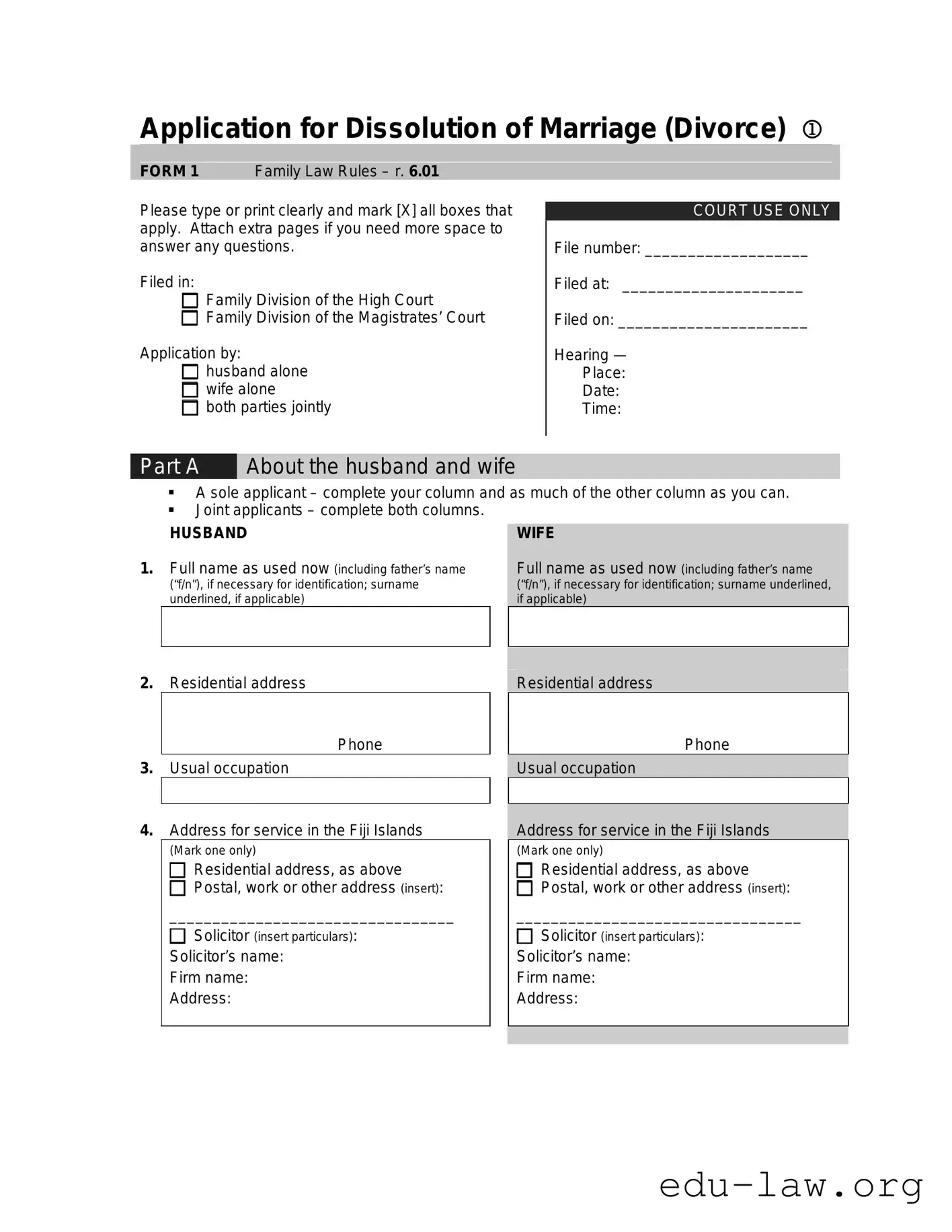
Application for Dissolution of Marriage (Divorce) 1
FORM 1 Family Law Rules – r. 6.01
Please type or print clearly and mark [X] all boxes that apply. Attach extra pages if you need more space to answer any questions.
Filed in:
Family Division of the High Court Family Division of the Magistrates’ Court
Application by: husband alone wife alone
both parties jointly
COURT USE ONLY
File number: ___________________
Filed at: _____________________
Filed on: ______________________
Hearing —
Place:
Date:
Time:
Part A About the husband and wife
A sole applicant – complete your column and as much of the other column as you can.
Joint applicants – complete both columns.
HUSBAND
1.Full name as used now (including father’s name (“f/n”), if necessary for identification; surname underlined, if applicable)
2.Residential address
Phone
3.Usual occupation
4.Address for service in the Fiji Islands
(Mark one only)
Residential address, as above Postal, work or other address (insert):
_________________________________
Solicitor (insert particulars):
Solicitor’s name:
Firm name:
Address:
WIFE
Full name as used now (including father’s name (“f/n”), if necessary for identification; surname underlined, if applicable)
Residential address
Phone
Usual occupation
Address for service in the Fiji Islands
(Mark one only)
Residential address, as above Postal, work or other address (insert):
_________________________________
Solicitor (insert particulars):
Solicitor’s name:
Firm name:
Address:
2
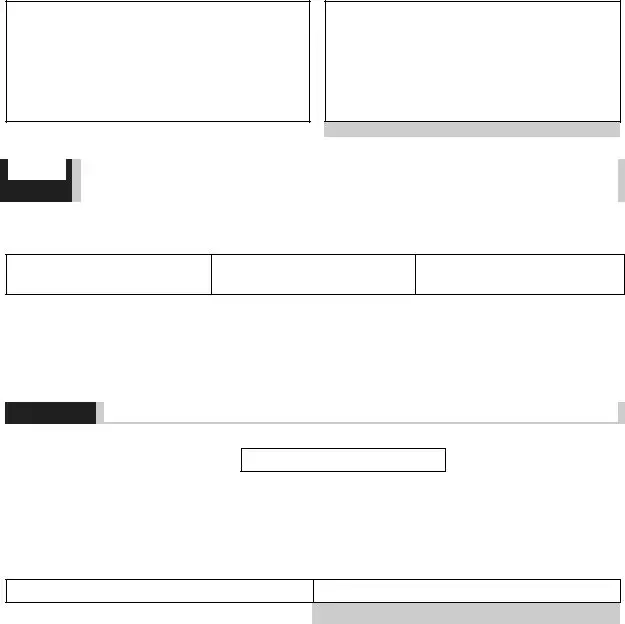
5.Basis of jurisdiction
MARK [x] EVERY BOX THAT APPLIES TO THE HUSBAND AND EVERY BOX THAT APPLIESTO THE WIFE
HUSBAND |
WIFE |
Fiji Islands citizen
Currently lives and intends to live permanently in the Fiji Islands Ordinarily lives in the Fiji Islands and has done so for 12 months immediately before filing of this application
Part B About the marriage
Fiji Islands citizen
Currently lives and intends to live permanently in the Fiji Islands Ordinarily lives in the Fiji Islands and has done so for 12 months immediately before filing of this application
Provide the following information directly from your marriage certificate.
6.On what date, at what place and in which country did you get married?
DAY/ MONTH / YEAR |
TOWN/CITY/LOCALITY |
COUNTRY |
/ /
7.Names as they appear on the marriage certificate
Husband |
Wife |
|
|
|
|
|
|
|
Part C About the
You must have been separated from your spouse for not less than 12 months before you sign this application and file it with the Court.
8.When did you separate?
/ /
Day / Month / Year
9.Was the date you wrote at item 8 the date on which you regarded the marriage as over?
Yes |
|
|
No |
On what date did you regard the marriage as over? |
|
HUSBAND |
|
WIFE |
DAY / MONTH / YEAR |
DAY / MONTH / YEAR |
|
|
|
|
/ /
/ /
You should be prepared to provide the Court with information about what happened or what was said on that date to show that one or both of you intended to end the marriage.

3
10.At any time after you separated, have you and your spouse resumed living together?
No
Yes PROVIDE THE FOLLOWING DETAILS
|
Day / Month / Year |
|
Day / Month / Year |
Period |
|
||
From |
/ |
/ |
to |
/ |
/ |
months |
days |
From |
/ |
/ |
to |
/ |
/ |
months |
days |
11.Do you think it likely that you will live together again as husband and wife? No
Yes
12.Have you attempted reconciliation?
No
Yes
Part D About other Court cases and orders
Before the Court can decide your Application for Dissolution of Marriage, it needs to know:
13.Do you have proceedings for an order of nullity?
(Proceedings for dissolution of marriage will not proceed if proceeding for nullity is before the Court — s.33)
No
Yes
14.Are there any ongoing cases in this or any other Court on any other family law matters that involve any of the parties or any of the children listed on this Form?
No GO TO ITEM 16
Yes PROVIDE THE FOLLOWING DETAILS |
|
|
|
Court name and place |
Court file number |
Next court date |
|
|
|
/ |
/ |
Names of parties to application
Nature of proceedings
IF THERE IS MORE THAN ONE CASE, PLEASE ATTACH AN EXTRA PAGE, NUMBERING THE NEXT CASE ITEM 14, PAGE 2 AND SO ON.

4
15.Are orders already granted?
No GO TO ITEM 16
Yes EITHER attach a full copy of the order, parenting plan, agreement or undertaking OR set out details below (attach extra pages if you need extra space, numbering them Item 15, page 2, and so on)
Attached is/are copy/copies of the following (mark [X] the boxes that apply) |
|
|
|||||
court order |
undertaking |
parenting plan |
agreement |
|
|
||
OR |
|
|
|
|
|
|
|
GIVE THE FOLLOWING DETAILS: |
|
|
|
|
|
|
|
Court name and place |
|
Court file number |
Date |
|
|||
|
|
|
|
|
|
/ |
/ |
Names of parties
Details of the order / undertaking / agreement / parenting plan
IF THERE IS MORE THAN ONE CASE, PLEASE ATTACH AN EXTRA PAGE, NUMBERING THE NEXT CASE ITEM 15, PAGE 2, AND SO ON.
Part E About the Children under 18
16.Are there any children of the marriage currently under 18? Include:
Any children of you and your spouse born before the marriage or after separation.
Children adopted by you and your spouse (or either of you with the consent of the other)
Any other child (including a child of neither of you) who was treated as a member of your family immediately before your final separation.
No GO TO PART F |
Yes COMPLETE ITEMS 17 AND 18 |
17.Give the following details for each child:
|
Full name |
M/F |
Date of birth |
Relationship to parties |
|
Child 1: |
|
|
/ |
/ |
|
Child 2: |
|
|
/ |
/ |
|
Child 3: |
|
|
/ |
/ |
|
Child 4: |
|
|
/ |
/ |
|
Child 5: |
|
|
/ |
/ |
|
Child 6: |
|
|
/ |
/ |
|
Child 7 |
|
|
/ |
/ |
|
Child 8: |
|
|
/ |
/ |
|
IF THERE ARE MORE CHILDREN, PLEASE ATTACH AN EXTRA PAGE, NUMBERING IT ITEM 18, PAGE 2.

5
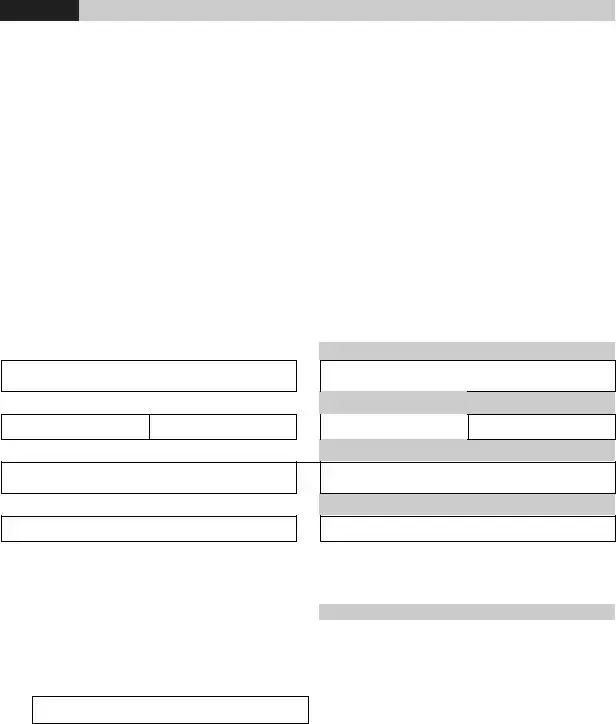
18.The Court needs to determine whether the arrangements for your children are proper in all the circumstances. To assist the Court to do this, please set out below the arrangements for the children including details about their home, schooling, health, financial support (including any maintenance paid for them), their contact with each of their parents and any other matter you consider will assist the Court.

6
19. Do you propose any changes to the arrangements described in item 18?
No
Yes Please provide details, in relation to each child, of any significant changes that are planned – for example, changing residence, schooling arrangements or supervision:
7
Part F Affidavit of applicant(s)
PLEASE DO NOT COMPLETE THIS PART OF THE FORM UNTIL YOU ARE WITH A PERSON WHO IS LEGALLY ABLE TO WITNESS YOUR SIGNATURE – PLEASE DO NOT SIGN UNLESS IT IS AT LEAST 12 MONTHS SINCE THE DATE YOU SEPARATED.
You must complete the following affidavit. You must sign it in the presence of a Justice of the Peace, notary public or lawyer. The person witnessing the affidavit will fill in the place and date.
Both the husband and wife are to sign the affidavit ONLY if you are applying together. You may do so before different persons and at different times or before the same witness on the same occasion. If only one of you is applying for the divorce, only you are to sign the affidavit. You do not have to ask your spouse.
Husband |
Wife |
||
I swear*/affirm* that: |
I swear*/affirm* that: |
||
• |
I am the*/an* applicant; |
• |
I am the*/an* applicant; |
• |
I have read this application; |
• |
I have read this application; |
•the facts of which I have personal knowledge are true; and
•all other facts are true to the best of my knowledge, information and belief.
•the facts of which I have personal knowledge are true; and
•all other facts are true to the best of my knowledge, information and belief.
Signature of husband
PlaceDate
Signature of wife
PlaceDate
/ /
Before me (signature of witness)
/ /
Before me (signature of witness)
Full name of witness (please print)
Justice of the Peace/Commissioner for Oaths Notary
Lawyer
* Delete whichever is inapplicable
This application was prepared by:
applicant(s)
lawyer for applicant(s)
Full name of witness (please print)
Justice of the Peace/Commissioner for Oaths Notary
Lawyer
PRINT LAWYER’S FIRM NAME

Notice of Application — Dissolution of Marriage (Divorce)
Complete this notice if you are applying on your own, then pin the notice to the front of the copy of the Application for Dissolution of Marriage (Divorce) to be served on your spouse.
To (name and address of spouse)
In the attached application your spouse is applying for divorce. The Court has set down the hearing of this application at the time and place shown on page 1 of the Application for Dissolution of Marriage (Divorce).
WHAT STEPS YOU NEED TO TAKE AS THE RECIPIENT OF THIS NOTICE
1You should check the details given by your spouse in the attached application to make sure that they are correct to the best of your knowledge.
2You should sign, date and return the attached Acknowledgment of Service (Form 21) to the person who served the Application for Divorce.
3If you want the divorce to be granted, you do not have to file any other documents.
4If you want the divorce to be granted, but you disagree with facts contained in the application, you may file a Response (Marital Status Proceedings) (Form 4) and appear in person on the hearing date.
5If you do not want the divorce to be granted you must complete a Response (Marital Status Proceedings) (Form 4) asking for the application to be dismissed. You will need to set out grounds on which you seek the dismissal. You will need to file the Response with the Court:
—if the application was served in the Fiji Islands, within 28 days after it was served; or
—if it was served overseas, within 42 days of the application being served.
After filing the Response with the Court you must also serve a copy of it on your spouse. You can obtain instructions on how to serve it from the court registry.
You must come to the hearing. If you do not attend, the Court may determine the Application for Divorce in your absence.
PROPERTY AND MAINTENANCE
If you have not applied to the Court for orders about property or maintenance, you may do so by a separate application (Form 9 for applications relating to property only or to both property and maintenance; Form 5 for applications for maintenance only) within 2 years of the date the divorce becomes final. After that time you must obtain the permission of the Court to apply.
Signature of Registry Officer ______________________________Date |
/ |
/ |
| Fact Name | Details |
|---|---|
| Purpose | The Application for Divorce form is used to initiate the legal process of divorce in a court. |
| State-Specific Forms | Each state has its own version of the Application for Divorce form, tailored to local laws. |
| Governing Laws | The form is governed by state-specific divorce laws, which vary by jurisdiction. |
| Filing Requirements | Typically, the form must be filed with the local court along with a filing fee. |
| Information Required | Commonly required information includes personal details, grounds for divorce, and any children involved. |
| Response Time | After filing, the other party usually has a specific time frame to respond to the application. |
Filling out the Application for Divorce form is an important step in the process of legally ending a marriage. Once completed, this form will be submitted to the appropriate court, initiating the legal proceedings. It’s essential to ensure that all information is accurate and complete to avoid delays.
What is the Application For Divorce form?
The Application For Divorce form is a legal document that initiates the divorce process. It outlines the reasons for the divorce and provides essential information about both spouses, including their names, addresses, and any children involved. Completing this form is the first step in formally ending a marriage through the court system.
Who can file the Application For Divorce?
Generally, either spouse can file the Application For Divorce. One spouse must meet the residency requirements of the state where the divorce is being filed. This usually means that at least one spouse has lived in that state for a specific period before filing. It's important to check the local laws to ensure compliance with residency requirements.
What information do I need to provide on the form?
You will need to provide personal details such as your name, your spouse's name, and your addresses. Additionally, information about your marriage, including the date of marriage and any children from the marriage, should be included. You will also need to state the grounds for divorce, which can vary by state.
How do I file the Application For Divorce?
Filing the Application For Divorce typically involves submitting the completed form to the appropriate court. This can often be done in person, by mail, or in some jurisdictions, online. After filing, you will need to pay a filing fee. Keep a copy of the filed application for your records.
What happens after I file the Application For Divorce?
Once you file the Application For Divorce, the court will process it and may schedule a hearing. You must also serve your spouse with a copy of the application and any related documents. This ensures that they are aware of the divorce proceedings. After service, your spouse will have a specific period to respond.
Can I change the Application For Divorce after filing?
Yes, you can amend the Application For Divorce after filing if necessary. However, this typically requires submitting a formal request to the court. You may need to provide a valid reason for the changes and possibly serve the amended application to your spouse again. It's advisable to consult with a legal professional if you need to make amendments.
Failing to provide accurate personal information. It is crucial to include full names, addresses, and contact details for both parties. Incomplete or incorrect information can delay the process.
Neglecting to specify the grounds for divorce. Individuals often overlook the importance of clearly stating the reasons for seeking a divorce. This section is essential for the court's understanding of the case.
Overlooking financial disclosures. Many applicants forget to include necessary financial documents or fail to disclose all assets and debts. This omission can lead to complications later in the proceedings.
Not considering child custody and support issues. When children are involved, it is vital to address custody arrangements and support obligations. Failing to do so can result in disputes that prolong the divorce process.
Using vague language. The application should be clear and specific. Ambiguities can create confusion and may require additional court hearings to clarify intentions.
Ignoring filing deadlines. Each jurisdiction has specific timelines for submitting divorce applications. Missing these deadlines can jeopardize the entire case.
Not seeking legal advice. Many individuals attempt to navigate the divorce process without professional guidance. This decision can lead to significant mistakes that may affect the outcome.
When filing for divorce, several forms and documents are often required to ensure the process goes smoothly. Each of these documents plays a crucial role in the overall procedure, helping to clarify your situation and streamline communication with the court. Here are four commonly used forms that accompany the Application for Divorce:
Understanding these documents can help you navigate the divorce process more effectively. Each form serves a distinct purpose, and together, they provide a comprehensive view of your situation to the court. Being well-prepared can lead to a smoother experience during what can be a challenging time.
The Application for Divorce form shares similarities with the Petition for Dissolution of Marriage. Both documents serve as formal requests to the court to terminate a marriage. They outline the reasons for the divorce and may include information about property division, child custody, and support. While the terminology may vary slightly by jurisdiction, the underlying purpose remains the same: to initiate legal proceedings for divorce and to inform the court of the parties' intentions and circumstances.
Another comparable document is the Motion for Temporary Orders. This motion is often filed alongside the divorce application to request immediate relief on issues such as child custody, visitation, and financial support during the divorce process. Like the Application for Divorce, it requires detailed information about the parties involved and the specific requests being made. Both documents aim to ensure that the court has the necessary information to make informed decisions while the divorce is pending.
The Affidavit of Support is also similar in that it requires the parties to provide financial information. This document is often necessary in cases involving spousal support or child support. It details each party's income, expenses, and financial obligations. While the Affidavit of Support is not exclusive to divorce proceedings, it plays a crucial role in determining the financial aspects of a divorce, much like the Application for Divorce does for the overall legal process.
Lastly, the Parenting Plan is another document that bears resemblance to the Application for Divorce. This plan outlines how parents will share responsibilities for their children after the divorce. It includes details about custody arrangements, visitation schedules, and decision-making responsibilities. Similar to the Application for Divorce, the Parenting Plan aims to provide clarity and structure during a time of transition, focusing on the best interests of the children involved.
When filling out the Application For Divorce form, it's important to approach the task with care. Here are five essential do's and don'ts to keep in mind:
When it comes to the Application for Divorce form, many individuals harbor misconceptions that can lead to confusion and frustration. Understanding the truth behind these misunderstandings can streamline the divorce process and help individuals make informed decisions. Here are five common misconceptions:
By addressing these misconceptions, individuals can approach the divorce process with greater clarity and confidence. Understanding the nuances of the Application for Divorce form can lead to a smoother experience during a challenging time.
Filling out the Application for Divorce form can seem daunting, but understanding the key points can make the process smoother. Here are some essential takeaways to consider:
By keeping these key points in mind, you can navigate the divorce application process with greater confidence and clarity.