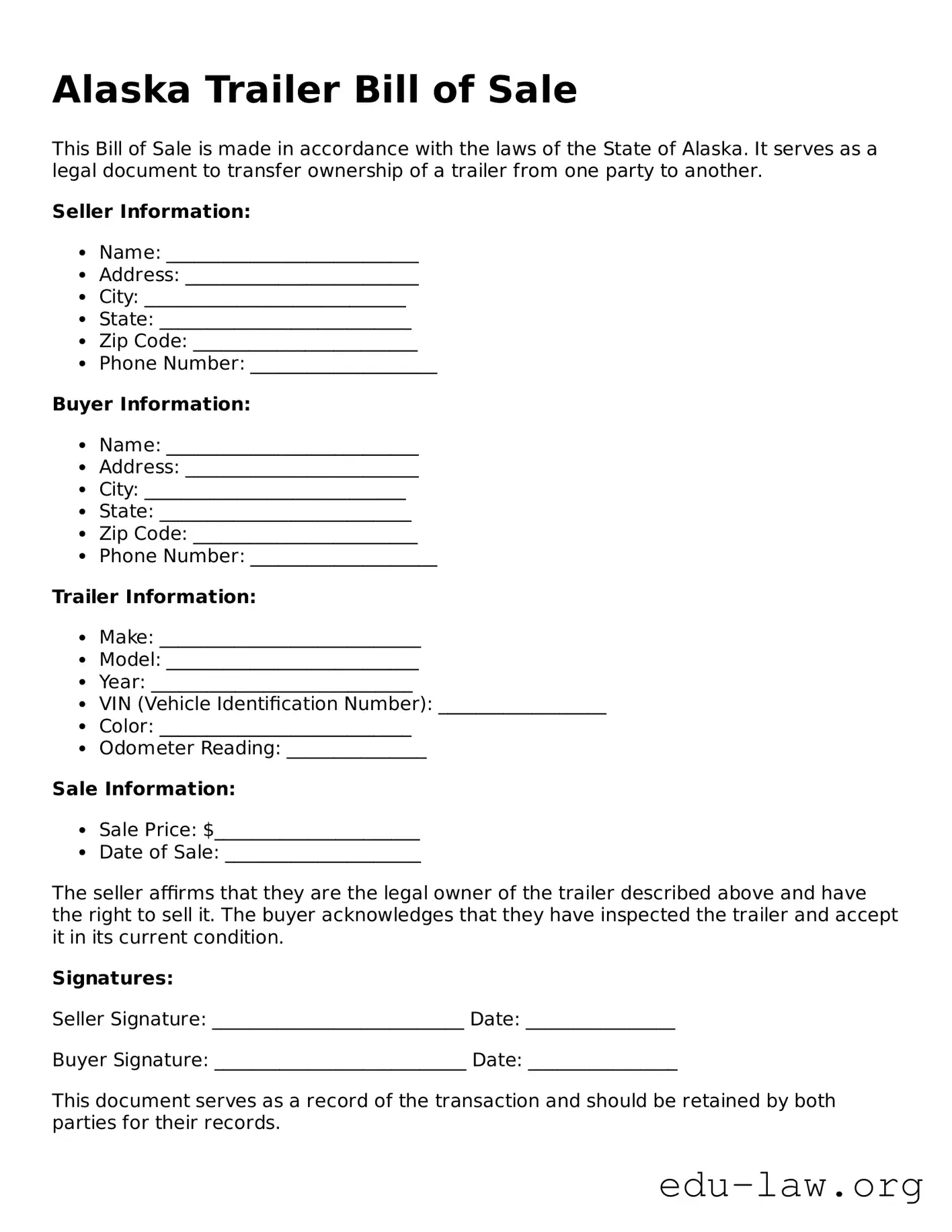
When it comes to buying or selling a trailer in Alaska, the Trailer Bill of Sale form plays a crucial role in ensuring a smooth transaction. This document serves as a legal record of the sale, capturing essential details such as the names and addresses of both the buyer and seller, the trailer's identification information, and the sale price. Additionally, it outlines any warranties or representations made by the seller, providing clarity and protection for both parties involved. Completing this form is not just a formality; it helps prevent disputes and establishes ownership, making it easier for the new owner to register the trailer with the state. Understanding the key components of the Alaska Trailer Bill of Sale form is vital for anyone looking to navigate the trailer market effectively and securely.
Alaska Trailer Bill of Sale
This Bill of Sale is made in accordance with the laws of the State of Alaska. It serves as a legal document to transfer ownership of a trailer from one party to another.
Seller Information:
Buyer Information:
Trailer Information:
Sale Information:
The seller affirms that they are the legal owner of the trailer described above and have the right to sell it. The buyer acknowledges that they have inspected the trailer and accept it in its current condition.
Signatures:
Seller Signature: ___________________________ Date: ________________
Buyer Signature: ___________________________ Date: ________________
This document serves as a record of the transaction and should be retained by both parties for their records.
| Fact Name | Description |
|---|---|
| Purpose | The Alaska Trailer Bill of Sale form is used to document the sale of a trailer between a seller and a buyer. |
| Governing Law | This form is governed by Alaska Statutes, specifically AS 28.10.011 regarding the transfer of vehicle ownership. |
| Required Information | The form must include details such as the trailer's make, model, year, Vehicle Identification Number (VIN), and sale price. |
| Signatures | Both the seller and buyer must sign the form to validate the transaction. |
| Notarization | Notarization is not typically required for the Alaska Trailer Bill of Sale, but it can provide additional security. |
| Record Keeping | It is advisable for both parties to keep a copy of the completed bill of sale for their records. |
| Transfer of Title | The bill of sale is often used in conjunction with the title transfer process at the local Department of Motor Vehicles (DMV). |
| Tax Implications | Sales tax may apply to the transaction, and the buyer is responsible for reporting it during registration. |
After obtaining the Alaska Trailer Bill of Sale form, you will need to provide specific details to ensure the document is complete and accurate. This form serves as a record of the sale and transfer of ownership, making it essential for both the buyer and seller.
What is a Trailer Bill of Sale form in Alaska?
The Trailer Bill of Sale form is a legal document used in Alaska to record the sale or transfer of ownership of a trailer. This form serves as proof of the transaction between the seller and the buyer. It includes essential details such as the trailer's identification number, make, model, year, and the purchase price. This document is crucial for both parties, as it helps establish clear ownership and may be required for registration purposes with the state.
Why is a Bill of Sale important when buying or selling a trailer?
A Bill of Sale is important because it protects both the buyer and seller in the transaction. For the buyer, it provides evidence of ownership, which is necessary for registering the trailer and obtaining title. For the seller, it offers proof that the trailer has been sold and that they are no longer responsible for it. In case of disputes, this document can serve as a critical piece of evidence in resolving issues related to ownership or payment.
What information should be included in the Alaska Trailer Bill of Sale?
When completing the Alaska Trailer Bill of Sale, several key pieces of information must be included. This includes the names and addresses of both the seller and the buyer, the trailer's vehicle identification number (VIN), make, model, year, and any identifying features. Additionally, the sale price should be clearly stated, along with the date of the transaction. Both parties should sign the document to validate the sale.
Do I need to have the Trailer Bill of Sale notarized?
In Alaska, notarization of the Trailer Bill of Sale is not a legal requirement; however, it is highly recommended. Having the document notarized adds an extra layer of authenticity and can help prevent future disputes regarding the sale. If you choose to have it notarized, both parties should be present during the signing process to ensure that the notary can verify their identities.
Can I use a generic Bill of Sale form for my trailer sale in Alaska?
While you can use a generic Bill of Sale form, it is advisable to use a specific Trailer Bill of Sale form tailored for Alaska. This ensures that all necessary information is captured according to state requirements. A specific form also helps to avoid any confusion or missing details that could arise from using a more general template. Always check that the form complies with local laws to ensure it will be accepted for registration purposes.
What should I do after completing the Trailer Bill of Sale?
After completing the Trailer Bill of Sale, both the buyer and seller should keep a copy for their records. The buyer should take the signed document to their local Department of Motor Vehicles (DMV) to register the trailer in their name. It is also wise for the seller to notify the DMV of the sale, as this can protect them from any future liabilities associated with the trailer. Ensuring that all steps are followed will help facilitate a smooth transition of ownership.
Incomplete Information: One of the most common mistakes is failing to fill out all required fields. Essential details such as the seller's name, buyer's name, and trailer identification number must be clearly provided. Missing information can lead to delays or complications in the sale process.
Incorrect Trailer Identification: The trailer identification number (VIN) must be accurate. Errors in this number can cause issues with registration and ownership transfer. Always double-check the VIN against the trailer's documentation.
Not Signing the Document: Both the seller and the buyer must sign the Bill of Sale. Neglecting to include signatures can render the document invalid. It is crucial to ensure that both parties have signed before finalizing the transaction.
Failure to Provide a Notarization: In some cases, notarization may be required for the Bill of Sale to be considered valid. Not checking local regulations can result in an incomplete sale. Verify whether notarization is necessary to avoid future complications.
When buying or selling a trailer in Alaska, several documents may accompany the Trailer Bill of Sale form. Each of these documents serves a specific purpose and can help ensure a smooth transaction. Below is a list of common forms and documents that are often used in conjunction with the Trailer Bill of Sale.
Having these documents prepared and organized can facilitate the sale or purchase of a trailer, helping to protect the interests of both parties involved. Always ensure that all necessary paperwork is completed accurately to avoid any future complications.
The Vehicle Bill of Sale is a document used to transfer ownership of a vehicle from one party to another. Like the Alaska Trailer Bill of Sale, it includes essential details such as the buyer's and seller's names, the vehicle identification number (VIN), and the sale price. Both documents serve as proof of the transaction and can be used for registration purposes with the state’s motor vehicle department.
The Boat Bill of Sale is similar in purpose to the Trailer Bill of Sale. It facilitates the transfer of ownership of a boat or watercraft. This document typically contains information about the boat, such as its hull identification number, make, model, and year. Both forms require the signatures of the buyer and seller, ensuring that the transaction is legally binding.
The RV Bill of Sale is designed for the sale of recreational vehicles. This document outlines the specifics of the RV, including its VIN, make, model, and sale price. Similar to the Trailer Bill of Sale, it requires both parties to sign, making the transaction official and providing necessary documentation for registration and titling.
The Mobile Home Bill of Sale is another document that shares similarities with the Trailer Bill of Sale. It is used when transferring ownership of a mobile home. This document includes details such as the mobile home’s identification number, make, model, and sale price. Both forms ensure that the sale is recorded and legally recognized.
The ATV Bill of Sale is utilized for the sale of all-terrain vehicles. Like the Trailer Bill of Sale, it contains information about the ATV, including the VIN, make, model, and sale price. Both documents serve as a record of the transaction and can be used for registration with the appropriate authorities.
The Snowmobile Bill of Sale is relevant for those buying or selling snowmobiles. This document includes details similar to the Trailer Bill of Sale, such as the VIN, make, model, and sale price. Both documents help establish legal ownership and provide a written record of the sale.
The Equipment Bill of Sale is used for the sale of various types of equipment, including trailers. This document outlines the specifics of the equipment being sold, such as its serial number, make, model, and sale price. Like the Trailer Bill of Sale, it requires signatures from both the buyer and seller to validate the transaction.
The Farm Equipment Bill of Sale is specific to agricultural machinery. This document serves a similar purpose as the Trailer Bill of Sale by providing a record of the sale and transferring ownership. It includes details such as the equipment's make, model, and sale price, ensuring that both parties have a clear understanding of the transaction.
When filling out the Alaska Trailer Bill of Sale form, it is essential to follow certain guidelines to ensure that the document is completed accurately. Below is a list of things you should and shouldn't do during this process.
By adhering to these guidelines, you can help ensure that the process goes smoothly and that the sale is documented properly.
Understanding the Alaska Trailer Bill of Sale form is crucial for anyone involved in the buying or selling of trailers in the state. However, several misconceptions often cloud the reality of this important document. Below is a list of common misunderstandings:
Clearing up these misconceptions can help ensure smoother transactions and legal compliance when dealing with trailers in Alaska.
When dealing with the purchase or sale of a trailer in Alaska, the Trailer Bill of Sale form is an essential document. Here are some key takeaways to keep in mind:
By paying attention to these key points, individuals can navigate the process of buying or selling a trailer in Alaska more effectively and with greater confidence.