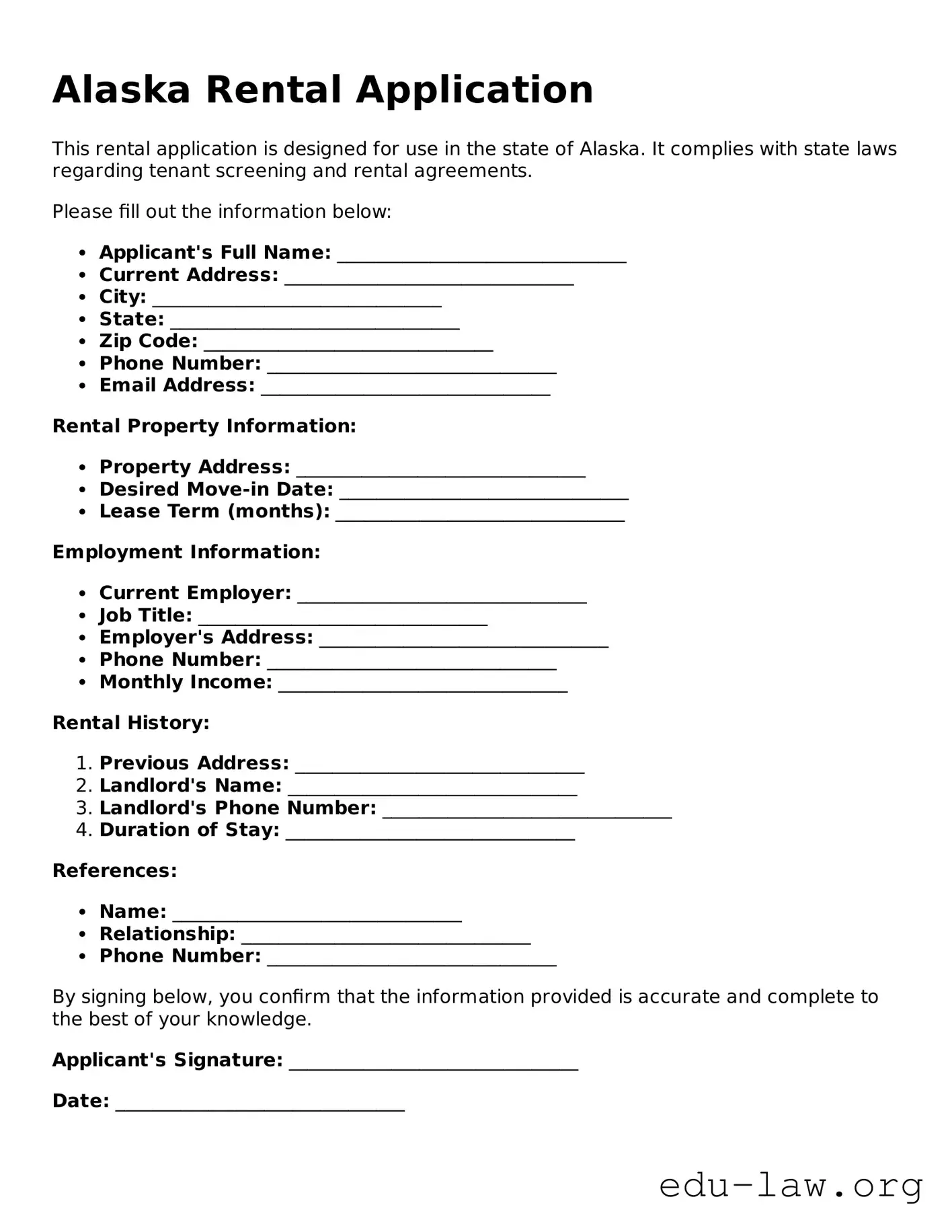
When looking for a rental property in Alaska, completing the rental application form is a crucial step in the process. This form typically requests essential information such as your personal details, rental history, employment status, and financial background. Landlords use this information to assess your suitability as a tenant. You may need to provide references, proof of income, and consent for background checks. Some applications also include questions about pets and smoking preferences, which can be important factors for many landlords. Understanding the components of the Alaska rental application form can help you present yourself as a strong candidate for your desired rental property.
Alaska Rental Application
This rental application is designed for use in the state of Alaska. It complies with state laws regarding tenant screening and rental agreements.
Please fill out the information below:
Rental Property Information:
Employment Information:
Rental History:
References:
By signing below, you confirm that the information provided is accurate and complete to the best of your knowledge.
Applicant's Signature: _______________________________
Date: _______________________________
| Fact Name | Fact Description |
|---|---|
| Purpose | The Alaska Rental Application form is used by landlords to evaluate potential tenants before leasing a property. |
| Required Information | Applicants must provide personal details, rental history, employment information, and references. |
| Governing Law | The use of rental applications in Alaska is governed by Alaska Statutes Title 34, specifically related to landlord-tenant relationships. |
| Application Fee | Landlords may charge an application fee to cover the cost of processing the application and conducting background checks. |
Once you have the Alaska Rental Application form in hand, you are ready to begin the process of filling it out. Completing this form accurately is essential for landlords to assess your eligibility as a tenant. Below are the steps to guide you through filling out the application.
After completing the form, review it for any errors or missing information. Once you are satisfied, submit it according to the landlord's instructions, which may involve handing it in person or sending it electronically.
What is the purpose of the Alaska Rental Application form?
The Alaska Rental Application form is designed to collect essential information from prospective tenants. It helps landlords assess the suitability of applicants for rental properties. By providing details such as employment history, income, and rental history, applicants enable landlords to make informed decisions regarding tenancy.
What information do I need to provide on the application?
When filling out the application, you will typically need to provide personal information, including your full name, contact details, and Social Security number. Additionally, you may be asked to disclose your employment history, monthly income, rental history, and references. Some applications may also require information about your pets or other household members.
Is there an application fee?
Many landlords charge an application fee to cover the costs of processing your application, such as background and credit checks. This fee can vary widely, so it’s important to inquire about the amount before submitting your application. Be aware that this fee is usually non-refundable, regardless of whether your application is approved or denied.
How long does it take to process the application?
The processing time for a rental application can vary depending on the landlord or property management company. Generally, it may take anywhere from a few hours to several days. Factors that can influence this timeline include the thoroughness of the background checks and the responsiveness of your references.
What happens if my application is denied?
If your application is denied, the landlord is typically required to provide you with a reason for the denial. Common reasons include insufficient income, poor credit history, or negative rental references. You have the right to request a copy of the report used in the decision-making process, which can help you understand the factors that influenced the outcome.
Can I appeal a denied application?
While there is no formal appeal process mandated by law, you may choose to communicate with the landlord to discuss the reasons for the denial. In some cases, providing additional information or documentation may help clarify misunderstandings or address concerns that led to the denial.
Do I need a co-signer for my application?
If your income or credit history does not meet the landlord’s requirements, you may be asked to provide a co-signer. A co-signer is someone who agrees to take on financial responsibility for the lease should you fail to meet your obligations. This arrangement can help strengthen your application and improve your chances of approval.
What should I do if I have a criminal record?
Having a criminal record may impact your rental application, but it does not automatically disqualify you. It is advisable to be honest about your record when filling out the application. Some landlords may consider the nature of the offense, how much time has passed, and evidence of rehabilitation. Transparency can often lead to a more favorable outcome.
How can I improve my chances of getting approved?
To increase your chances of approval, ensure that your application is complete and accurate. Providing references from previous landlords or employers can help establish your reliability. Additionally, demonstrating stable employment and a consistent rental history can further strengthen your application. If possible, offer to pay a higher security deposit or several months’ rent in advance.
What are my rights regarding the application process?
As an applicant, you have rights protected by fair housing laws. This means you cannot be discriminated against based on race, color, national origin, religion, sex, familial status, or disability. If you believe you have been treated unfairly during the application process, you may wish to seek legal advice or contact a local fair housing organization for assistance.
Failing to provide complete personal information, such as full name, date of birth, and social security number.
Not including contact information, which can lead to delays in processing the application.
Omitting employment history or providing inaccurate job details can raise red flags for landlords.
Neglecting to list previous rental addresses can hinder the background check process.
Forgetting to disclose any pets or failing to provide information about them may violate lease terms.
Not including references or providing outdated contact information for them can slow down approval.
Overlooking the need for signatures where required can render the application invalid.
Submitting the application without the required application fee can result in immediate rejection.
Providing inconsistent information across different sections of the application may raise suspicion.
Failing to proofread the application for typos and errors can reflect poorly on the applicant.
When applying for a rental property in Alaska, several documents may accompany the rental application form. These documents help landlords assess the suitability of potential tenants and ensure a smooth leasing process. Below is a list of common forms and documents that are often required.
Having these documents prepared can expedite the rental application process and increase the chances of securing a desired property. It is essential to understand the requirements and gather all necessary paperwork before submitting an application.
The Alaska Rental Application form shares similarities with the standard Residential Lease Agreement. Both documents are essential in the rental process, as they outline the terms and conditions under which a tenant can occupy a rental property. While the lease agreement typically details the rental duration, payment terms, and responsibilities of both parties, the rental application serves as a preliminary screening tool to assess the suitability of potential tenants before finalizing the lease.
Another document closely related to the Alaska Rental Application is the Tenant Screening Report. This report usually includes background checks, credit history, and rental history. Landlords often rely on this information to make informed decisions about applicants. Like the rental application, the tenant screening report helps ensure that the chosen tenant is likely to fulfill their obligations under the lease.
The Lease Guaranty Agreement is also similar to the rental application in its purpose. This document is often used when a tenant does not meet certain income or credit criteria. A guarantor agrees to take on the financial responsibilities if the tenant fails to pay rent. Both documents aim to protect the landlord's interests while providing a way for tenants to secure housing.
The Rental Reference Form is another document that complements the rental application. This form collects information about the applicant's previous landlords or personal references. It allows landlords to verify the applicant’s rental history and character. Like the rental application, it plays a critical role in assessing whether an applicant is a good fit for the rental property.
The Pet Application Form is similar in that it gathers specific information about an applicant's pets. Many landlords have pet policies that require additional documentation. This form helps landlords determine if the pet meets their criteria. Both the rental application and the pet application work together to ensure that all aspects of a tenant's living situation are considered.
The Employment Verification Form is another document that parallels the rental application. This form is used to confirm an applicant's employment status and income level. Landlords often require this verification to ensure that tenants can afford the rent. Both documents help landlords assess the financial stability of potential tenants.
The Move-In Checklist is similar in that it is used at the beginning of a rental agreement. While the rental application focuses on tenant qualifications, the move-in checklist documents the condition of the property before the tenant takes possession. This ensures that both parties are aware of any existing issues, thus preventing disputes later on.
The Security Deposit Agreement also shares similarities with the rental application. This document outlines the terms related to the security deposit, including how much is required and the conditions for its return. Both documents are crucial for protecting the landlord's investment and ensuring that tenants understand their financial responsibilities.
The Rental Agreement Addendum is another related document. This addendum can modify the original rental agreement by adding specific terms, such as pet policies or maintenance responsibilities. Like the rental application, it addresses important aspects of the rental relationship and helps clarify expectations for both landlords and tenants.
Finally, the Eviction Notice form is connected to the rental application process, though it comes into play later. If a tenant fails to meet their obligations, this document is used to formally notify them of the eviction process. Both the rental application and eviction notice are part of the broader rental relationship, emphasizing the importance of clear communication and understanding of responsibilities.
When filling out the Alaska Rental Application form, it's important to be thorough and accurate. Here are some dos and don'ts to keep in mind:
Understanding the Alaska Rental Application form is crucial for both landlords and tenants. However, several misconceptions often arise regarding its use and requirements. Here are five common misconceptions:
In reality, rental applications can vary significantly between different landlords and property management companies. Each may have unique requirements and processes.
Submitting an application does not ensure that a tenant will be approved. Landlords consider various factors, including credit history and rental references.
Landlords must comply with privacy laws, which protect the personal information provided in rental applications. This information should be handled with care.
While credit scores are important, landlords also evaluate rental history, income stability, and background checks when making decisions.
Many landlords charge an application fee to cover the costs of processing the application. This fee is typically non-refundable, regardless of the application outcome.
Being informed about these misconceptions can help both landlords and tenants navigate the rental process more effectively.
When filling out the Alaska Rental Application form, there are several important aspects to keep in mind. Below are key takeaways to ensure a smooth application process.
By keeping these takeaways in mind, applicants can improve their chances of securing a rental property in Alaska.