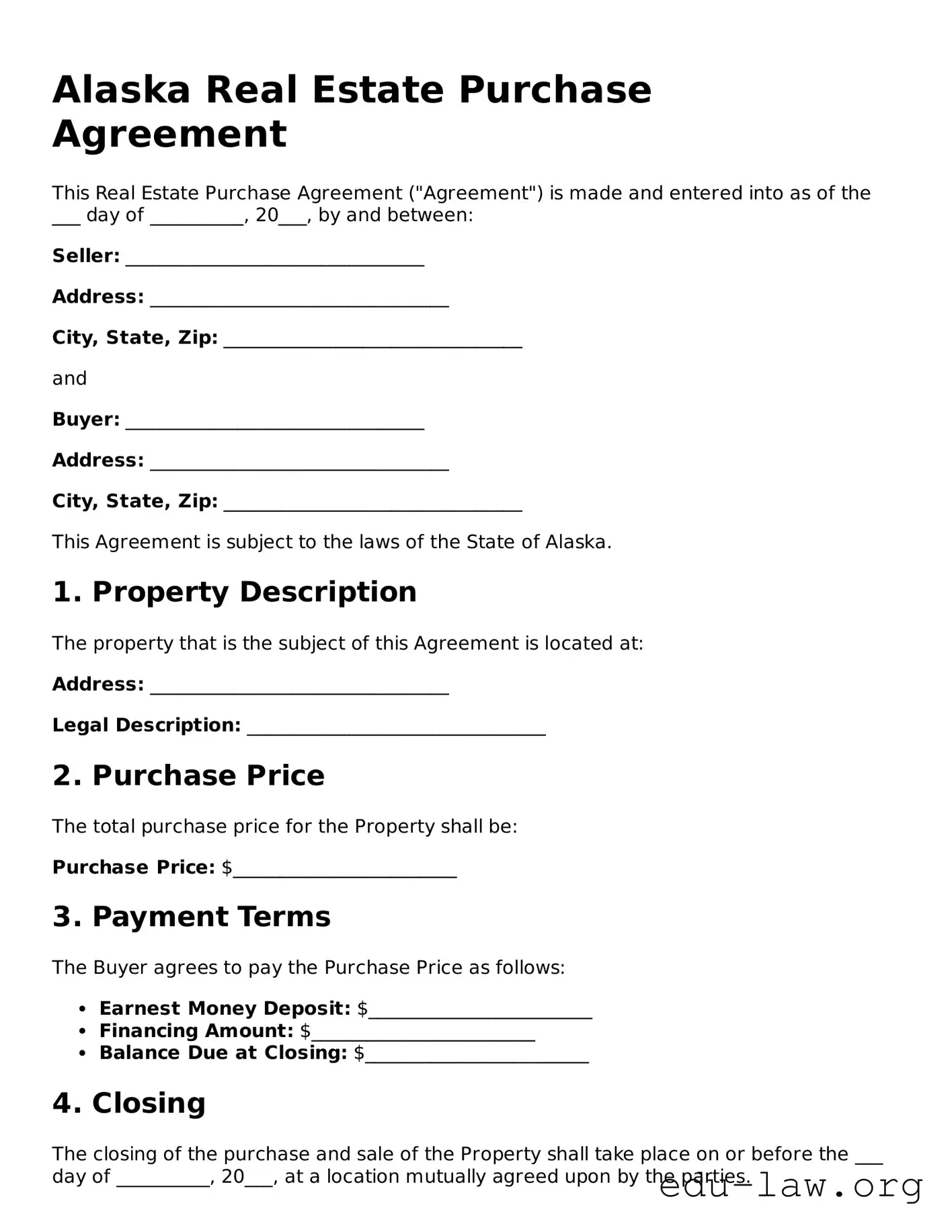
The Alaska Real Estate Purchase Agreement is a crucial document for anyone looking to buy or sell property in the state. This form outlines the essential terms of the transaction, ensuring that both parties understand their rights and obligations. Key elements include the purchase price, property description, and closing date. Additionally, it addresses contingencies, such as financing and inspections, which can affect the sale. The agreement also details the responsibilities of both the buyer and seller, including disclosures and any agreed-upon repairs. By providing a clear framework for the transaction, this form helps facilitate a smooth process, minimizing misunderstandings and disputes. Understanding each section of the agreement is vital for a successful real estate transaction in Alaska.
Alaska Real Estate Purchase Agreement
This Real Estate Purchase Agreement ("Agreement") is made and entered into as of the ___ day of __________, 20___, by and between:
Seller: ________________________________
Address: ________________________________
City, State, Zip: ________________________________
and
Buyer: ________________________________
Address: ________________________________
City, State, Zip: ________________________________
This Agreement is subject to the laws of the State of Alaska.
1. Property Description
The property that is the subject of this Agreement is located at:
Address: ________________________________
Legal Description: ________________________________
2. Purchase Price
The total purchase price for the Property shall be:
Purchase Price: $________________________
3. Payment Terms
The Buyer agrees to pay the Purchase Price as follows:
4. Closing
The closing of the purchase and sale of the Property shall take place on or before the ___ day of __________, 20___, at a location mutually agreed upon by the parties.
5. Contingencies
This Agreement is contingent upon:
6. Signatures
By signing below, the parties agree to the terms and conditions outlined in this Agreement.
Seller's Signature: ________________________________ Date: _______________
Buyer's Signature: ________________________________ Date: _______________
| Fact Name | Description |
|---|---|
| Governing Law | The Alaska Real Estate Purchase Agreement is governed by Alaska state law. |
| Parties Involved | The agreement typically includes a buyer and a seller, both of whom must be clearly identified. |
| Property Description | A detailed description of the property being sold must be included, including its legal description. |
| Purchase Price | The total purchase price of the property must be stated clearly in the agreement. |
| Earnest Money | The agreement often specifies the amount of earnest money that the buyer must provide to secure the purchase. |
| Contingencies | Common contingencies may include financing, inspections, and the sale of the buyer's current home. |
| Closing Date | The agreement should specify the closing date, when the ownership of the property will officially transfer. |
| Signatures | Both parties must sign the agreement for it to be legally binding, indicating their acceptance of the terms. |
Filling out the Alaska Real Estate Purchase Agreement form requires careful attention to detail. Once completed, the form will facilitate the process of buying or selling property in Alaska.
What is an Alaska Real Estate Purchase Agreement?
The Alaska Real Estate Purchase Agreement is a legal document used when buying or selling property in Alaska. It outlines the terms and conditions of the sale, including the purchase price, property description, and any contingencies. This agreement serves to protect both the buyer and seller by clearly stating their rights and responsibilities throughout the transaction process.
What key elements are included in the agreement?
Several important elements are included in the Alaska Real Estate Purchase Agreement. These typically consist of the names of the parties involved, a detailed description of the property, the purchase price, and the closing date. Additionally, the agreement may specify contingencies, such as financing or inspection requirements, and any personal property included in the sale. It is essential to review all sections carefully to ensure that they reflect the agreed-upon terms.
How can I modify the agreement if needed?
If modifications are necessary, both parties must agree to the changes. This can be done by drafting an amendment to the original agreement. It is important to clearly outline the changes and have both parties sign the amendment. This ensures that all modifications are legally binding and acknowledged by everyone involved in the transaction.
Is it necessary to have a lawyer review the agreement?
Incomplete Information: Failing to fill out all required fields can lead to delays or even invalidation of the agreement.
Incorrect Property Description: Not accurately describing the property, including address and legal description, can cause confusion and disputes.
Missing Signatures: All necessary parties must sign the agreement. Omitting a signature can render the contract unenforceable.
Neglecting Contingencies: Forgetting to include important contingencies, like financing or inspection, may lead to unexpected issues later on.
Ignoring Deadlines: Failing to specify or adhere to deadlines for contingencies and closing can complicate the transaction.
Inaccurate Pricing: Listing the wrong purchase price can create conflicts and affect negotiations.
Not Reviewing Terms: Overlooking the terms and conditions can result in misunderstandings about responsibilities and obligations.
Forgetting to Include Personal Property: Not specifying which personal property items are included in the sale can lead to disputes after closing.
When entering into a real estate transaction in Alaska, several forms and documents complement the Real Estate Purchase Agreement. These documents help clarify terms, protect the interests of both parties, and ensure compliance with local laws. Below are five commonly used forms:
These documents play a vital role in the real estate transaction process. They provide essential information and protection for both buyers and sellers, facilitating a smoother and more informed transaction.
The Alaska Real Estate Purchase Agreement form shares similarities with the Purchase and Sale Agreement commonly used in many states. Both documents outline the terms and conditions under which a buyer agrees to purchase property from a seller. They typically include details such as the purchase price, contingencies, and the timeline for closing the sale. Just like the Alaska form, the Purchase and Sale Agreement serves as a legally binding contract that protects the interests of both parties involved in the transaction.
Another document that resembles the Alaska Real Estate Purchase Agreement is the Residential Real Estate Purchase Agreement. This document is specifically tailored for residential properties and includes provisions that address unique aspects of home buying. It covers essential elements like earnest money deposits and inspection contingencies, similar to the Alaska form. Both agreements aim to ensure that buyers and sellers understand their obligations and rights throughout the transaction process.
The Commercial Real Estate Purchase Agreement is also akin to the Alaska Real Estate Purchase Agreement, but it is designed for commercial properties. This agreement addresses the complexities involved in commercial transactions, including zoning laws and property use restrictions. While both agreements serve the same fundamental purpose of facilitating a property sale, the Commercial Real Estate Purchase Agreement includes additional clauses that reflect the unique nature of commercial real estate investments.
A fourth similar document is the Land Purchase Agreement. This form is used specifically for the purchase of vacant land and shares many elements with the Alaska Real Estate Purchase Agreement. Both documents outline the terms of the sale, including the purchase price and any contingencies related to inspections or financing. However, the Land Purchase Agreement often includes provisions specific to land use and development, which may not be relevant in residential or commercial agreements.
Lastly, the Option to Purchase Agreement bears resemblance to the Alaska Real Estate Purchase Agreement in that it grants a buyer the right, but not the obligation, to purchase a property within a specified timeframe. This document often includes terms similar to those found in a standard purchase agreement, such as price and duration of the option. While the primary focus of the Option to Purchase Agreement is on the buyer's right to buy, it still serves as a crucial tool in real estate transactions, just like the Alaska form.
When filling out the Alaska Real Estate Purchase Agreement form, it is essential to approach the task with care and attention to detail. Here are some important dos and don'ts to keep in mind:
Misconceptions about the Alaska Real Estate Purchase Agreement form can lead to confusion for buyers and sellers. Understanding these misconceptions is crucial for navigating real estate transactions effectively.
When engaging in real estate transactions in Alaska, understanding the Real Estate Purchase Agreement (REPA) form is crucial. This document serves as a binding contract between buyers and sellers. Here are some key takeaways to keep in mind when filling out and using this form:
By paying careful attention to these aspects of the Alaska Real Estate Purchase Agreement, buyers and sellers can facilitate a smoother transaction process. Understanding each section of the form will help prevent misunderstandings and ensure that both parties are on the same page.