When entering into a lease agreement in Alaska, both landlords and tenants must understand the essential components that make up this important document. The Alaska Lease Agreement form outlines the rights and responsibilities of both parties, ensuring a clear understanding of the terms involved. Key aspects include the duration of the lease, rental payment details, and security deposit requirements. It also addresses maintenance responsibilities, rules regarding pets, and the process for terminating the lease. By clearly defining these elements, the form helps prevent misunderstandings and disputes. Additionally, it may include clauses that cover late fees, eviction processes, and the handling of repairs, providing a comprehensive framework for the rental relationship. Understanding these components is crucial for anyone looking to navigate the rental market in Alaska effectively.
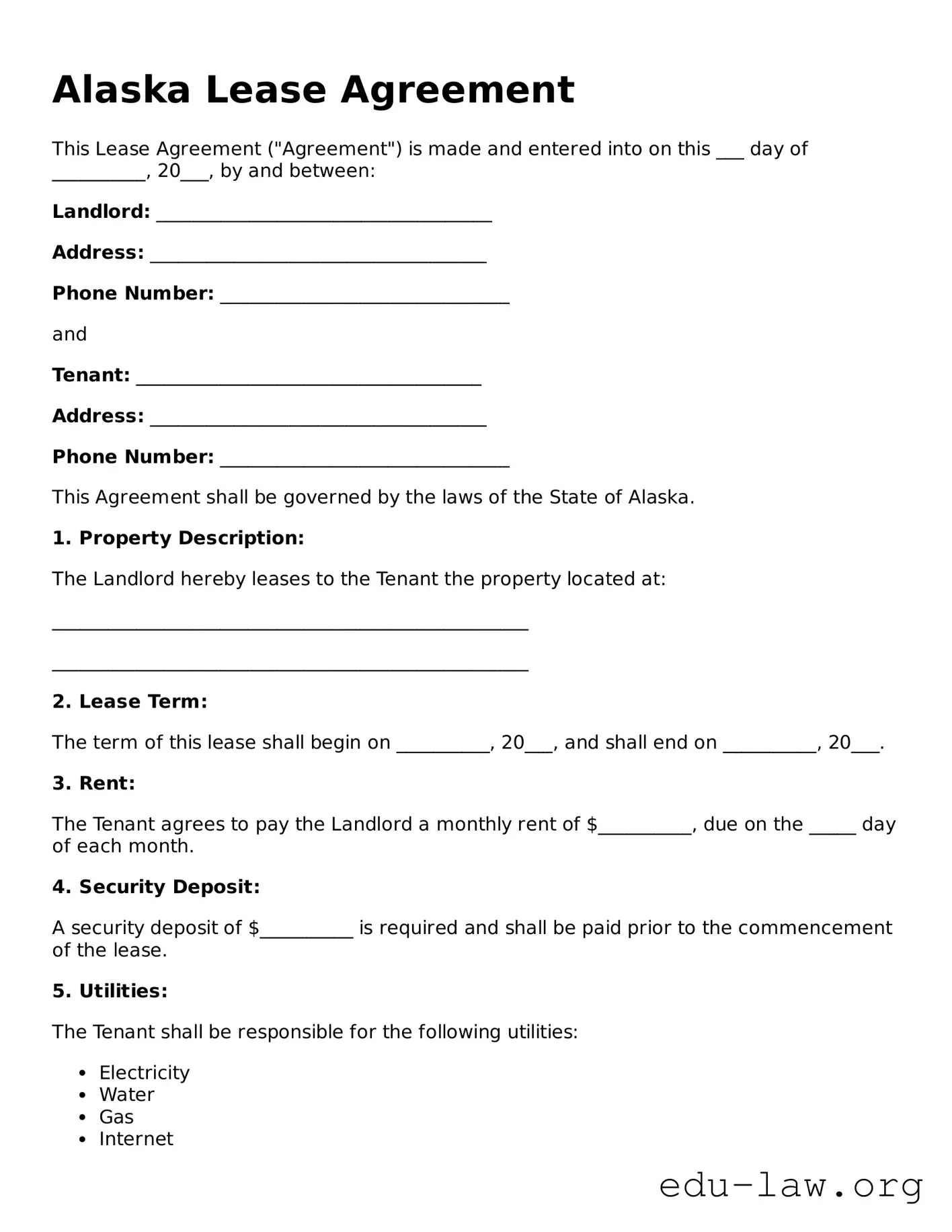
Alaska Lease Agreement
This Lease Agreement ("Agreement") is made and entered into on this ___ day of __________, 20___, by and between:
Landlord: ____________________________________
Address: ____________________________________
Phone Number: _______________________________
and
Tenant: _____________________________________
Address: ____________________________________
Phone Number: _______________________________
This Agreement shall be governed by the laws of the State of Alaska.
1. Property Description:
The Landlord hereby leases to the Tenant the property located at:
___________________________________________________
___________________________________________________
2. Lease Term:
The term of this lease shall begin on __________, 20___, and shall end on __________, 20___.
3. Rent:
The Tenant agrees to pay the Landlord a monthly rent of $__________, due on the _____ day of each month.
4. Security Deposit:
A security deposit of $__________ is required and shall be paid prior to the commencement of the lease.
5. Utilities:
The Tenant shall be responsible for the following utilities:
6. Maintenance and Repairs:
The Tenant agrees to maintain the property in good condition and to promptly notify the Landlord of any needed repairs.
7. Termination:
Either party may terminate this Agreement by providing written notice of at least _____ days prior to the desired termination date.
8. Governing Law:
This Agreement shall be construed in accordance with the laws of the State of Alaska.
IN WITNESS WHEREOF, the parties have executed this Lease Agreement as of the date first above written.
Landlord Signature: ___________________________
Date: ______________________________________
Tenant Signature: ____________________________
Date: ______________________________________
| Fact Name | Details |
|---|---|
| Governing Law | The Alaska Lease Agreement is governed by Alaska Statutes Title 34, specifically Chapter 34.03 regarding leases. |
| Parties Involved | The lease agreement typically involves a lessor (landlord) and a lessee (tenant). |
| Lease Duration | The agreement can specify a fixed term, such as one year, or it may be month-to-month. |
| Security Deposit | Alaska law allows landlords to collect a security deposit, which cannot exceed two months' rent for unfurnished properties. |
| Rent Payment Terms | The lease should clearly outline the rent amount, payment method, and due date. |
| Maintenance Responsibilities | The agreement may define the responsibilities of both parties regarding property maintenance and repairs. |
| Termination Notice | For month-to-month leases, either party must provide at least 30 days' notice to terminate the agreement. |
Completing the Alaska Lease Agreement form requires careful attention to detail. Each section of the form needs to be filled out accurately to ensure clarity and avoid potential disputes. Below are the steps to guide you through the process of filling out the form.
After completing the form, ensure that both parties retain a copy for their records. This will help in managing expectations and obligations throughout the lease term.
What is an Alaska Lease Agreement form?
An Alaska Lease Agreement form is a legal document used to outline the terms and conditions under which one party (the lessor) allows another party (the lessee) to use a property for a specified period in exchange for rent. This document is essential for both residential and commercial leases in Alaska, ensuring that both parties understand their rights and responsibilities.
What information is typically included in the Alaska Lease Agreement?
The agreement generally includes the names of the parties involved, a description of the property, the lease term (duration), the rental amount, payment terms, security deposits, maintenance responsibilities, and any rules or regulations that apply to the property. It's crucial to read through each section carefully to avoid misunderstandings.
Do I need to have a written lease agreement in Alaska?
While oral agreements can be legally binding, having a written lease is highly recommended. A written agreement provides clear evidence of the terms and protects both parties in case of disputes. In Alaska, certain leases, especially those longer than one year, are required to be in writing to be enforceable.
How long is a typical lease term in Alaska?
Lease terms in Alaska can vary widely. They can be as short as a month-to-month arrangement or as long as several years. The length of the lease should be clearly stated in the agreement, and both parties should feel comfortable with the duration before signing.
What happens if the tenant wants to break the lease early?
If a tenant needs to break the lease before the term ends, they should refer to the lease agreement for specific terms regarding early termination. Many leases include clauses that outline penalties or fees for breaking the lease early. Open communication with the landlord can sometimes lead to a mutual agreement that minimizes costs.
Are there any specific tenant rights in Alaska?
Yes, tenants in Alaska have several rights, including the right to a habitable living environment, the right to privacy, and the right to be free from discrimination. Additionally, landlords must follow specific procedures for eviction and must provide proper notice before entering the rental property.
What is a security deposit, and how is it handled in Alaska?
A security deposit is a sum of money collected by the landlord to cover potential damages or unpaid rent. In Alaska, landlords can charge a security deposit, but it is typically limited to two months' rent for unfurnished properties and one month's rent for furnished properties. The landlord must return the deposit within a specific timeframe after the lease ends, minus any deductions for damages.
Can a landlord raise the rent during a lease term?
Generally, a landlord cannot raise the rent during a fixed-term lease unless the lease agreement specifically allows for such an increase. For month-to-month leases, landlords can raise the rent but must provide proper notice to the tenant, usually at least 30 days in advance.
What should I do if I have a dispute with my landlord?
If a dispute arises, the first step is to communicate directly with the landlord to try and resolve the issue amicably. If that doesn’t work, tenants can seek mediation services or file a complaint with the Alaska Department of Law. Legal action is also an option, but it should be considered a last resort.
Is it possible to modify an existing lease agreement?
Yes, lease agreements can be modified, but any changes must be documented in writing and signed by both parties. Verbal agreements about modifications are typically not enforceable. Always ensure that any amendments are clear and agreed upon to avoid future disputes.
Incomplete Information: One of the most common mistakes is failing to fill out all required fields. Missing details can lead to confusion or disputes later on.
Incorrect Dates: Entering the wrong lease start and end dates can create significant issues. Ensure that the timeline is accurate to avoid misunderstandings.
Neglecting Tenant and Landlord Signatures: Both parties must sign the lease for it to be valid. Omitting signatures can render the agreement unenforceable.
Ignoring State-Specific Laws: Alaska has unique regulations regarding leases. Failing to comply with these laws can lead to legal complications.
Not Specifying Rent Payment Details: Clearly outlining how and when rent is to be paid is crucial. Vague terms can lead to disputes over payment methods or due dates.
Omitting Maintenance Responsibilities: Clearly defining who is responsible for maintenance and repairs can prevent future conflicts. Be specific about each party's obligations.
Failing to Include Pet Policies: If pets are allowed or prohibited, this should be clearly stated. Misunderstandings about pet policies can lead to tension between landlords and tenants.
When entering into a lease agreement in Alaska, several other forms and documents may accompany the primary lease agreement. These documents help clarify terms, protect the rights of both parties, and ensure compliance with local laws. Below is a list of commonly used documents in conjunction with the Alaska Lease Agreement.
Understanding these additional documents can enhance the leasing experience for both landlords and tenants. They provide clarity and structure, helping to foster a positive rental relationship while ensuring compliance with legal requirements.
The Alaska Lease Agreement form shares similarities with the Residential Lease Agreement, which is commonly used across the United States. Both documents establish the terms under which a tenant can occupy a property owned by a landlord. They outline essential details such as the duration of the lease, rental payment amounts, and responsibilities for maintenance. While the Alaska Lease Agreement may include specific provisions related to the unique environmental conditions of the state, the core purpose remains the same: to protect the rights of both parties and ensure a clear understanding of expectations.
Another document that parallels the Alaska Lease Agreement is the Commercial Lease Agreement. This form is tailored for businesses renting commercial space, but like the residential version, it delineates the terms of occupancy. Key similarities include the specification of lease duration, payment terms, and maintenance responsibilities. Additionally, both agreements often address issues such as property use and modifications, ensuring that all parties are aware of their rights and obligations in the context of the lease.
The Rental Agreement is another document that closely resembles the Alaska Lease Agreement. While often used interchangeably with a lease, a rental agreement typically covers shorter terms, such as month-to-month arrangements. Both documents serve the purpose of defining the relationship between the landlord and tenant, outlining payment schedules, and clarifying the rules governing the property. The primary difference lies in the length of commitment, but both aim to provide a clear framework for the tenancy.
Similarly, the Sublease Agreement is akin to the Alaska Lease Agreement, as it governs the relationship between a primary tenant and a subtenant. This document allows the primary tenant to rent out their space to another individual, while still maintaining responsibility to the original landlord. Like the Alaska Lease Agreement, it details the terms of occupancy, payment, and responsibilities. This ensures that all parties understand their roles and obligations, even when multiple tenants are involved.
Lastly, the Lease-Purchase Agreement bears resemblance to the Alaska Lease Agreement by combining elements of leasing and purchasing a property. This document allows tenants to rent a property with the option to buy it later. Like the standard lease agreement, it outlines payment terms and responsibilities. However, it also includes provisions related to the eventual purchase, making it a unique hybrid of leasing and ownership. Both agreements ultimately aim to clarify expectations and protect the interests of all involved parties.
When filling out the Alaska Lease Agreement form, it’s essential to be thorough and accurate. Here’s a list of things you should and shouldn’t do to ensure the process goes smoothly.
When it comes to the Alaska Lease Agreement form, several misconceptions can lead to confusion for both landlords and tenants. Understanding these misconceptions can help ensure a smoother leasing process. Here are four common misunderstandings:
By clarifying these misconceptions, both landlords and tenants can approach the leasing process with a better understanding, leading to a more positive experience for everyone involved.
When filling out and using the Alaska Lease Agreement form, there are several important points to consider. Here are key takeaways to keep in mind:
By paying attention to these key elements, both landlords and tenants can create a more effective and clear lease agreement.