When navigating the often emotional terrain of divorce, having a clear and comprehensive Divorce Settlement Agreement form can make all the difference. This important document outlines the terms of the separation, addressing key issues such as property division, child custody, visitation rights, and spousal support. By detailing each party's rights and responsibilities, the form helps to prevent misunderstandings and disputes down the line. It serves as a foundation for the final divorce decree, ensuring that both individuals have agreed on essential matters before moving forward. Understanding how to fill out this form correctly is crucial for a smooth transition into post-divorce life, allowing both parties to focus on their future rather than lingering conflicts. Whether you are amicably parting ways or facing challenges, knowing the ins and outs of the Alaska Divorce Settlement Agreement can empower you to make informed decisions during this significant life change.
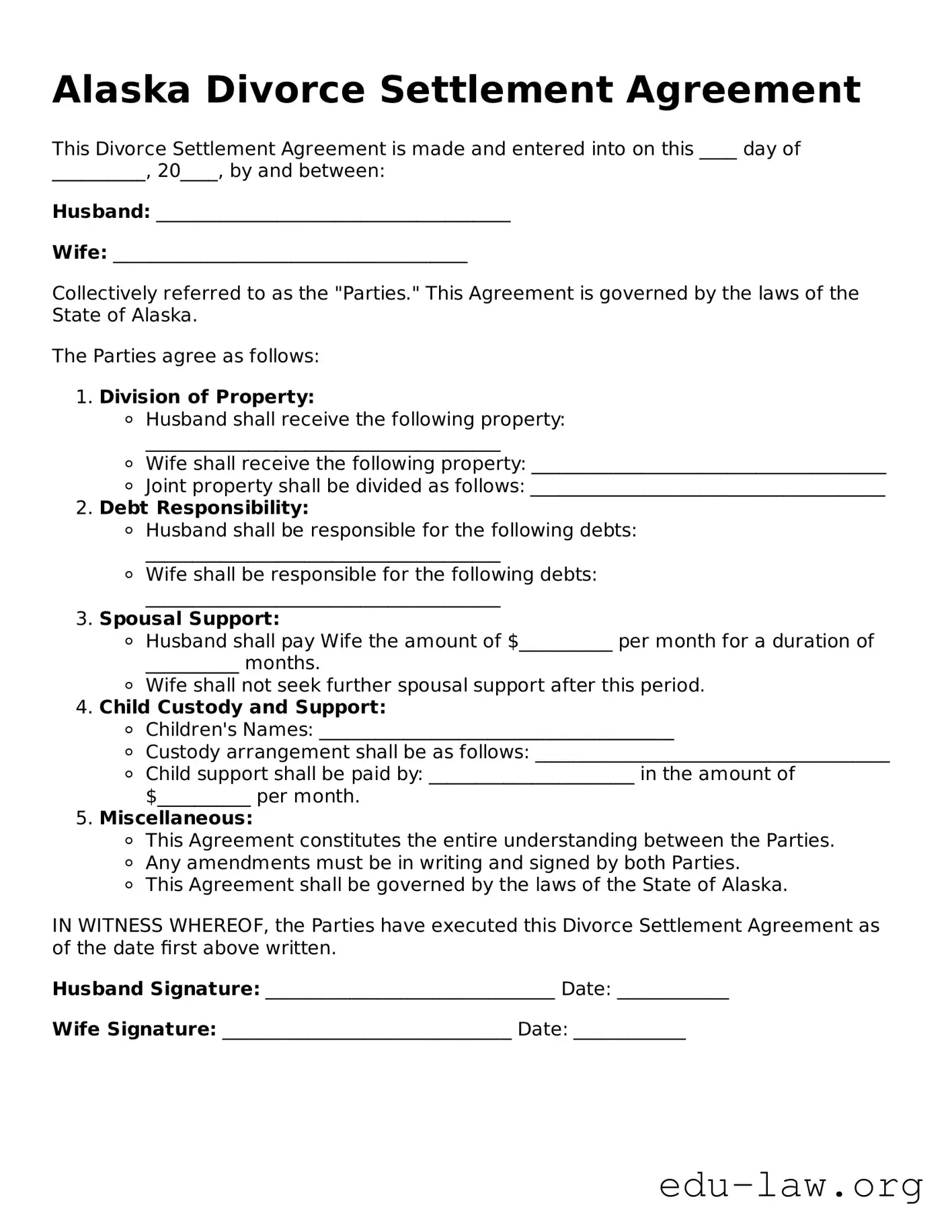
Alaska Divorce Settlement Agreement
This Divorce Settlement Agreement is made and entered into on this ____ day of __________, 20____, by and between:
Husband: ______________________________________
Wife: ______________________________________
Collectively referred to as the "Parties." This Agreement is governed by the laws of the State of Alaska.
The Parties agree as follows:
IN WITNESS WHEREOF, the Parties have executed this Divorce Settlement Agreement as of the date first above written.
Husband Signature: _______________________________ Date: ____________
Wife Signature: _______________________________ Date: ____________
| Fact Name | Description |
|---|---|
| Purpose | The Alaska Divorce Settlement Agreement form outlines the terms agreed upon by both parties regarding the division of assets, debts, and other relevant matters during a divorce. |
| Governing Law | This form is governed by Alaska state law, specifically under Title 25 of the Alaska Statutes, which covers marriage and divorce. |
| Mutual Agreement | Both parties must mutually agree to the terms specified in the settlement agreement for it to be valid. |
| Filing Requirement | The completed form must be filed with the court as part of the divorce proceedings. |
| Asset Division | The form includes provisions for the equitable division of marital property and debts. |
| Child Custody | If applicable, the agreement can address child custody arrangements and visitation rights. |
| Spousal Support | The settlement may specify any spousal support (alimony) obligations, if necessary. |
| Signatures | Both parties must sign the agreement to confirm their acceptance of the terms. |
| Modification | Once filed, modifications to the agreement may require court approval. |
| Legal Advice | It is advisable for both parties to seek independent legal advice before signing the agreement to ensure their rights are protected. |
After obtaining the Alaska Divorce Settlement Agreement form, you will need to carefully complete it to ensure all necessary details are accurately captured. This form is essential for finalizing the terms of your divorce, including asset division, child custody, and support arrangements.
Once the form is completed, review it for accuracy. Make sure all parties involved agree with the terms before submitting it to the court. Proper submission will help facilitate the divorce process.
What is an Alaska Divorce Settlement Agreement form?
The Alaska Divorce Settlement Agreement form is a legal document that outlines the terms agreed upon by both spouses during a divorce. This form typically addresses issues such as property division, child custody, child support, and spousal support. By documenting these agreements, the form helps ensure that both parties understand their rights and obligations, making the divorce process smoother and more manageable.
Who needs to fill out the Divorce Settlement Agreement form?
What happens if we cannot agree on the terms of the settlement?
Is the Divorce Settlement Agreement legally binding?
Can the Divorce Settlement Agreement be modified after it is finalized?
Incomplete Information: Many individuals fail to provide all necessary details. This includes personal information, such as full names, addresses, and dates of birth. Missing even one piece of information can delay the process.
Incorrect Financial Disclosure: It's crucial to accurately report income, assets, and debts. Some people underestimate their assets or fail to disclose certain liabilities, which can lead to complications later.
Not Addressing Child Custody Properly: Parents often overlook the importance of detailing custody arrangements. Clear agreements on visitation schedules, decision-making responsibilities, and child support are essential to avoid future disputes.
Ignoring State Guidelines: Alaska has specific rules regarding divorce settlements. Failing to adhere to these guidelines can result in the rejection of the agreement or require additional legal intervention.
Not Seeking Legal Advice: Many individuals attempt to fill out the form without consulting a legal professional. This can lead to mistakes that may have been easily avoided with proper guidance.
When navigating a divorce in Alaska, several documents may accompany the Divorce Settlement Agreement. Each of these forms serves a specific purpose and helps ensure that the divorce process is smooth and clear for both parties.
Having these documents ready can help streamline the divorce process and ensure that all important aspects are covered. Being organized and informed will make this challenging time a little easier.
The Alaska Divorce Settlement Agreement form shares similarities with the Marital Settlement Agreement. Both documents outline the terms agreed upon by spouses regarding the division of assets, debts, and other responsibilities. Just like the Alaska form, a Marital Settlement Agreement serves as a crucial tool in ensuring that both parties understand their rights and obligations post-divorce. It can help prevent misunderstandings and disputes by clearly stating how property and responsibilities will be divided.
Another related document is the Separation Agreement. This document is often used when couples decide to live apart but are not ready to divorce. Much like the Divorce Settlement Agreement, the Separation Agreement details how the couple will handle finances, child custody, and support during their separation. It provides a roadmap for both parties, ensuring that they are on the same page while they navigate this transitional phase.
The Child Custody Agreement is also similar, particularly when children are involved. This document specifically addresses the care and custody arrangements for children after a divorce. Like the Divorce Settlement Agreement, it aims to create a clear understanding between parents about their responsibilities and rights. The Child Custody Agreement helps to minimize conflict and ensures that the best interests of the children are prioritized.
A Property Settlement Agreement is another document that mirrors the Divorce Settlement Agreement. This type of agreement focuses solely on the division of property and debts. It outlines how assets will be split and what debts each party will be responsible for after the divorce. By being specific about these details, both parties can avoid potential disputes and ensure a smoother transition into their new lives.
The Parenting Plan is closely related as well. This document outlines how parents will raise their children after divorce, detailing visitation schedules, decision-making authority, and communication methods. Similar to the Divorce Settlement Agreement, a Parenting Plan emphasizes cooperation and clarity, aiming to foster a healthy co-parenting relationship that benefits the children.
A Spousal Support Agreement can also be compared to the Divorce Settlement Agreement. This document specifically addresses financial support one spouse may provide to the other after the divorce. It outlines the amount, duration, and conditions of support, ensuring both parties have a clear understanding of their financial obligations. Like the Divorce Settlement Agreement, it plays a vital role in reducing conflict and uncertainty in the post-divorce landscape.
Lastly, the Financial Disclosure Statement is relevant to the Divorce Settlement Agreement. This document requires both parties to disclose their financial situations, including assets, liabilities, income, and expenses. Transparency is key in divorce proceedings, and this statement ensures that both parties are fully informed before making decisions about asset division and support. By fostering honesty, it helps build a foundation for a fair settlement.
When completing the Alaska Divorce Settlement Agreement form, it is essential to follow specific guidelines to ensure accuracy and compliance. Below is a list of things to do and avoid during this process.
Completing the form with care can help facilitate a smoother divorce process. Always prioritize clarity and accuracy in your submissions.
This form can be used by any couple seeking a divorce, regardless of whether they have children. It addresses the division of assets and debts, which is applicable to all divorcing couples.
While the form represents an agreement between both parties, it can be modified if both spouses agree to the changes. It is essential to document any modifications properly.
The agreement allows couples to negotiate the division of their assets. A 50/50 split is common, but it is not mandated. The final division depends on the couple's unique circumstances.
The Divorce Settlement Agreement is important even in uncontested divorces. It provides a clear record of how assets and responsibilities will be divided, ensuring both parties understand their rights.
While individuals can complete the form on their own, consulting with a lawyer can help clarify rights and obligations. Legal advice can prevent misunderstandings and future disputes.
The Divorce Settlement Agreement can include provisions for spousal support, also known as alimony. Couples should discuss this aspect during negotiations to ensure it is adequately addressed.
While the form is specific to Alaska, similar forms exist in other states. Couples moving out of Alaska should consult their new state's requirements for divorce agreements.
Although the agreement is legally binding, it can be revisited if circumstances change. For example, if a significant life event occurs, such as job loss, a court may allow modifications.
Filling out and using the Alaska Divorce Settlement Agreement form can be straightforward if you keep a few key points in mind. Here are some important takeaways:
By keeping these takeaways in mind, you can navigate the divorce settlement process more effectively.