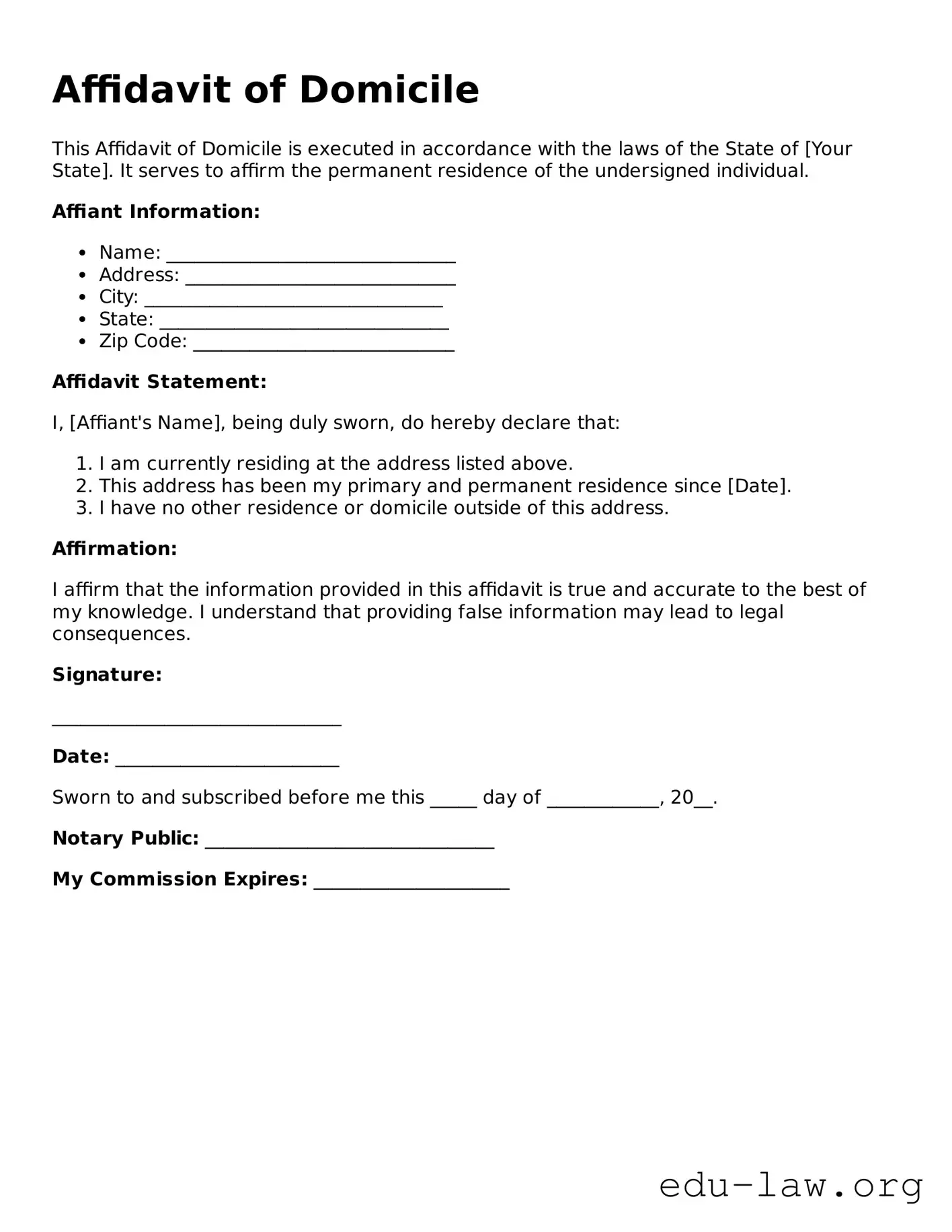
The Affidavit of Domicile is a crucial document often used in estate planning and probate processes. It serves to establish an individual’s legal residence at the time of their death, which can have significant implications for tax purposes and the distribution of assets. This form typically requires the decedent’s name, date of birth, and the address that was considered their primary residence. Additionally, the affidavit may need to be signed by a witness or notary to ensure its validity. By affirming the place of domicile, this document helps clarify jurisdictional issues and can facilitate smoother transitions for heirs and beneficiaries. Understanding the importance of the Affidavit of Domicile can help individuals navigate the complexities of estate management and ensure that their wishes are honored after their passing.
Affidavit of Domicile
This Affidavit of Domicile is executed in accordance with the laws of the State of [Your State]. It serves to affirm the permanent residence of the undersigned individual.
Affiant Information:
Affidavit Statement:
I, [Affiant's Name], being duly sworn, do hereby declare that:
Affirmation:
I affirm that the information provided in this affidavit is true and accurate to the best of my knowledge. I understand that providing false information may lead to legal consequences.
Signature:
_______________________________
Date: ________________________
Sworn to and subscribed before me this _____ day of ____________, 20__.
Notary Public: _______________________________
My Commission Expires: _____________________
| Fact Name | Details |
|---|---|
| Definition | An Affidavit of Domicile is a legal document used to declare an individual's permanent residence, often required by financial institutions or courts. |
| Purpose | This form is commonly used to establish the domicile of a deceased person for the distribution of their estate or for tax purposes. |
| State-Specific Forms | Different states may have their own versions of the Affidavit of Domicile, governed by state laws such as the Uniform Probate Code. |
| Notarization Requirement | Most jurisdictions require the Affidavit of Domicile to be notarized to ensure its authenticity and legal validity. |
After obtaining the Affidavit of Domicile form, you will need to complete it accurately to ensure it meets the necessary requirements. Once filled out, the form may need to be submitted to a relevant authority or used for specific legal purposes. Follow these steps to complete the form correctly.
What is an Affidavit of Domicile?
An Affidavit of Domicile is a legal document used to establish an individual's permanent residence. This form is often required in situations such as settling an estate, transferring assets, or dealing with financial institutions. It serves to confirm where a person lived at the time of their death or during a specific period.
Why do I need an Affidavit of Domicile?
You may need an Affidavit of Domicile to clarify your residency status for various legal or financial reasons. For instance, if you are managing the estate of a deceased person, financial institutions may require this affidavit to ensure that assets are handled according to the laws of the state where the deceased resided. It helps prevent disputes over where a person legally belonged at the time of death.
Who can complete an Affidavit of Domicile?
What information is required on the Affidavit of Domicile?
Is the Affidavit of Domicile a legally binding document?
How do I file an Affidavit of Domicile?
Can I revoke an Affidavit of Domicile?
Incorrect Information: One of the most common mistakes is providing inaccurate details about your residence. Ensure that the address listed is current and reflects your primary place of living. Double-check for typos or outdated information.
Failure to Sign: Many individuals forget to sign the affidavit. A signature is crucial, as it validates the document. Without it, the affidavit may be deemed incomplete and could lead to delays or complications.
Not Including Witnesses: Depending on state requirements, some affidavits may need to be witnessed. Failing to have the necessary witnesses present can invalidate the document. Always verify the specific requirements for your state.
Omitting Dates: Dates play an important role in an affidavit. Many people neglect to include the date of signing or the date when the residency began. This information is vital for establishing timelines and can impact the validity of the affidavit.
Neglecting to Notarize: In some jurisdictions, notarization is required for the affidavit to be legally binding. Forgetting this step can lead to issues when the document is presented for legal purposes. Always check if notarization is necessary in your area.
The Affidavit of Domicile is an important document used to establish a person's permanent residence. It often works alongside other forms and documents that help clarify various aspects of a person's legal status or property ownership. Here’s a list of some commonly used documents that may accompany the Affidavit of Domicile.
These documents work together to provide a clearer picture of a person's residency and estate matters. Having them prepared can make the process smoother and more efficient.
The Affidavit of Domicile is similar to a Last Will and Testament. Both documents serve to clarify the intentions of an individual regarding their estate. While a will outlines how assets should be distributed after death, an Affidavit of Domicile confirms the deceased's primary residence at the time of death. This information can be crucial for determining the proper jurisdiction for probate proceedings and ensuring that the estate is administered according to the laws of the correct state.
Another document that shares similarities is the Power of Attorney. A Power of Attorney allows an individual to designate someone else to make decisions on their behalf. Like the Affidavit of Domicile, it requires the individual’s intent to be clearly stated. Both documents must be executed with care to ensure they reflect the individual's wishes and comply with state laws, as they can significantly impact financial and legal matters.
The Declaration of Trust is also comparable. This document establishes a trust and outlines how the assets within it should be managed. Similar to the Affidavit of Domicile, it requires clear identification of the parties involved and the intent behind the document. Both documents aim to clarify ownership and management of assets, though the Declaration of Trust typically operates during the individual's lifetime, while the Affidavit of Domicile often comes into play after death.
A Living Will shares a connection with the Affidavit of Domicile as well. A Living Will outlines an individual’s preferences regarding medical treatment in case they become incapacitated. Both documents reflect personal choices and intentions. They must be executed properly to ensure that the individual's wishes are honored, whether in matters of health care or the distribution of assets after death.
The Certificate of Death is another relevant document. While the Affidavit of Domicile confirms the deceased’s residence, the Certificate of Death provides official proof of death. Both documents are essential in the probate process. The Affidavit of Domicile may be used alongside the Certificate of Death to establish jurisdiction and facilitate the administration of the estate.
Additionally, the Estate Inventory is similar in that it lists the assets owned by a deceased person. The Affidavit of Domicile may accompany the Estate Inventory to affirm the primary residence and help determine the estate's value. Both documents play a critical role in the probate process, ensuring that all assets are accounted for and properly managed according to the deceased's wishes.
Finally, the Letter of Instruction can be compared to the Affidavit of Domicile. This document provides guidance to loved ones regarding the deceased’s preferences and wishes. While the Affidavit of Domicile focuses on the legal residence, the Letter of Instruction can cover a broader range of topics, such as funeral arrangements and asset distribution. Both documents are valuable in helping survivors navigate the complexities of estate management.
When filling out the Affidavit of Domicile form, it’s important to approach the task with care. Here are five things to keep in mind, both dos and don'ts, to ensure your affidavit is completed accurately and effectively.
Many people have misunderstandings about the Affidavit of Domicile form. Here are ten common misconceptions, along with clarifications to help you better understand this important document.
Understanding these misconceptions can help you navigate the process of completing an Affidavit of Domicile more easily. Always consult with a legal professional if you have specific questions or concerns.
When filling out and using the Affidavit of Domicile form, keep these key points in mind: