The Affidavit of Correction form serves as a vital tool for individuals seeking to amend or rectify errors in official documents. This form is typically used when inaccuracies in names, dates, or other important details appear in legal filings, property records, or public documents. By submitting this affidavit, individuals can formally declare the need for correction, ensuring that their records accurately reflect the intended information. The process often involves providing specific details about the original document, outlining the nature of the error, and stating the correct information. It's essential for the affidavit to be signed and notarized, as this adds an extra layer of authenticity and validity. Understanding how to properly complete and file this form can help prevent future complications and ensure that records are clear and accurate.
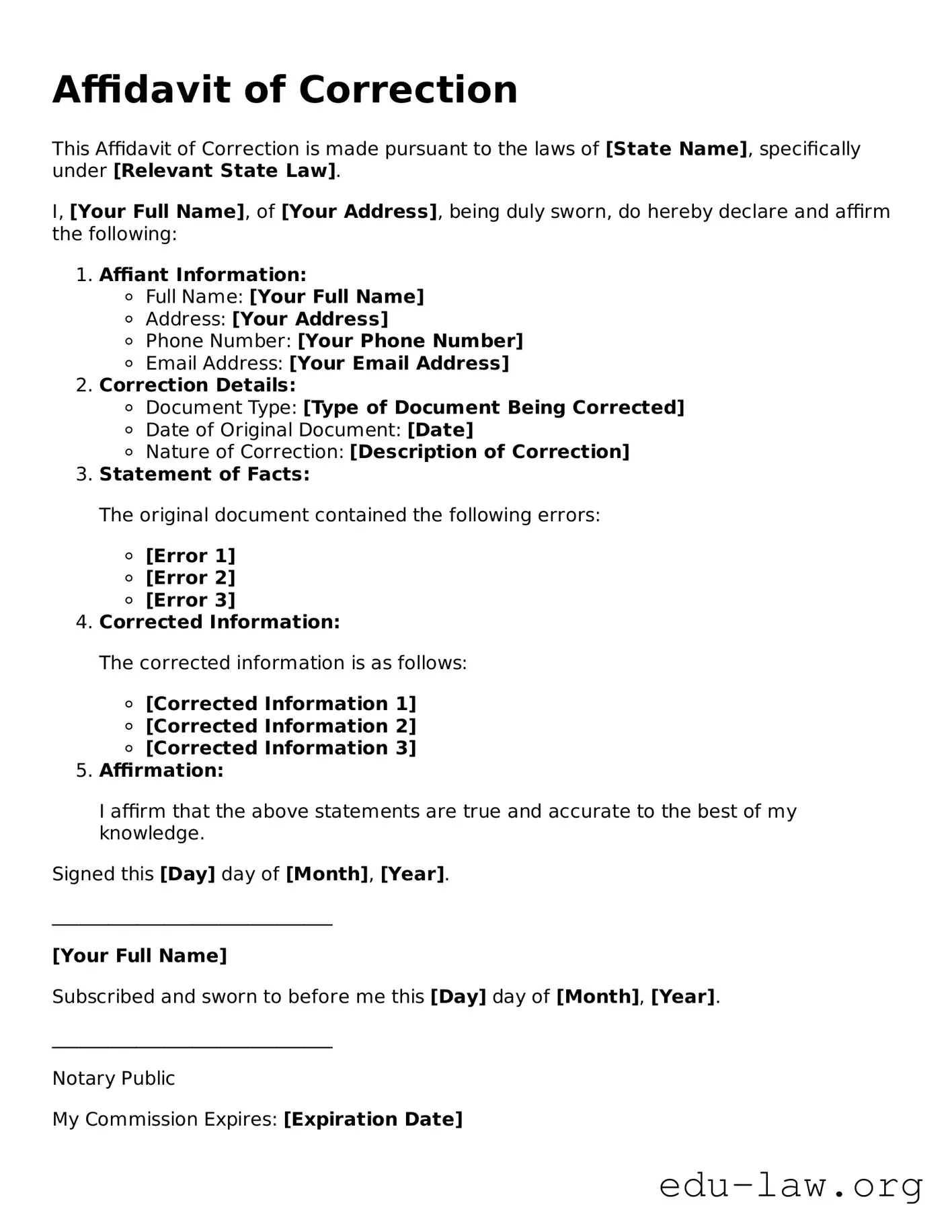
Affidavit of Correction
This Affidavit of Correction is made pursuant to the laws of [State Name], specifically under [Relevant State Law].
I, [Your Full Name], of [Your Address], being duly sworn, do hereby declare and affirm the following:
The original document contained the following errors:
The corrected information is as follows:
I affirm that the above statements are true and accurate to the best of my knowledge.
Signed this [Day] day of [Month], [Year].
______________________________
[Your Full Name]
Subscribed and sworn to before me this [Day] day of [Month], [Year].
______________________________
Notary Public
My Commission Expires: [Expiration Date]
| Fact Name | Details |
|---|---|
| Purpose | The Affidavit of Correction is used to correct errors in recorded documents. |
| Common Errors | It typically addresses errors such as misspellings, incorrect dates, or wrong legal descriptions. |
| Who Can File | Any party involved in the original document can file an Affidavit of Correction. |
| Governing Law (California) | In California, it is governed by California Civil Code Section 1187. |
| Governing Law (Florida) | In Florida, it is governed by Florida Statutes Section 695.26. |
| Filing Process | The affidavit must be signed in front of a notary public before being filed with the appropriate county office. |
| Impact on Original Document | The original document remains valid; the affidavit simply clarifies the intended information. |
| Fees | Filing fees may vary by state and county, so it is important to check local regulations. |
| Record Keeping | Once filed, the Affidavit of Correction becomes part of the public record. |
After obtaining the Affidavit of Correction form, you will need to complete it accurately to ensure that the necessary corrections are made. Once the form is filled out, it will need to be submitted to the appropriate authority for processing.
What is an Affidavit of Correction?
An Affidavit of Correction is a legal document used to correct errors or inaccuracies in previously filed documents, such as property deeds, marriage certificates, or court records. This form helps clarify the intended information and ensures that public records are accurate.
Who can file an Affidavit of Correction?
Generally, any individual or entity that has a vested interest in the document can file an Affidavit of Correction. This includes property owners, spouses, or legal representatives. It is essential that the person filing the affidavit has the authority to do so and is directly affected by the error.
What types of errors can be corrected with this form?
Common errors that can be corrected include typographical mistakes, incorrect names, wrong dates, or misdescriptions of property. However, the affidavit cannot be used to change substantive rights or interests. It is meant solely for clerical or factual corrections.
How do I complete an Affidavit of Correction?
To complete the form, you will need to provide specific information about the original document, including its title, date, and any relevant identification numbers. You must also clearly state the errors and the correct information. Finally, the affidavit must be signed in the presence of a notary public to validate the corrections.
Is there a fee associated with filing an Affidavit of Correction?
Fees can vary depending on the jurisdiction and the type of document being corrected. It's important to check with the local recording office or court to determine if there are any filing fees associated with your specific situation.
Where do I file an Affidavit of Correction?
The Affidavit of Correction should be filed with the same office where the original document was recorded. This could be a county clerk's office, a court, or another relevant agency. Always confirm the correct filing location based on the type of document you are correcting.
Do I need to notify anyone after filing the Affidavit of Correction?
In most cases, you do not need to notify anyone directly after filing the affidavit. However, it is wise to keep copies of the filed document for your records. If the correction affects other parties, such as co-owners or interested third parties, consider informing them as a courtesy.
Can an Affidavit of Correction be contested?
Yes, an Affidavit of Correction can be contested if someone believes that the correction is inaccurate or that it alters their rights. If a dispute arises, it may lead to further legal proceedings to resolve the issue. It’s advisable to seek legal counsel if you anticipate any objections.
How long does it take for an Affidavit of Correction to be processed?
The processing time can vary widely depending on the jurisdiction and the volume of documents being handled. Generally, it can take anywhere from a few days to several weeks. Checking with the filing office can provide more specific timelines.
What should I do if my Affidavit of Correction is denied?
If your Affidavit of Correction is denied, you will typically receive a notice explaining the reasons for the denial. You may have the option to correct any issues and refile. In more complex situations, consulting with a legal expert can help you understand your next steps.
Not Providing Complete Information: Many individuals forget to include all necessary details. This includes names, addresses, and specific information about the document being corrected. Omitting any part of this information can lead to delays or rejection of the affidavit.
Using Incorrect Dates: Some people mistakenly enter the wrong dates when filling out the form. This can include the date of the original document or the date of the correction. Accurate dates are crucial for the validity of the affidavit.
Failing to Sign and Date: A common error is neglecting to sign the affidavit or forgetting to date it. An unsigned affidavit is not valid. Always ensure that you sign in the designated area and include the date of signing.
Not Following Submission Guidelines: Each jurisdiction may have specific rules regarding how to submit the affidavit. Some individuals fail to check these guidelines, leading to improper submissions. Always verify the requirements for your area.
When dealing with the Affidavit of Correction form, several other documents may be necessary to ensure a smooth process. Each of these forms serves a specific purpose and can help clarify or support the corrections being made.
Understanding these documents can streamline your correction process and ensure that everything is in order. Having the right paperwork on hand will help avoid delays and complications.
The Affidavit of Correction is similar to a Declaration. Both documents serve to affirm the truth of certain facts. A Declaration is often used in legal proceedings to state facts under penalty of perjury. Like an Affidavit of Correction, a Declaration provides a clear statement of information, but it may not always require notarization. Both are used to clarify or correct information, ensuring that the record reflects the truth.
Another document akin to the Affidavit of Correction is the Certificate of Correction. This document is typically filed with state agencies to rectify errors in corporate filings. While the Affidavit of Correction is more personal and often used in legal contexts, the Certificate of Correction serves a more formal purpose in business law. Both aim to correct inaccuracies, but their applications differ based on context.
The Affidavit of Truth is also similar. This document asserts the truth of specific statements made by an individual. Like the Affidavit of Correction, it is sworn to be true and can be used in legal settings. However, the Affidavit of Truth often addresses personal beliefs or facts about one’s life, while the Affidavit of Correction focuses on rectifying specific errors in documents.
A Statement of Facts shares some similarities as well. This document outlines specific facts related to a case or situation. While it may not be sworn or notarized, it serves to clarify details. Both the Statement of Facts and the Affidavit of Correction aim to provide clear information, but the former is often less formal and may not have legal weight.
The Affidavit of Support is another related document. This form is used in immigration processes to demonstrate that a sponsor can financially support a visa applicant. Both documents require a sworn statement, but the Affidavit of Support has a specific purpose related to immigration, while the Affidavit of Correction is used to amend records.
Next, we have the Correction Deed. This legal document is used to correct errors in property deeds. Like the Affidavit of Correction, a Correction Deed is designed to fix inaccuracies. However, it is specifically tied to real estate transactions, whereas the Affidavit of Correction can apply to various legal contexts.
The Verification of Identity is also similar. This document confirms a person’s identity for legal purposes. Both the Verification of Identity and the Affidavit of Correction require an affirmation of truth, but the former focuses on identity verification, while the latter is about correcting information.
The Affidavit of Change of Name serves a similar function as well. This document is used when an individual legally changes their name. Like the Affidavit of Correction, it is sworn and notarized. Both documents aim to ensure that official records accurately reflect the individual’s current status, but they address different types of changes.
Lastly, the Affidavit of Consent can be compared to the Affidavit of Correction. This document is often used in situations where one party agrees to something, such as a minor’s travel. Both require a sworn statement, but the Affidavit of Consent focuses on agreement, while the Affidavit of Correction is about rectifying errors.
When filling out the Affidavit of Correction form, it is important to follow specific guidelines to ensure accuracy and compliance. Here are some key do's and don'ts:
By following these guidelines, individuals can help ensure that their Affidavit of Correction is processed smoothly and efficiently.
Misconceptions about the Affidavit of Correction form can lead to confusion and missteps in legal processes. Below are eight common misconceptions, along with clarifications for each.
Understanding these misconceptions can help individuals navigate the process more effectively and ensure that their corrections are handled appropriately.
When dealing with the Affidavit of Correction form, there are several important points to keep in mind. This document serves to correct errors in previously filed documents. Understanding its use can prevent future complications.
Following these key takeaways can help ensure that the Affidavit of Correction is filled out and used effectively, minimizing the risk of further issues down the line.