When it comes to film and television production, securing the right permissions is crucial. One important document in this process is the Actor Release form. This form serves as a legal agreement between the actor and the production team, ensuring that the actor's performance can be used in the final product. It typically covers aspects such as consent to use the actor's likeness, voice, and performance, along with any rights to royalties or compensation. By signing this form, actors grant producers the ability to showcase their work without future legal complications. Understanding the key elements of the Actor Release form can help both actors and producers navigate the often complex world of media production, fostering clear communication and mutual respect in the creative process.
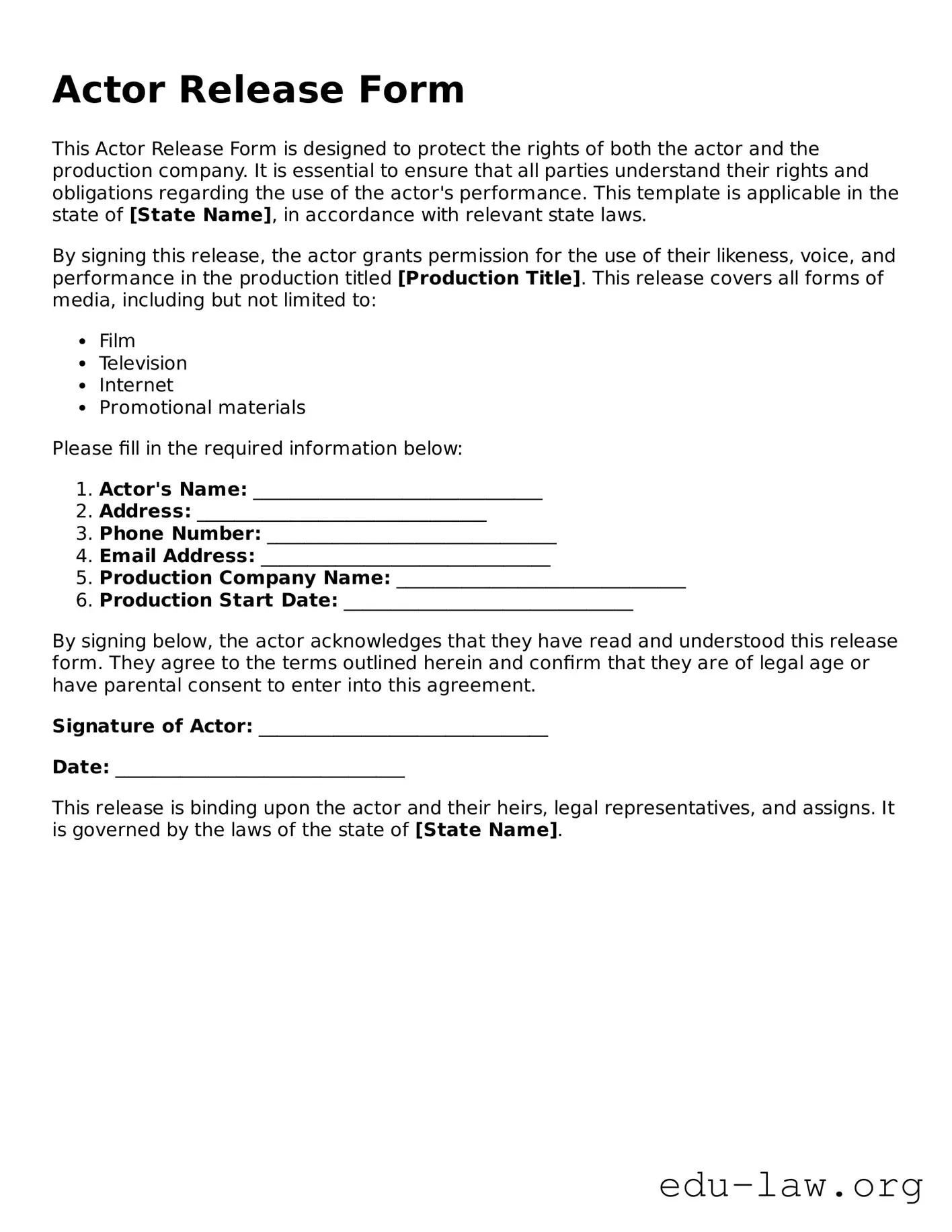
Actor Release Form
This Actor Release Form is designed to protect the rights of both the actor and the production company. It is essential to ensure that all parties understand their rights and obligations regarding the use of the actor's performance. This template is applicable in the state of [State Name], in accordance with relevant state laws.
By signing this release, the actor grants permission for the use of their likeness, voice, and performance in the production titled [Production Title]. This release covers all forms of media, including but not limited to:
Please fill in the required information below:
By signing below, the actor acknowledges that they have read and understood this release form. They agree to the terms outlined herein and confirm that they are of legal age or have parental consent to enter into this agreement.
Signature of Actor: _______________________________
Date: _______________________________
This release is binding upon the actor and their heirs, legal representatives, and assigns. It is governed by the laws of the state of [State Name].
| Fact Name | Description |
|---|---|
| Purpose | An Actor Release Form grants permission for the use of an actor's likeness, voice, and performance in a production. |
| Importance | This form protects filmmakers from legal disputes regarding the use of an actor's image and ensures that all parties understand their rights. |
| Governing Law (California) | In California, the right of publicity governs the use of an actor's likeness, outlined in California Civil Code Section 3344. |
| Governing Law (New York) | New York's Civil Rights Law Sections 50 and 51 protect an individual's right to control the commercial use of their name and likeness. |
| Key Components | The form typically includes the actor's name, the production details, and a statement of consent for the use of their performance. |
| Duration | Once signed, the release generally remains in effect indefinitely, unless otherwise stated in the agreement. |
After obtaining the Actor Release form, you will need to complete it accurately to ensure all necessary information is provided. This form is essential for moving forward with your project, so take your time and fill it out carefully.
What is an Actor Release form?
An Actor Release form is a legal document that grants permission for filmmakers or producers to use an actor's likeness, voice, and performance in a project. This form ensures that the actor understands how their performance will be used and that they waive any future claims regarding the use of their image or performance.
Why is an Actor Release form important?
This form is crucial for protecting both the actor and the production team. It provides clarity on the rights granted and helps avoid potential disputes in the future. By signing the form, actors acknowledge their consent, which is vital for legal and ethical production practices.
Who needs to sign the Actor Release form?
All actors participating in a production should sign the Actor Release form. This includes principal actors, background actors, and anyone whose performance will be captured on film or video. It ensures that all parties are on the same page regarding usage rights.
What happens if an actor refuses to sign the form?
If an actor refuses to sign the Actor Release form, the production may need to find a replacement or reconsider the actor's involvement. Without a signed release, the production may face legal challenges regarding the use of the actor's performance or likeness.
Can an Actor Release form be revoked?
Generally, once an Actor Release form is signed, it cannot be revoked. The actor gives up certain rights regarding their performance for the duration specified in the form. However, specific terms may vary, so it’s important to read the document carefully.
Is compensation required for signing the Actor Release form?
Compensation is not a requirement for signing the Actor Release form. However, actors are often compensated for their performances, and this can be negotiated as part of their contract. The release form itself does not dictate payment terms.
What should actors look for in an Actor Release form?
Actors should review the form for clarity on how their performance will be used, the duration of the rights granted, and any limitations on usage. It’s also wise to check for any clauses regarding compensation or additional rights that may affect them.
Can an Actor Release form cover multiple projects?
Yes, an Actor Release form can be drafted to cover multiple projects, but this should be explicitly stated in the document. If an actor is involved in several productions, having a comprehensive release can simplify the process, but it’s essential to ensure that all terms are clearly defined.
Not reading the form carefully: Many people rush through the Actor Release form without fully understanding each section. This can lead to mistakes.
Missing signatures: Forgetting to sign the form is a common error. A signature is essential for the release to be valid.
Incorrect dates: Some individuals write the wrong date on the form. This can create confusion about when the release is effective.
Failing to provide contact information: Not including a phone number or email can make it difficult for the production team to reach you if needed.
Not specifying the project: Omitting details about the specific project can lead to misunderstandings about what you are agreeing to.
Ignoring additional clauses: Some forms include extra clauses or conditions. Skipping these can result in unexpected obligations.
Not keeping a copy: Failing to make a copy of the signed form for your records can lead to issues later if questions arise.
When working on a film or video project, several documents complement the Actor Release form to ensure clarity and protection for all parties involved. These forms help manage rights, permissions, and expectations. Here are some commonly used documents:
Using these documents alongside the Actor Release form helps create a smoother production process. They protect everyone involved and clarify expectations, reducing the risk of misunderstandings or legal issues down the line.
The Actor Release form is akin to the Model Release form, which is used in the modeling industry. Both documents serve to grant permission for the use of an individual's likeness in various media. Just as actors agree to allow filmmakers to use their image and performance, models provide similar consent to photographers and brands. This ensures that the creators can use the images without fear of legal repercussions, while also acknowledging the rights of the individuals involved.
Another document similar to the Actor Release form is the Talent Release form. This form is used not only for actors but also for musicians, dancers, and other performers. It allows producers and directors to use the performance of the talent in their projects. Like the Actor Release, it protects the rights of the creators while ensuring that the talent is aware of how their performance will be utilized.
The Photography Release form is also comparable. This document is often used by photographers to obtain permission from subjects to use their images in promotional materials or publications. Much like the Actor Release, it outlines the terms under which the images can be used, ensuring that both the photographer and the subject understand their rights and responsibilities.
The Video Release form shares similarities with the Actor Release form as well. It is commonly used in video production to secure permission from individuals appearing in the footage. This document clarifies how the video will be used and protects the producer from potential legal issues related to the use of someone's likeness, similar to the protections offered in an Actor Release.
The Publicity Release form is another related document. This form is often utilized when a person's name, image, or likeness is used for advertising or promotional purposes. It ensures that the individual consents to the use of their identity in marketing materials, just as an actor would agree to the use of their performance in a film or show.
The Consent to Use form is also comparable. This document is often used in various fields, including healthcare and research, to obtain permission from individuals to use their information or likeness. Similar to the Actor Release, it ensures that individuals are informed about how their data or image will be used and provides legal protection for the parties involved.
The Waiver of Liability form shares some characteristics with the Actor Release. While it primarily focuses on protecting a party from legal claims, it often includes language about the use of an individual's likeness in promotional materials. This is relevant in scenarios where actors or participants in events may be photographed or filmed, ensuring that they understand the risks involved and consent to the use of their image.
The Event Release form is another document that resembles the Actor Release. This form is used during events, such as concerts or public gatherings, to obtain permission from attendees to capture and use their images in promotional content. It serves a similar purpose, allowing event organizers to use footage and images for marketing while respecting the rights of the individuals present.
Lastly, the Social Media Release form is similar in nature. This document is often used by brands or influencers to secure permission from individuals before sharing their images or videos on social media platforms. Like the Actor Release, it ensures that all parties understand how the content will be used and protects the rights of the individuals involved.
When filling out an Actor Release form, it is essential to follow specific guidelines to ensure the process goes smoothly. Below are seven things you should and shouldn't do:
Misconceptions about the Actor Release form can lead to misunderstandings regarding its purpose and implications. Below are four common misconceptions explained.
This is incorrect. Regardless of the project's size or budget, obtaining an Actor Release form is essential for any production that features an actor's performance. This document protects both the production team and the actor by clearly defining usage rights.
While both documents are important, they serve different purposes. A contract typically outlines the terms of employment, including payment and responsibilities. In contrast, the Actor Release form specifically grants permission to use the actor's likeness and performance.
This is a misunderstanding. An Actor Release form allows the production to use the actor's performance, but it does not strip the actor of all rights. Actors may still retain certain rights, such as moral rights, depending on the jurisdiction.
This is false. The form is applicable in various contexts, including film, television, theater, and even online content. Anytime an actor's performance is recorded or presented, securing a release is advisable.
Below are key takeaways regarding the Actor Release form: