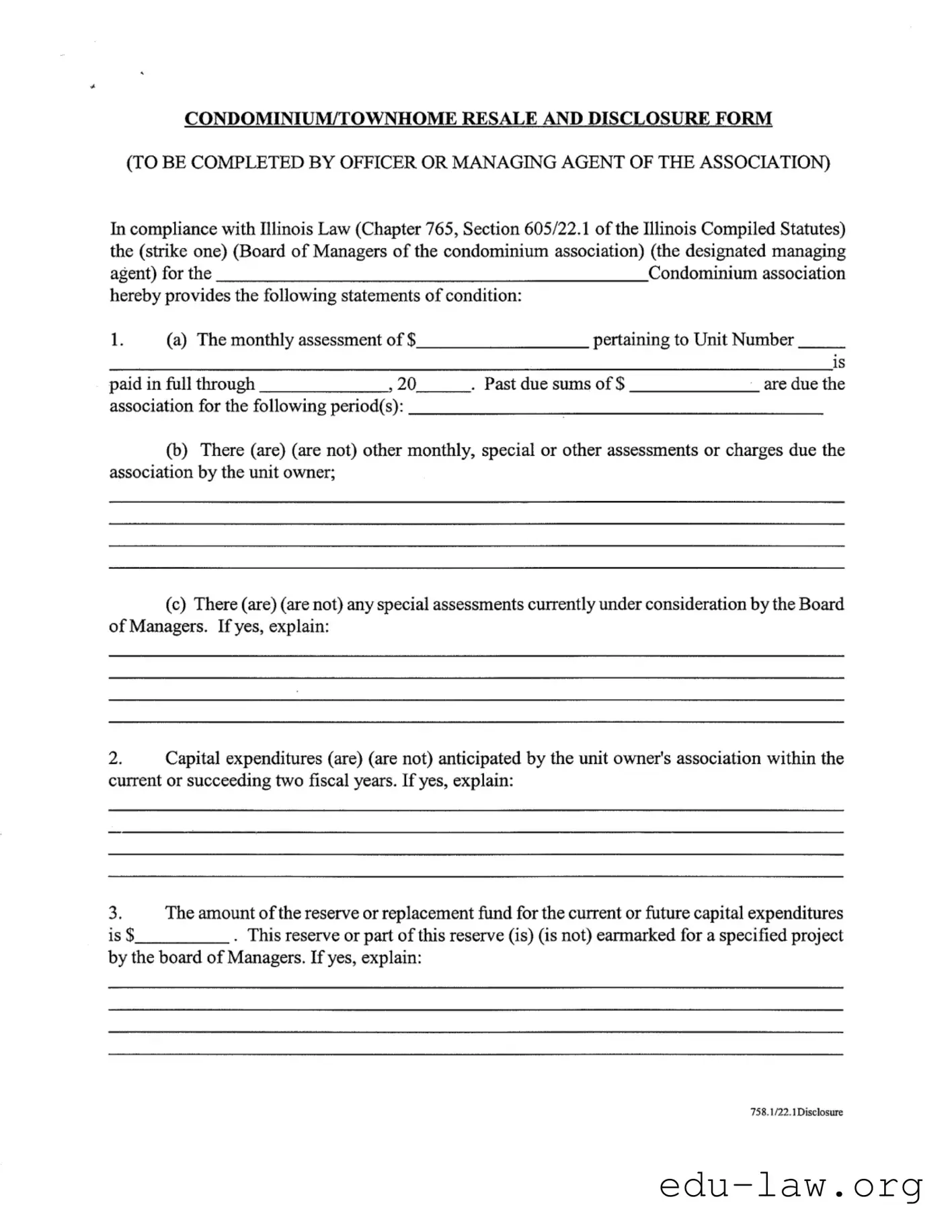
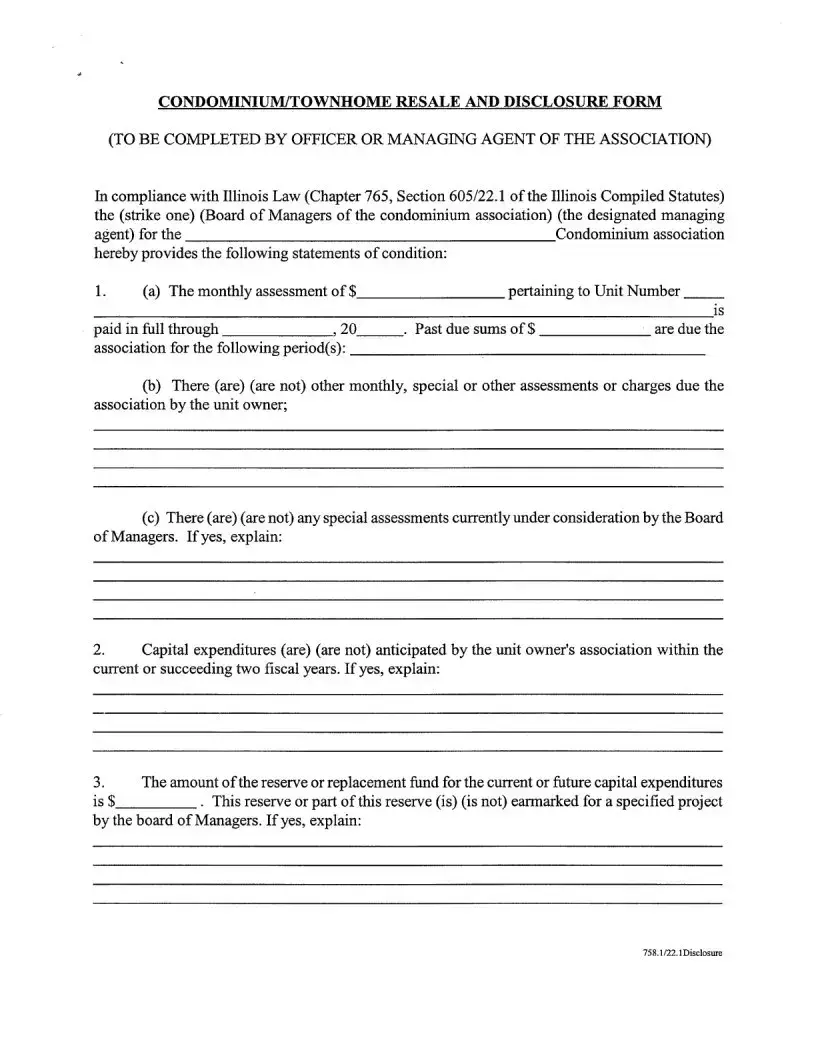
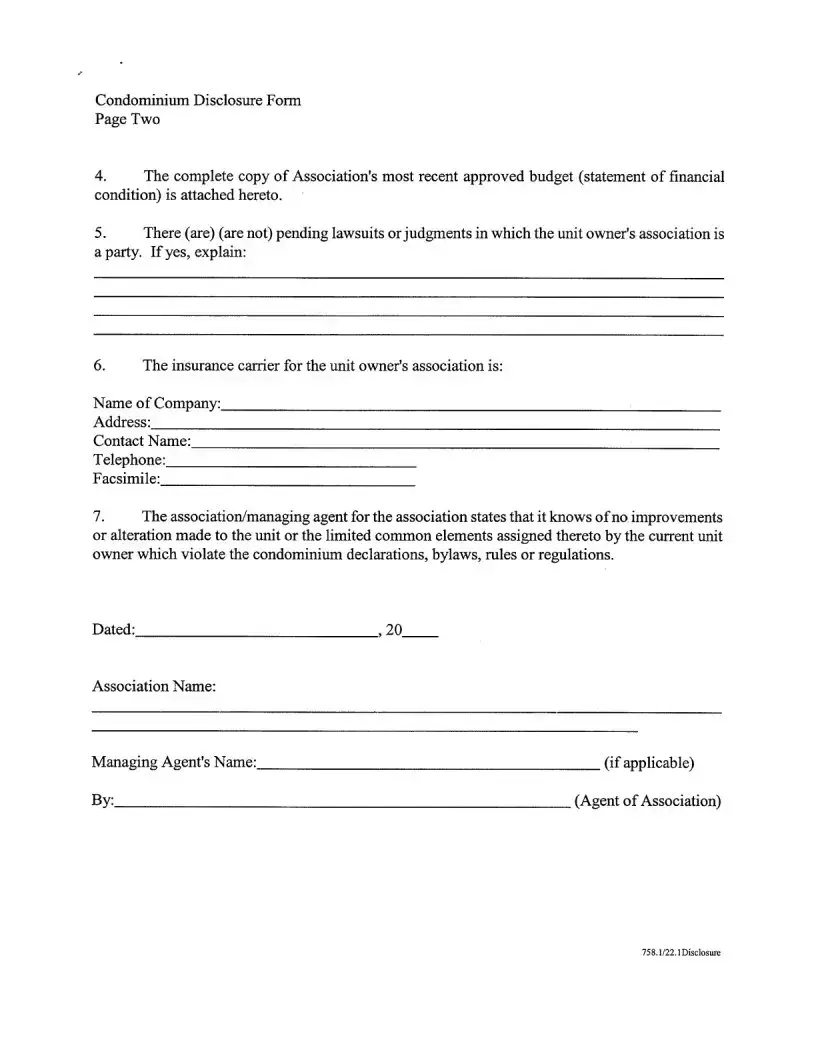
The Act 221 Disclosure form plays a crucial role in the resale of condominium and townhome units in Illinois, ensuring that prospective buyers are well-informed about the financial and legal status of the property they are considering. This form, mandated by Illinois law, must be completed by an officer or managing agent of the condominium association. It provides essential information regarding the unit's financial obligations, including whether the monthly assessments are up to date and if there are any past due amounts. The form also addresses potential special assessments that may be under consideration, along with anticipated capital expenditures that could impact the unit owner. Furthermore, it details the status of the association's reserve funds, highlighting whether any portion is earmarked for specific projects. Buyers can expect to find a copy of the association's most recent budget attached, which offers insight into the financial health of the association. Additionally, the form discloses any pending lawsuits involving the association and provides contact information for the insurance carrier covering the property. Overall, the Act 221 Disclosure form is a vital tool for promoting transparency and protecting the interests of both current and prospective unit owners.
| Fact Name | Details |
|---|---|
| Governing Law | This form complies with Illinois Law, specifically Chapter 765, Section 605/22.1 of the Illinois Compiled Statutes. |
| Monthly Assessments | The form requires information on whether the monthly assessments for the unit are paid in full and if any past due sums exist. |
| Special Assessments | It addresses whether there are any special assessments currently under consideration by the Board of Managers. |
| Capital Expenditures | The form asks if capital expenditures are anticipated within the current or next two fiscal years, and details may be required. |
| Pending Lawsuits | It includes a section to disclose any pending lawsuits or judgments involving the unit owner's association. |
Completing the Act 221 Disclosure form is an important step for the management of a condominium or townhome association. This form provides essential information regarding the financial and legal status of the association, which is critical for potential buyers. After filling out the form, it should be submitted to the appropriate parties for review.
What is the Act 221 Disclosure form?
The Act 221 Disclosure form is a document required by Illinois law for condominium and townhome associations. It provides essential information about the financial condition and status of the association. This form must be completed by an officer or managing agent of the association and includes details such as monthly assessments, any pending special assessments, and the association's budget. It aims to inform prospective buyers about the financial health of the association and any obligations they may have if they decide to purchase a unit.
Who is responsible for completing the Act 221 Disclosure form?
The form must be completed by either the Board of Managers of the condominium association or the designated managing agent. This ensures that the information provided is accurate and reflects the current status of the association. It is essential for the responsible party to have a good understanding of the association’s finances and any ongoing issues to provide potential buyers with the most reliable information.
What information is included in the Act 221 Disclosure form?
The form includes several key pieces of information. It outlines the monthly assessments for the unit, any past due sums, and whether there are any additional charges or special assessments. It also covers anticipated capital expenditures, the status of the reserve fund, and any pending lawsuits involving the association. Additionally, it provides details about the association's insurance carrier. This comprehensive information helps buyers understand their potential financial obligations and the overall health of the association.
How does the Act 221 Disclosure form protect buyers?
This form serves as a protective measure for buyers by ensuring they are fully informed about the financial and legal standing of the condominium association before making a purchase. By reviewing the disclosures, buyers can assess any potential risks, such as outstanding debts or pending legal issues. This transparency helps them make informed decisions and avoid unexpected financial burdens after purchasing a unit.
What should I do if I find discrepancies in the information provided in the Act 221 Disclosure form?
If you notice any discrepancies or have concerns about the information provided in the Act 221 Disclosure form, it is crucial to address them before proceeding with the purchase. You can reach out to the managing agent or Board of Managers for clarification. It may also be wise to consult with a real estate attorney or a knowledgeable real estate agent who can help you understand the implications of the discrepancies and advise you on the best course of action.
Neglecting to Complete All Sections: Each section of the Act 221 Disclosure form is crucial. Leaving any part blank can lead to misunderstandings or misrepresentations about the property's status.
Incorrect Unit Number: Ensure that the unit number is accurately filled in. An incorrect unit number can create confusion and may delay the resale process.
Failure to Update Financial Information: Make sure that all financial details, such as the monthly assessment and any past due sums, are current. Outdated information can mislead potential buyers.
Not Disclosing Special Assessments: If there are any special assessments under consideration, they must be disclosed. Failing to do so can result in legal consequences for the association.
Overlooking Pending Lawsuits: It is essential to indicate whether there are any pending lawsuits involving the association. Omitting this information can create serious liabilities.
Inaccurate Insurance Information: The insurance carrier's details must be correct. Providing inaccurate information can leave the association vulnerable in case of claims.
Ignoring Capital Expenditures: If capital expenditures are anticipated, they should be clearly stated. Not mentioning these can lead to unexpected financial burdens for new owners.
The Act 221 Disclosure form is a crucial document for anyone involved in the resale of a condominium or townhome in Illinois. Along with this form, several other documents are often used to provide a comprehensive overview of the property and its associated obligations. Below is a list of these documents, each serving a specific purpose in the transaction process.
These documents work together to provide a clear picture of the condominium or townhome's status and the obligations that come with ownership. Buyers should review each carefully to make informed decisions about their investment.
The Act 221 Disclosure form shares similarities with the Seller’s Disclosure Statement commonly used in real estate transactions. Both documents aim to provide potential buyers with essential information about the property in question. They outline the condition of the property, including any known issues, financial obligations, and the overall status of the homeowner's association. Just as the Act 221 Disclosure form highlights assessments and capital expenditures, the Seller’s Disclosure Statement addresses any repairs or maintenance that may be needed, ensuring that buyers are fully informed before making a purchase decision.
Another document that resembles the Act 221 Disclosure form is the Property Condition Disclosure Statement. This statement is often required in residential sales and serves a similar purpose by disclosing the condition of the property. It typically includes information about structural issues, plumbing, electrical systems, and any environmental hazards. Like the Act 221 form, it protects buyers by ensuring they are aware of any potential problems that could affect their investment, allowing for informed negotiations and decisions.
The Homeowners Association (HOA) Disclosure is yet another document that aligns closely with the Act 221 Disclosure form. This document provides potential buyers with information about the rules, regulations, and financial status of the HOA governing the property. It includes details about monthly fees, special assessments, and any pending legal matters involving the association. Both documents serve to clarify the financial obligations and responsibilities associated with property ownership, helping buyers understand what to expect after the purchase.
The Lead-Based Paint Disclosure is also comparable to the Act 221 Disclosure form, particularly in terms of protecting buyers from potential risks. While the Act 221 focuses on the financial and operational aspects of a condominium association, the Lead-Based Paint Disclosure specifically addresses health concerns related to lead exposure in homes built before 1978. Both documents emphasize transparency, ensuring that buyers are aware of any issues that could impact their living experience or financial investment.
Lastly, the Real Estate Transfer Disclosure Statement (TDS) is similar to the Act 221 Disclosure form in that it provides a comprehensive overview of the property being sold. This document typically includes information about the property’s condition, repairs, and any known issues, similar to the disclosures made in the Act 221 form. Both forms are designed to protect buyers by ensuring they have all the necessary information to make informed decisions, ultimately fostering trust in the real estate transaction process.
When filling out the Act 221 Disclosure form, it's important to approach the task with care. Here are five essential do's and don'ts to keep in mind:
Understanding the Act 221 Disclosure form is crucial for anyone involved in the purchase or sale of a condominium or townhome. Unfortunately, there are several misconceptions that can lead to confusion. Here are ten common misconceptions about the Act 221 Disclosure form, along with clarifications for each.
It is essential to approach the Act 221 Disclosure form with a clear understanding. Being informed can help you make better decisions and protect your investment.
Understanding the Act 221 Disclosure form is essential for both sellers and buyers in the condominium market. Here are key takeaways to consider:
Completing and reviewing this form thoroughly can safeguard your interests in a condominium transaction.