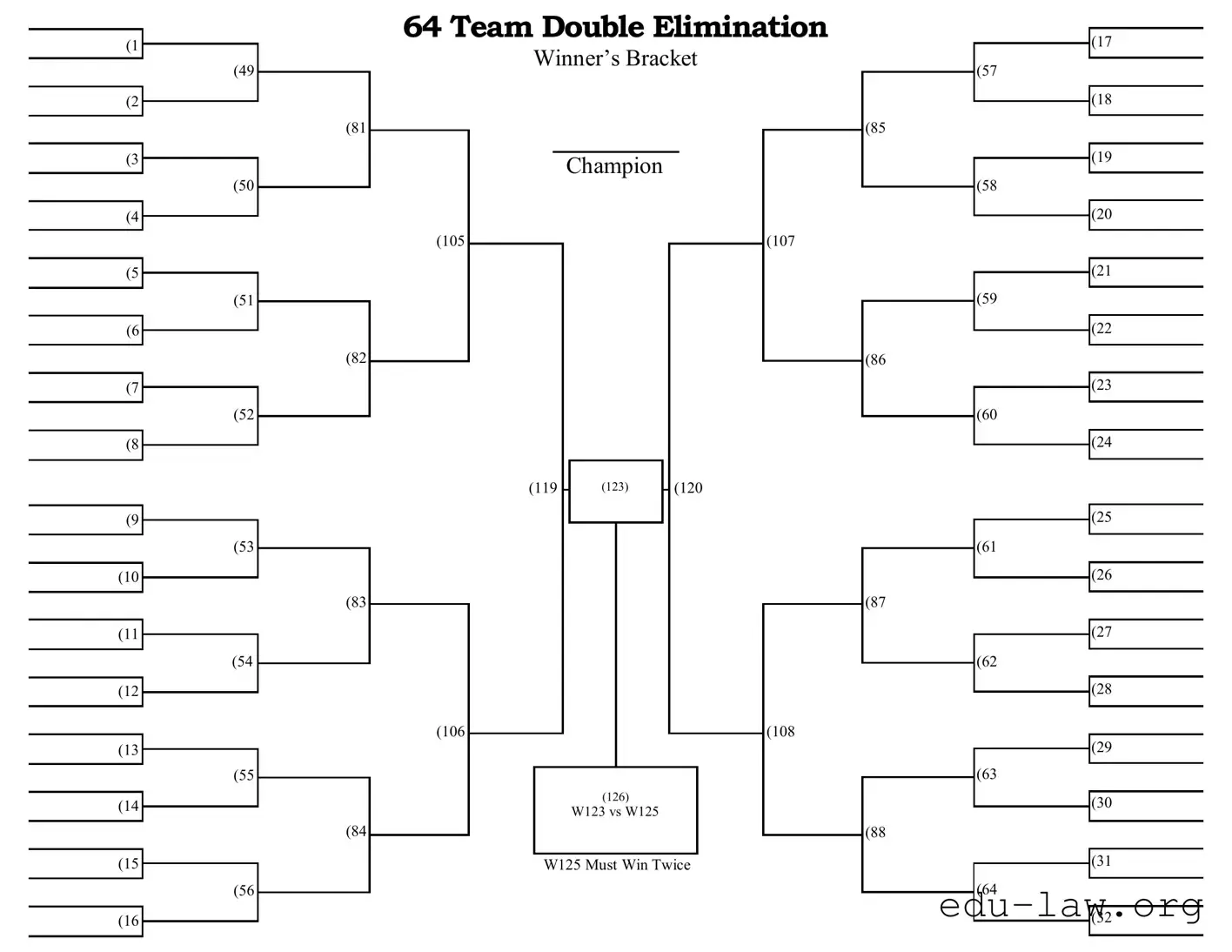
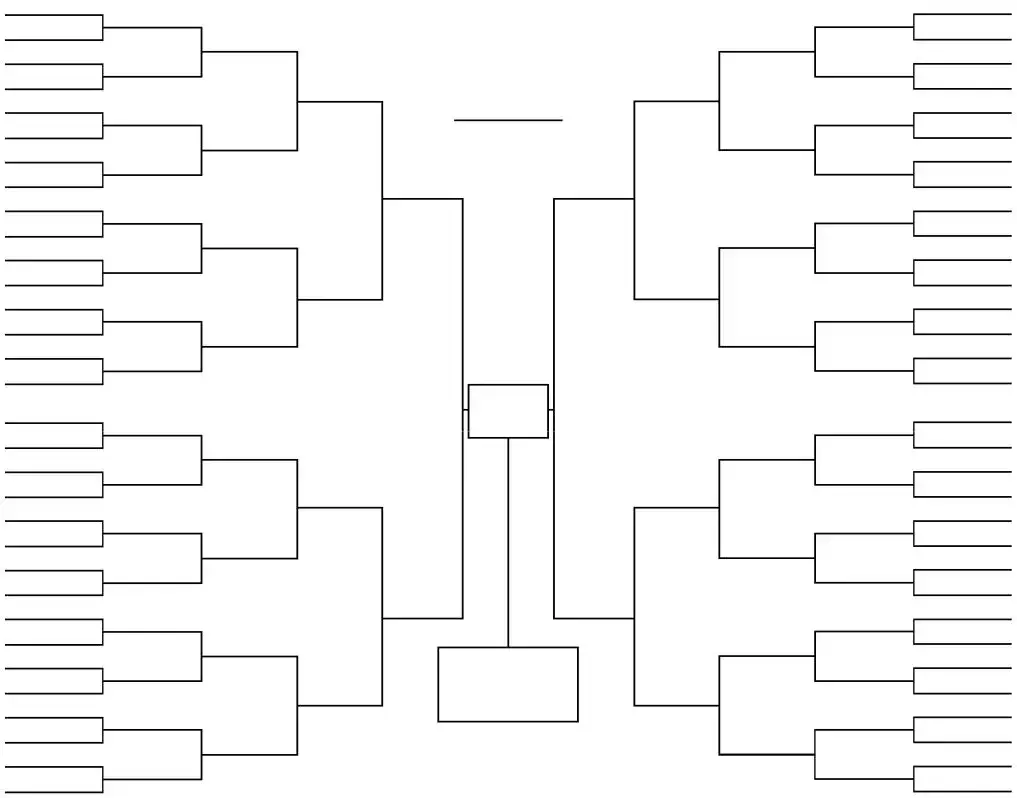
In the world of competitive sports and tournaments, organizing a fair and efficient structure is essential for ensuring that every team has a chance to showcase their skills. One popular method used for this purpose is the 64 Team Double Elimination Bracket form. This format allows teams to compete in a way that maximizes their chances of success, even if they face an early setback. Each team is given the opportunity to lose once before being eliminated from the tournament, which adds an exciting layer of strategy and resilience. The bracket is divided into two main sections: the winners' bracket and the losers' bracket. Teams initially compete in the winners' bracket, and those that lose are given a second chance to fight for the championship title in the losers' bracket. This structure not only keeps the competition engaging but also ensures that the best teams have multiple opportunities to advance. Understanding how to navigate this bracket form can be crucial for organizers and participants alike, as it influences match scheduling, team progression, and overall tournament dynamics.
(1 |
64 Team Double Elimination |
(17 |
|
Winner’s Bracket |
|||
(49 |
(57 |
||
|
(2 |
|
|
|
|
RACKETS |
|
|
|
|
|
|
(18 |
|
|
(81 |
|
|
|
|
(85 |
(3 |
|
|
Champion |
|
|
(19 |
(50 |
|
|
|
|
|
(58 |
(4 |
|
|
|
|
|
(20 |
|
|
(105 |
|
|
(107 |
|
(5 |
|
|
|
|
|
(21 |
(51 |
|
|
|
|
|
(59 |
(6 |
|
|
|
|
|
(22 |
|
(82 |
|
B |
(86 |
||
(7 |
|
|
(23 |
|||
|
|
|
|
|
||
(52 |
|
|
|
|
|
(60 |
(8 |
|
OUR |
|
|
(24 |
|
(54 |
|
(120 |
|
(62 |
||
|
|
(119 |
(123) |
|
|
|
(9 |
|
|
|
|
|
(25 |
(53 |
Y |
|
|
|
(61 |
|
(10 |
|
|
|
(26 |
||
|
|
|
|
|
||
|
(83 |
|
|
|
|
(87 |
(11 |
|
|
|
|
|
(27 |
RINT(56 |
|
|
|
|
(64 |
|
(12 |
|
|
|
|
|
(28 |
(13 |
|
(106 |
|
|
(108 |
(29 |
(55 |
|
|
|
|
|
(63 |
P |
|
|
(126) |
|
|
(30 |
(14 |
|
|
W123 vs W125 |
|
|
|
|
(84 |
|
|
|
|
(88 |
(15 |
|
W125 Must Win Twice |
|
(31 |
||
|
|
|
||||
(16 |
|
|
|
|
|
(32 |
L9
(33
L10(65
Loser’s Bracket
L25
(41
(73L26
|
L49 |
|
|
|
|
|
|
|
RACKETS |
||||
|
|
|
|
|
|
|
|
|
|
|
|
L57 |
|
L11 |
|
|
(89 |
|
|
|
|
|
|
|
|
(93 |
L27 |
|
(34 |
|
|
|
|
|
|
|
|
|
|
|
(42 |
L12 |
|
(66 |
|
(97 |
|
L120 |
|
|
L119 |
|
(101 |
(74 |
L28 |
|
L50 |
|
L85 |
|
|
|
|
|
|
|
|
L81 |
L58 |
L13 |
|
|
|
|
|
|
|
|
|
|
|
|
L29 |
|
(35 |
|
|
|
|
|
|
|
|
|
|
|
(43 |
L14 |
|
(67 |
|
|
(109 |
|
|
|
|
|
(111 |
(75 |
L30 |
|
|
|
|
|
|
|
|
|
|
|
|
||
|
L51 |
|
|
|
|
|
|
|
|
|
|
|
L59 |
L15 |
|
|
(90 |
|
|
|
|
|
|
|
|
(94 |
L31 |
|
|
|
|
|
|
|
|
|
|
|
|
||
|
(36 |
|
|
|
|
|
B |
|
|
|
(44 |
||
L16 |
|
(68 |
|
(98 |
|
(113 |
(115 |
(102 |
(76 |
L32 |
|||
|
|
|
|
|
|
||||||||
|
|
|
|
|
|
|
|
||||||
|
|
|
|
|
|
|
|
|
|
|
|
||
|
L52 |
|
L86 |
|
|
(121 |
(124) |
(122 |
|
|
|
L82 |
L60 |
|
|
|
|
|
|
|
|
|
|
|
|
||
|
|
|
|
|
L105 |
|
|
|
|
|
L107 |
|
|
|
L53 |
|
L87 |
|
|
|
|
|
|
|
|
L83 |
L61 |
|
|
|
|
|
|
|
|
|
|
|
|
||
L1 |
|
(69 |
|
(99 |
Y |
|
|
|
|
(103 |
(77 |
L17 |
|
|
(37 |
|
|
|
|
|
(118 |
|
|
|
(45 |
||
|
|
|
|
|
(117 |
|
|
|
|
|
|||
|
|
|
(91 |
|
|
|
|
|
|
(95 |
|
||
L2 |
|
|
|
|
OUR |
|
|
|
|
L18 |
|||
|
|
|
|
|
|
|
|
|
|
||||
|
L54 |
|
|
|
|
|
|
|
|
|
L62 |
||
|
RINT |
|
|
|
|
|
|
||||||
L3 |
|
(70 |
|
|
(110 |
|
|
|
(112 |
(78 |
L19 |
||
|
(38 |
|
|
|
|
|
|
|
|
|
|
|
(46 |
L4 |
|
|
L88 |
|
|
|
|
|
|
|
|
L84 |
L20 |
|
L55 |
|
|
|
|
(114 |
|
|
|
(116 |
|
|
L63 |
L5 |
|
(71 |
|
(100 |
|
|
|
|
|
|
(104 |
(79 |
L21 |
P |
|
|
|
|
(125) |
|
|
|
|
|
(47 |
||
|
(39 |
|
|
|
|
|
W124 vs L123 |
|
|
|
|
|
|
|
|
|
(92 |
|
|
|
|
|
|
|
(96 |
|
|
L6 |
|
|
|
L106 |
|
|
|
|
|
L108 |
L22 |
||
|
L56 |
|
|
|
|
|
|
|
|
|
L64 |
||
|
|
|
|
|
Loser’s Bracket Final |
|
|
|
|
||||
L7 |
|
(72 |
|
|
|
|
|
|
(80 |
L23 |
|||
|
|
|
|
|
|
|
|
|
|
||||
|
|
|
|
|
|
|
|
|
|
|
|||
|
(40 |
|
|
|
|
PrintYourBrackets.com |
|
|
|
(48 |
|||
L8 |
|
|
|
|
|
|
|
|
L24 |
||||
|
|
|
|
|
|
|
|
|
|
|
|
||
| Fact Name | Description |
|---|---|
| Format Overview | A 64 team double elimination bracket allows each team to lose twice before being eliminated from the tournament. |
| Initial Rounds | The tournament starts with 64 teams competing in the first round, resulting in 32 winners and 32 losers. |
| Losers Bracket | |
| Finals Structure | The final match can potentially involve the same team from the winners bracket and the losers bracket, creating a must-win scenario for the latter. |
| Match Count | In total, there can be up to 63 matches played in the tournament, depending on how teams progress. |
| State-Specific Forms | Different states may have specific rules governing double elimination tournaments, often found in local sports regulations. |
| Popularity | This format is popular in various sports, including baseball, basketball, and esports, due to its fairness and excitement. |
Filling out the 64 Team Double Elimination Bracket form can be an exciting process, especially as you prepare for a competitive event. This form will help you organize the matches and track the progress of each team throughout the tournament. Below are the steps to effectively complete the form.
By following these steps, you will have a well-organized bracket that tracks the progress of all teams in your double elimination tournament.
What is a 64 Team Double Elimination Bracket?
A 64 Team Double Elimination Bracket is a tournament format that allows teams to compete in a series of matches, where a team must lose two matches to be eliminated from the tournament. This format ensures that each team has a chance to recover from an initial loss, making it popular in sports and competitive events.
How does the double elimination format work?
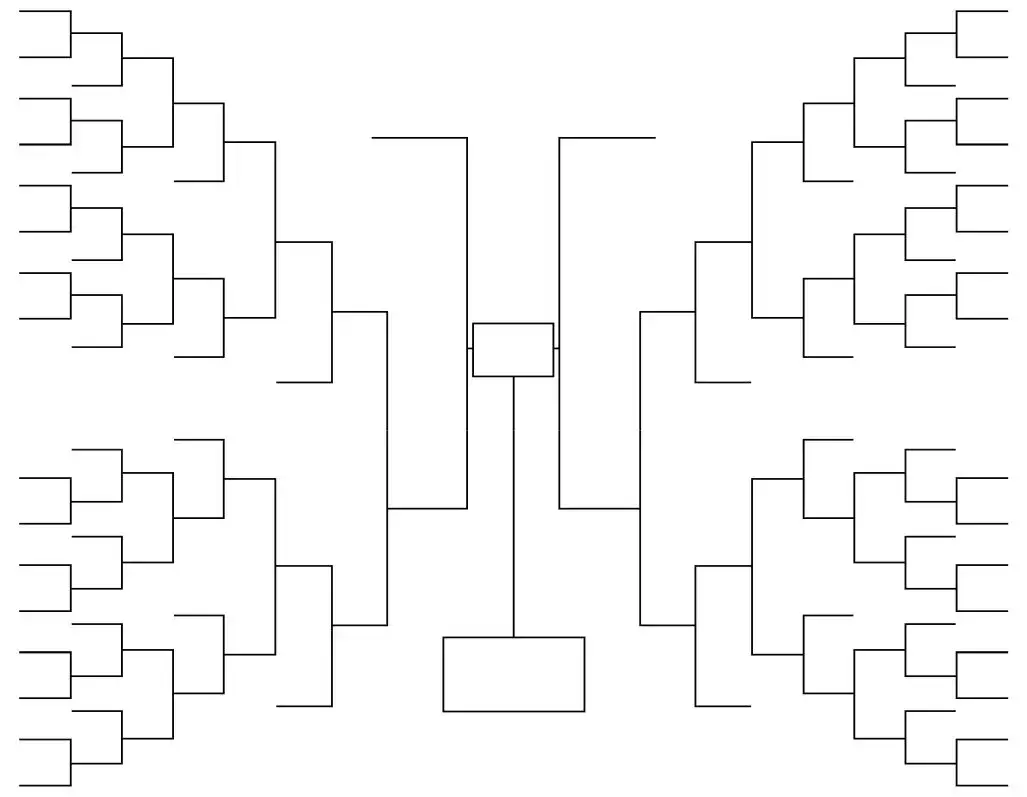
In a double elimination tournament, teams are divided into two brackets: the winners' bracket and the losers' bracket. Teams that win their matches continue in the winners' bracket, while those that lose move to the losers' bracket. A team is eliminated only after losing two matches. The final match often pits the winners' bracket champion against the losers' bracket champion, with the latter needing to win twice to claim the championship.
How do I fill out the 64 Team Double Elimination Bracket form?
To fill out the bracket form, begin by listing all 64 teams in the designated slots. Ensure that you accurately record the match results as the tournament progresses. The form typically includes sections for team names, match scores, and progression through the winners' and losers' brackets. Clarity and accuracy are crucial for maintaining the integrity of the tournament.
Can I customize the bracket for my specific needs?
Yes, many 64 Team Double Elimination Bracket forms can be customized. You may adjust team names, add logos, or modify match scheduling as needed. However, ensure that the overall structure of the double elimination format remains intact to maintain fairness and competitiveness.
What happens if a team withdraws from the tournament?
If a team withdraws, it can affect the entire bracket. The rules for handling withdrawals may vary depending on the tournament's regulations. Typically, the opposing team may receive a bye, or the bracket may be adjusted to accommodate the withdrawal. Always consult the tournament rules for guidance on this issue.
Where can I find a template for the 64 Team Double Elimination Bracket?
Templates for a 64 Team Double Elimination Bracket can be found online on various sports and tournament management websites. Many of these resources offer free downloadable formats that you can print or fill out digitally. Ensure that the template you choose is designed specifically for double elimination to avoid confusion during the tournament.
Failing to understand the structure of a double elimination bracket can lead to confusion. It's important to recognize that a team must lose twice before being eliminated.
Many people neglect to clearly label each team in the bracket. Without proper identification, tracking progress becomes difficult.
Inaccurate seeding is a common mistake. Teams should be placed in a way that reflects their skill level to ensure fair competition.
Forgetting to include a space for each matchup can create chaos. Each game needs a designated spot to avoid confusion.
Some individuals do not account for the potential of a team coming back from the losers' bracket. This oversight can disrupt the flow of the tournament.
Not updating the bracket after each match is a frequent error. Keeping the bracket current is essential for all participants to stay informed.
Failing to communicate the rules of the tournament can lead to misunderstandings. Clear guidelines help ensure everyone knows what to expect.
Some people forget to include a legend or key for any symbols used in the bracket. This can cause confusion about what certain marks mean.
Neglecting to check for conflicts in scheduling can result in delays. Ensuring that all teams have adequate time to play is crucial for a smooth tournament.
Lastly, not having a backup plan for unexpected situations can lead to problems. It's wise to prepare for the unforeseen, such as a team dropping out.
The 64 Team Double Elimination Bracket form is a popular tool for organizing tournaments where teams have a chance to compete even after losing. To effectively manage a tournament, several other forms and documents can be utilized alongside this bracket. Here’s a brief overview of those essential documents.
Using these documents alongside the 64 Team Double Elimination Bracket form can streamline the organization of your tournament. They ensure that everything runs efficiently and that participants have a clear understanding of the event's structure and expectations.
The 64 Team Double Elimination Bracket form shares similarities with the Single Elimination Bracket form. Both documents serve the purpose of organizing tournament matchups and tracking progress. In a single elimination format, teams are eliminated after one loss, which simplifies the structure. However, the double elimination format allows teams to have a second chance, providing a more extensive competition experience. This difference in structure leads to a more complex design in the double elimination bracket, as it requires additional pathways for teams to advance even after a loss.
Another document that resembles the 64 Team Double Elimination Bracket form is the Round Robin Tournament Schedule. Both formats are designed to facilitate organized competition among multiple teams. In a round robin, each team competes against every other team, which can lead to a comprehensive understanding of team performance. However, unlike the double elimination bracket, the round robin does not eliminate teams based on losses. This distinction in elimination criteria affects how teams are ranked and how the overall tournament progresses.
The Swiss System Tournament format is another document that shares characteristics with the double elimination bracket. Both formats aim to provide a fair competition structure while allowing teams to compete multiple times. In a Swiss system, teams are paired based on their performance in previous rounds, ensuring that competitors face opponents of similar skill levels. This method contrasts with the double elimination format, where teams may face a wider range of opponents as they progress through the bracket.
Lastly, the Constellation Bracket is similar to the 64 Team Double Elimination Bracket form in that it provides an opportunity for teams to continue competing even after initial losses. In a constellation bracket, teams that lose in the main bracket are given a chance to compete in a secondary bracket. This structure mirrors the double elimination format by allowing teams to fight for a place in the finals despite setbacks. The primary difference lies in how teams are organized and the specific pathways available for advancement in each format.
When filling out a 64 Team Double Elimination Bracket form, careful attention to detail is essential. Here are five things you should do and five things you should avoid.
Things to Do:
Things to Avoid:
Understanding the 64 Team Double Elimination Bracket can be tricky, and several misconceptions can lead to confusion. Here are four common misunderstandings:
This is true, but it can be misleading. In a double elimination format, a team is only eliminated after losing two matches. However, if a team wins all their matches in the upper bracket, they can win the tournament without ever facing elimination.
This is not always the case. The team from the lower bracket can reach the finals and must defeat the upper bracket team twice to win the tournament, as they have one loss already.
This is a misconception. Seeding can significantly impact matchups. Higher-seeded teams often face lower-seeded teams in the early rounds, which can lead to easier paths to the later stages of the tournament.
This is incorrect. A team that loses in the upper bracket still has a chance to come back and win the tournament through the lower bracket. This adds excitement and drama, as teams fight to stay in the competition.
Here are some key takeaways about filling out and using the 64 Team Double Elimination Bracket form: