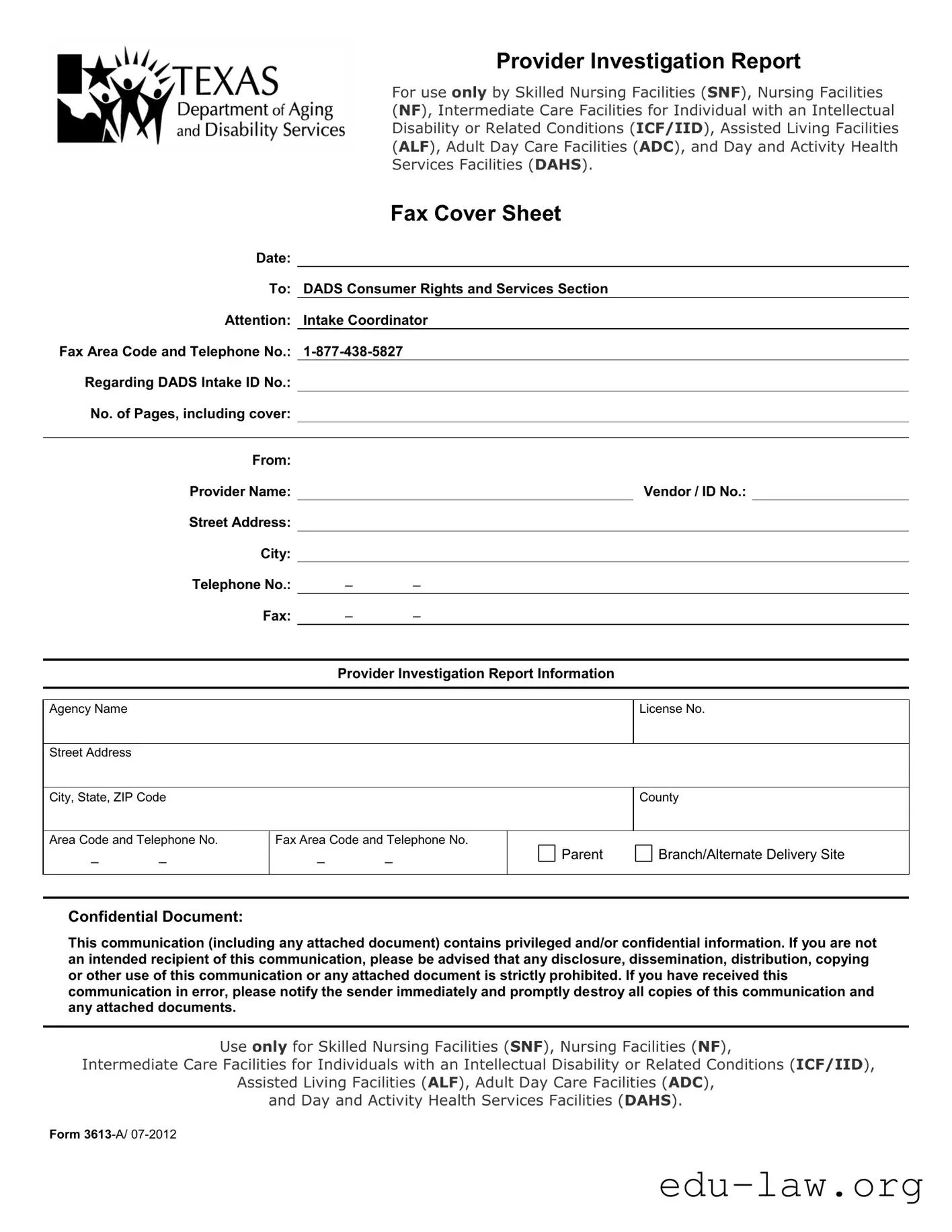
The 3613 A form plays a crucial role in the oversight of various healthcare facilities, specifically Skilled Nursing Facilities (SNF), Nursing Facilities (NF), Intermediate Care Facilities for Individuals with an Intellectual Disability or Related Conditions (ICF/IID), Assisted Living Facilities (ALF), Adult Day Care Facilities (ADC), and Day and Activity Health Services Facilities (DAHS). This form is designed to report incidents that may involve serious allegations such as abuse, neglect, or even death. It includes essential details like the provider's information, the nature of the incident, and the individuals involved. The form must be completed with accuracy, as it serves as a formal communication tool to the Texas Department of Aging and Disability Services (DADS). Facilities must fax or mail the completed form to the appropriate DADS section, ensuring that it reaches the right hands for timely investigation. Confidentiality is paramount; thus, the form emphasizes the importance of handling the information carefully. By documenting the necessary details, the 3613 A form helps maintain accountability and safety within these care environments.
Provider Investigation Report
For use only by Skilled Nursing Facilities (SNF), Nursing Facilities (NF), Intermediate Care Facilities for Individual with an Intellectual Disability or Related Conditions (ICF/IID), Assisted Living Facilities (ALF), Adult Day Care Facilities (ADC), and Day and Activity Health Services Facilities (DAHS).
Fax Cover Sheet
Date:
To: DADS Consumer Rights and Services Section
Attention: Intake Coordinator
Fax Area Code and Telephone No.:
Regarding DADS Intake ID No.:
No. of Pages, including cover:
|
|
From: |
|
|
|
|
|
|
|
Provider Name: |
|
|
|
Vendor / ID No.: |
|||
|
Street Address: |
|
|
|
|
|
||
|
|
City: |
|
|
|
|
|
|
|
Telephone No.: |
– |
– |
|
|
|
||
|
|
Fax: |
– |
– |
|
|
|
|
|
|
|
|
|
|
|
|
|
|
|
|
|
Provider Investigation Report Information |
|
|
||
|
|
|
|
|
|
|
|
|
|
|
|
|
|
|
|
|
|
Agency Name |
|
|
|
|
|
|
License No. |
|
|
|
|
|
|
|
|
|
|
Street Address |
|
|
|
|
|
|
|
|
|
|
|
|
|
|
|
||
City, State, ZIP Code |
|
|
|
|
|
County |
||
|
|
|
|
|
|
|||
Area Code and Telephone No. |
|
Fax Area Code and Telephone No. |
|
|
|
|||
– |
– |
|
|
– |
– |
Parent |
Branch/Alternate Delivery Site |
|
|
|
|
|
|
||||
|
|
|
|
|
|
|
|
|
|
|
|
|
|
|
|
|
|
Confidential Document:
This communication (including any attached document) contains privileged and/or confidential information. If you are not an intended recipient of this communication, please be advised that any disclosure, dissemination, distribution, copying or other use of this communication or any attached document is strictly prohibited. If you have received this communication in error, please notify the sender immediately and promptly destroy all copies of this communication and any attached documents.
Use only for Skilled Nursing Facilities (SNF), Nursing Facilities (NF),
Intermediate Care Facilities for Individuals with an Intellectual Disability or Related Conditions (ICF/IID),
Assisted Living Facilities (ALF), Adult Day Care Facilities (ADC),
and Day and Activity Health Services Facilities (DAHS).
Form
Texas Department of Aging |
SNF, NF, ICF/IID, ALF, ADC, DAHS |
|
and Disability Services |
||
Provider Investigation Report |
||
|
Fax this report to:
Mail this report to: Texas Department of Aging and Disability Services, Consumer Rights and Services Section,
Form
July 2012
Note to reporter:
Do not mail if faxed.
DADS Intake ID No. |
|
Date Reported to DADS |
|
|
Time Reported |
|
|||||||||||
|
|
|
|
|
|
|
|
|
|
|
|
: |
|
|
|
A.M. |
P.M. |
|
|
|
|
|
|
|
|
|
|
|
|
|
|
|
|||
Provider Type |
|
|
|
|
Vendor / ID No. |
|
Telephone No. |
|
|
|
|
||||||
|
|
|
|
|
|
|
|
|
|
|
– |
|
|
– |
|
||
Name |
|
|
|
|
|
|
|
|
|
Fax |
|
|
|
|
|
|
|
|
|
|
|
|
|
|
|
|
|
|
– |
|
|
– |
|
||
Street Address |
|
|
|
|
|
|
|
City |
|
|
|
|
|
|
ZIP Code |
|
|
|
|
|
|
|
|
|
|
|
|
|
|
|
|
|
|
|
|
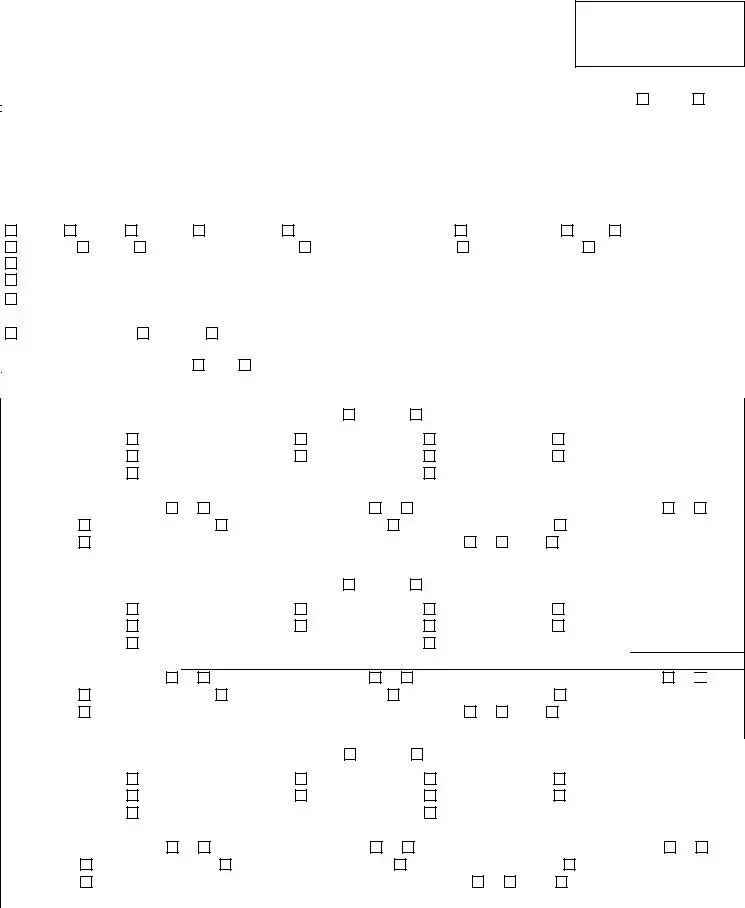
Incident Category |
|
|
|
|
|
|
|
|
|
|
|
|
|
|
|
||
Death |
Abuse |
Neglect |
Exploitation |
Missing Resident/Individual |
Drug Diversion |
|
Fire |
Bomb Threat |
|
||||||||
Tornado |
Flood |
Emergency Power Failure |
Sprinkler System Failure |
Fire Alarm Failure |
Firearms in the Building |
||||||||||||
Air Conditioning Failure if Outdoor Temperature is or will be 90 Degrees or Above |
|
|
|
|
|
|
|
|
|
||||||||
Heating System Failure if Outdoor Temperature is 65 Degrees or Below |
|
|
|
|
|
|
|
|
|
||||||||
Others, specify |
|
|
|
|
|
|
|
|
|
|
|
|
|
|
|
||
|
|
|
|
|
|
|
|
|
|
|
|
|
|
|
|
||
Who made the allegation? |
|
|
|
|
|
|
|
|
|
When? |
|
|
|
|
|||
Individual /Resident |
Family |
Other |
|
|
|
|
|
|
|
|
|
|
|
|
|
||
Incident Date |
|
|
Time |
|
|
Location |
|
|
|
|
|
|
|
|
|
||
|
|
|
: |
A.M. |
P.M. |
|
|
|
|
|
|
|
|
|
|
|
|
|
|
|
|
|
|
|
|
|
|
|
|
|
|
|
|
|
|
Individual(s)/Resident(s) Involved, Including Alleged Victim(s) or Alleged Aggressor(s)
Name |
|
|
|
|
|
|
Female |
|
Male |
Social Security No. |
|
Date of Birth |
|
|
||
|
|
|
|
|
|
|
|
|
|
|
|
|
|
|
||
Functional Ability: |
Total assistance |
|
Extensive |
|
Minimal |
|
No assistance |
|
|
|||||||
Level of Supervision: |
No special supervision |
Within eyesight |
|
Within hearing |
Within arm’s length |
|
|
|||||||||
|
|
Within specified distance: |
|
|
|
Specified observation time frame: |
|
|
||||||||
|
|
Other: |
|
|
|
|
|
|
|
|
|
|
|
|
|
|
|
|
|
|
|
|
|
|
|
|
|
|
|
|
|
||
Independently ambulatory |
Y |
N |
Interviewable |
Y |
N Capacity to make informed decisions |
Y |
N |
|||||||||
History of |
Combativeness |
|
Verbal aggression |
|
Physical aggression |
|
Sexual misconduct |
|
|
|||||||
|
Wandering |
Wearing wander guard at time of incident |
Y |
N |
Similar allegations |
|
|
|||||||||
|
Other pertinent history: |
|
|
|
|
|
|
|
|
|
|
|
|
|
||
|
|
|
|
|
|
|
|
|
|
|
|
|
|
|
||
Name |
|
|
|
|
|
|
Female |
|
Male |
Social Security No. |
|
Date of Birth |
|
|
||
|
|
|
|
|
|
|
|
|
|
|
|
|
|
|
|
|
Functional Ability: Level of Supervision:
Total assistance
No special supervision Within specified distance: Other:
Extensive |
Minimal |
No assistance |
Within eyesight |
Within hearing |
Within arm’s length |
|
Specified observation time frame: |
|
|
|
|
Independently ambulatory |
Y |
|
History of |
Combativeness |
|
|
Wandering |
|
Other pertinent history:
N |
Interviewable |
Y |
N |
Capacity to make informed decisions |
||
|
Verbal aggression |
|
Physical aggression |
|
Sexual misconduct |
|
Wearing wander guard at time of incident |
Y |
N |
Similar allegations |
|||
Y N
Name |
|
|
|
|
|
|
Female |
|
Male |
Social Security No. |
|
Date of Birth |
|
|
|||
|
|
|
|
|
|
|
|
|
|
|
|
|
|
|
|||
|
|
|
|
|
|
|
|
|
|
|
|
|
|
|
|
||
Functional Ability: |
Total assistance |
|
Extensive |
|
|
Minimal |
|
No assistance |
|
|
|||||||
Level of Supervision: |
No special supervision |
Within eyesight |
|
|
Within hearing |
|
Within arm’s length |
|
|
||||||||
|
|
Within specified distance: |
|
|
|
|
Specified observation time frame: |
|
|
||||||||
|
|
Other: |
|
|
|
|
|
|
|
|
|
|
|
|
|
|
|
|
|
|
|
|
|
|
|
|
|
|
|
|
|
|
|
||
|
|
|
|
|
|
|
|
|
|
||||||||
Independently ambulatory |
|
Y |
N |
Interviewable |
Y |
N |
Capacity to make informed decisions |
Y |
N |
||||||||
History of |
Combativeness |
|
Verbal aggression |
|
Physical aggression |
|
Sexual misconduct |
|
|||||||||
|
Wandering |
Wearing wander guard at time of incident |
|
Y |
N |
Similar allegations |
|
|
|||||||||
|
Other pertinent history: |
|
|
|
|
|
|
|
|
|
|
|
|
|
|
||
|
|
|
|
|
|
|
|
|
|
|
|
|
|
|
|
|
|
Form
Page 2 /
DADS Intake ID No.
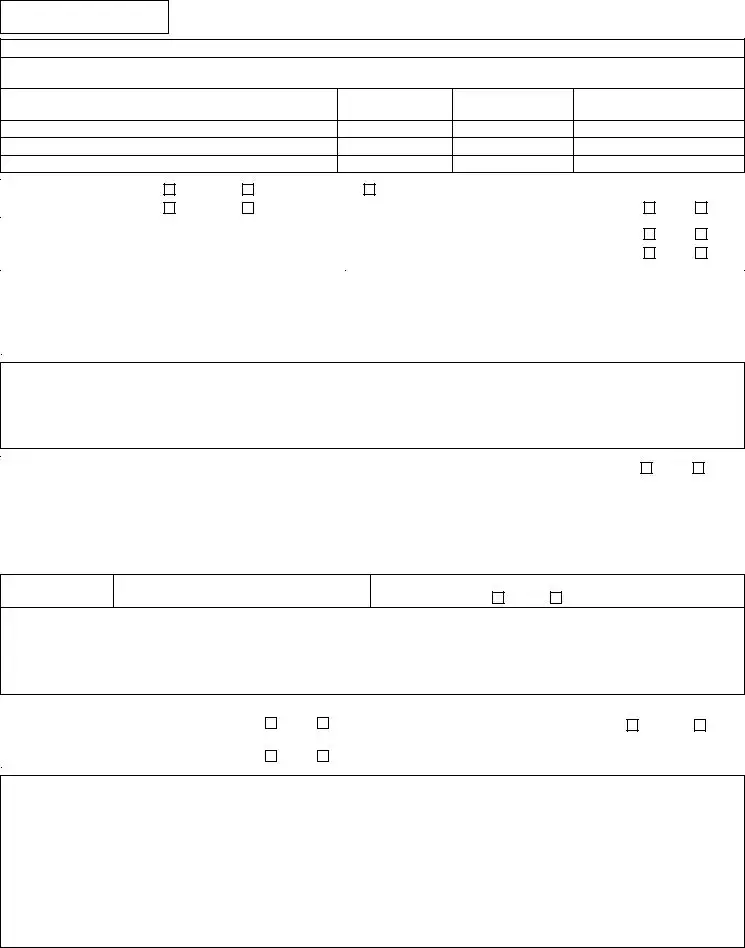
Alleged Perpetrator(s) (AP)
(If alleged perpetrator is somebody other than a staff member, indicate this individual’s relationship to the person. Example: relative, visitor, etc.)
Name
Date of Birth
Social Security No.
License/Certificate No.
|
How was the AP identified? |
By name |
By description |
Other: |
|
|
|
|
|
|
|
|
|
|
|
|
|
|
|
|
Perpetrator: |
Denied |
Confirmed |
History of similar allegations? |
|
Yes |
No |
|
|
|
Did investigation reveal the presence of a witness? |
|
|
|
Yes |
No |
|
||
|
|
|
|
|
|||||
|
Statement attached (signed and notarized, if possible) |
|
|
|
Yes |
No |
|
||
|
|
|
|
|
|
|
|||
|
|
|
|
|
|
|
|||
|
Witness(es) Name |
Individual/Patient/Family/Staff/Other |
Address |
Area Code and Telephone No. |
|
|
|||
|
|
|
|
|
|
– |
– |
|
|
|
|
|
|
|
|
– |
– |
|
|
|
|
|
|
|
|
– |
– |
|
|
|
|
|
|
|
|
– |
– |
|
|
Description of the Allegation
....................................................................................................................................................Injury/Adverse Effect? |
Yes |
No |
|
|
|
Description of Injury |
|
|
|
|
|
Assessment
Date
Time
:
A.M.
P.M.
Description of Assessment
|
|
|
Treatment/Transfer Date |
Time |
|
|
Treatment provided? |
Yes |
No |
|
: |
A.M. |
P.M. |
|
|
|
|
City |
|
|
Treatment location: |
Yes |
No |
|
|
|
|
|
|
|
|
|
|
|
Provider Response
Form
Page 3 /
DADS Intake ID No.
Investigation Summary (attach additional sheets, as necessary)
Investigation Findings
Confirmed
Unconfirmed
Inconclusive
Unfounded
Provider Action Taken
Signature
Printed Name
Title
Date
| Fact Name | Description |
|---|---|
| Intended Use | This form is specifically designed for use by various types of facilities, including Skilled Nursing Facilities (SNF), Nursing Facilities (NF), and Assisted Living Facilities (ALF). |
| Confidentiality Notice | The form contains a confidentiality notice, warning that the information is privileged. If received in error, the recipient must notify the sender and destroy all copies. |
| Submission Guidelines | Providers must fax the completed report to 1-877-438-5827 or mail it to the Texas Department of Aging and Disability Services in Austin, Texas. |
| Governing Law | This form is governed by Texas state laws related to aging and disability services, ensuring compliance with regulations for care facilities. |
Filling out the 3613 A form is essential for reporting incidents in various healthcare facilities. After completing the form, it should be faxed to the designated number or mailed to the appropriate address. Ensure all sections are filled accurately to facilitate a thorough review.
What is the purpose of the 3613 A form?
The 3613 A form serves as a Provider Investigation Report specifically designed for use by various types of facilities, including Skilled Nursing Facilities, Nursing Facilities, Intermediate Care Facilities, Assisted Living Facilities, Adult Day Care Facilities, and Day and Activity Health Services Facilities. Its primary purpose is to document incidents such as abuse, neglect, or other significant events involving residents. This form helps ensure that allegations are reported to the appropriate authorities and that investigations are conducted thoroughly and systematically.
Who is required to use the 3613 A form?
This form is mandatory for facilities that fall under specific categories, including Skilled Nursing Facilities (SNF), Nursing Facilities (NF), Intermediate Care Facilities for Individuals with an Intellectual Disability or Related Conditions (ICF/IID), Assisted Living Facilities (ALF), Adult Day Care Facilities (ADC), and Day and Activity Health Services Facilities (DAHS). Staff members at these facilities must complete the form when incidents occur that warrant investigation.
How should the 3613 A form be submitted?
The 3613 A form can be submitted either by fax or by mail. If faxing, it should be sent to the toll-free number 1-877-438-5827. Alternatively, it can be mailed to the Texas Department of Aging and Disability Services, Consumer Rights and Services Section, at the provided address in Austin, Texas. It is important to note that if the form is faxed, it should not be mailed as well.
What types of incidents must be reported using the 3613 A form?
Incidents that must be reported using the 3613 A form include, but are not limited to, allegations of death, abuse, neglect, exploitation, missing residents, drug diversion, and various emergencies such as fires or power failures. Each of these categories requires specific details to be filled out on the form, ensuring a comprehensive account of the incident.
What information is needed to complete the 3613 A form?
To complete the 3613 A form, several key pieces of information are required. This includes the provider's name and identification number, the nature of the incident, the individuals involved (including alleged victims and aggressors), and any relevant history or context surrounding the allegation. Additionally, details about witnesses, assessments, and any actions taken by the facility must be documented thoroughly.
What happens after the 3613 A form is submitted?
Once the 3613 A form is submitted, the appropriate authorities will review the report. An investigation may be initiated based on the information provided. The facility is expected to cooperate fully with any inquiries and may need to take immediate actions to address the situation, such as providing care or support to affected individuals. The findings of the investigation will ultimately determine the next steps, which may include corrective actions or further reporting requirements.
Is the information on the 3613 A form confidential?
Yes, the information contained in the 3613 A form is considered confidential. The form includes a notice indicating that the communication may contain privileged information. It is crucial for the facility staff to ensure that this information is handled securely and shared only with authorized personnel. Any unauthorized disclosure, dissemination, or use of the information is strictly prohibited.
How can facilities ensure compliance with the requirements of the 3613 A form?
Facilities can ensure compliance by training staff on the proper procedures for reporting incidents and completing the 3613 A form accurately. Regular audits and reviews of incident reports can help identify any gaps in compliance. Additionally, having a designated person responsible for handling these reports can streamline the process and ensure that all necessary information is captured and submitted in a timely manner.
Incomplete Information: Failing to fill out all required fields can lead to delays in processing. Ensure every section is completed, including contact details and incident specifics.
Incorrect Incident Category: Selecting the wrong category for the incident can mislead the investigation. Carefully review the options and choose the one that best fits the situation.
Missing Alleged Victim Details: Not providing complete information about the individuals involved, including their social security numbers and functional abilities, can hinder the investigation.
Failure to Document Witnesses: Omitting witness information can limit the investigation's effectiveness. Always include details of any witnesses and their contact information.
Not Specifying the Relationship of Alleged Perpetrators: If the alleged perpetrator is not a staff member, their relationship to the victim must be clearly stated to provide context.
Neglecting to Attach Supporting Documents: Failing to include necessary documentation, such as signed statements or treatment records, can weaken the report's validity.
Incorrect Submission Method: Confusing fax and mail options can cause delays. If you fax the report, do not mail it, as indicated in the instructions.
Ignoring Confidentiality Notices: Disregarding the confidentiality statement can lead to unauthorized sharing of sensitive information. Always handle the document with care.
The 3613 A form is essential for reporting incidents within various care facilities. Alongside this form, several other documents may be required to ensure comprehensive reporting and compliance with regulations. Below is a list of these documents, each serving a specific purpose in the reporting process.
These documents work together to create a thorough record of incidents within care facilities. Proper documentation not only ensures compliance but also enhances the safety and well-being of residents.
The Incident Report is similar to the 3613 A form as it serves to document incidents that occur within a facility. This report typically includes details about the incident, individuals involved, and any actions taken in response. Like the 3613 A form, the Incident Report aims to provide a clear account of events for internal review and regulatory compliance. Both documents emphasize the importance of confidentiality and proper handling of sensitive information.
The Abuse Report is another document that aligns closely with the 3613 A form. This report specifically focuses on allegations of abuse within a care facility. It captures information about the alleged victim, the accused, and the nature of the abuse. Similar to the 3613 A form, the Abuse Report requires thorough documentation to ensure proper investigation and adherence to legal requirements, safeguarding the rights of all parties involved.
The Neglect Report shares similarities with the 3613 A form in that it addresses incidents of neglect within care facilities. This document outlines specific instances where care standards may not have been met, detailing the individuals affected and the circumstances of the neglect. Like the 3613 A form, it serves as a tool for accountability and improvement in care practices, ensuring that vulnerable individuals receive the attention they require.
The Incident Investigation Report is akin to the 3613 A form in its purpose of documenting the findings of an investigation into reported incidents. This report includes analysis of the situation, evidence collected, and conclusions drawn. Both documents are essential for maintaining transparency and ensuring that appropriate actions are taken following incidents in care settings.
The Safety Report is another document that parallels the 3613 A form. It focuses on safety concerns within a facility, detailing hazards or incidents that may compromise resident well-being. Like the 3613 A form, the Safety Report emphasizes the need for corrective actions and ongoing monitoring to prevent future occurrences, thereby enhancing the overall safety of the environment.
The Compliance Report is similar to the 3613 A form in that it assesses whether a facility is adhering to regulations and standards. This report often includes findings from inspections and reviews, detailing areas of compliance and non-compliance. Both documents aim to ensure that facilities operate within legal frameworks and maintain high standards of care for residents.
The Grievance Report also shares common ground with the 3613 A form, as it documents complaints made by residents or their families regarding care or services. This report captures the nature of the grievance, the individuals involved, and the facility’s response. Like the 3613 A form, it serves as a mechanism for addressing concerns and improving care quality through feedback and resolution processes.
Finally, the Quality Assurance Report is similar to the 3613 A form in that it evaluates the overall quality of care provided in a facility. This report includes metrics and assessments that help identify strengths and areas for improvement. Both documents contribute to ongoing quality improvement efforts, ensuring that care facilities remain committed to providing the best possible services to their residents.
When filling out the 3613 A form, it's crucial to ensure accuracy and compliance. Here’s a helpful list of things to do and avoid:
Misunderstandings about the 3613 A form can lead to confusion among providers and facilities. Here are some common misconceptions:
Filling out the 3613 A form is a crucial step for facilities handling sensitive incidents. Here are some key takeaways to keep in mind: